Get Full Government Meeting Transcripts, Videos, & Alerts Forever!
Get email alerts on the Nuisance Abatement topic
No spam. Unsubscribe anytime.
Bill would let cities and counties place liens or special assessments to recover nuisance-abatement costs with hardship safeguards
Summary
Sen. Richardson’s SB 757 would allow cities and counties to use nuisance abatement liens or special assessments to recover costs for prolonged hazardous or trash-filled properties until Jan. 1, 2035, adding a 60-day cure period and hardship waivers per committee amendments; the committee advanced the bill after debate and recorded roll call.
Sen. Richardson told the Assembly Local Government Committee that SB 757 would authorize a city or county legislative body to establish procedures allowing nuisance abatement liens or special assessments to recover abatement and administrative costs through Jan. 1, 2035.
The sponsor said the bill targets chronic nuisance properties that accumulate large volumes of trash, debris and overgrowth and that municipal enforcement and cleanup burdens fall on local governments when property owners do not comply. Richardson said the bill includes a defined cure period and hardship waiver to address due-process and equity concerns raised in earlier hearings.
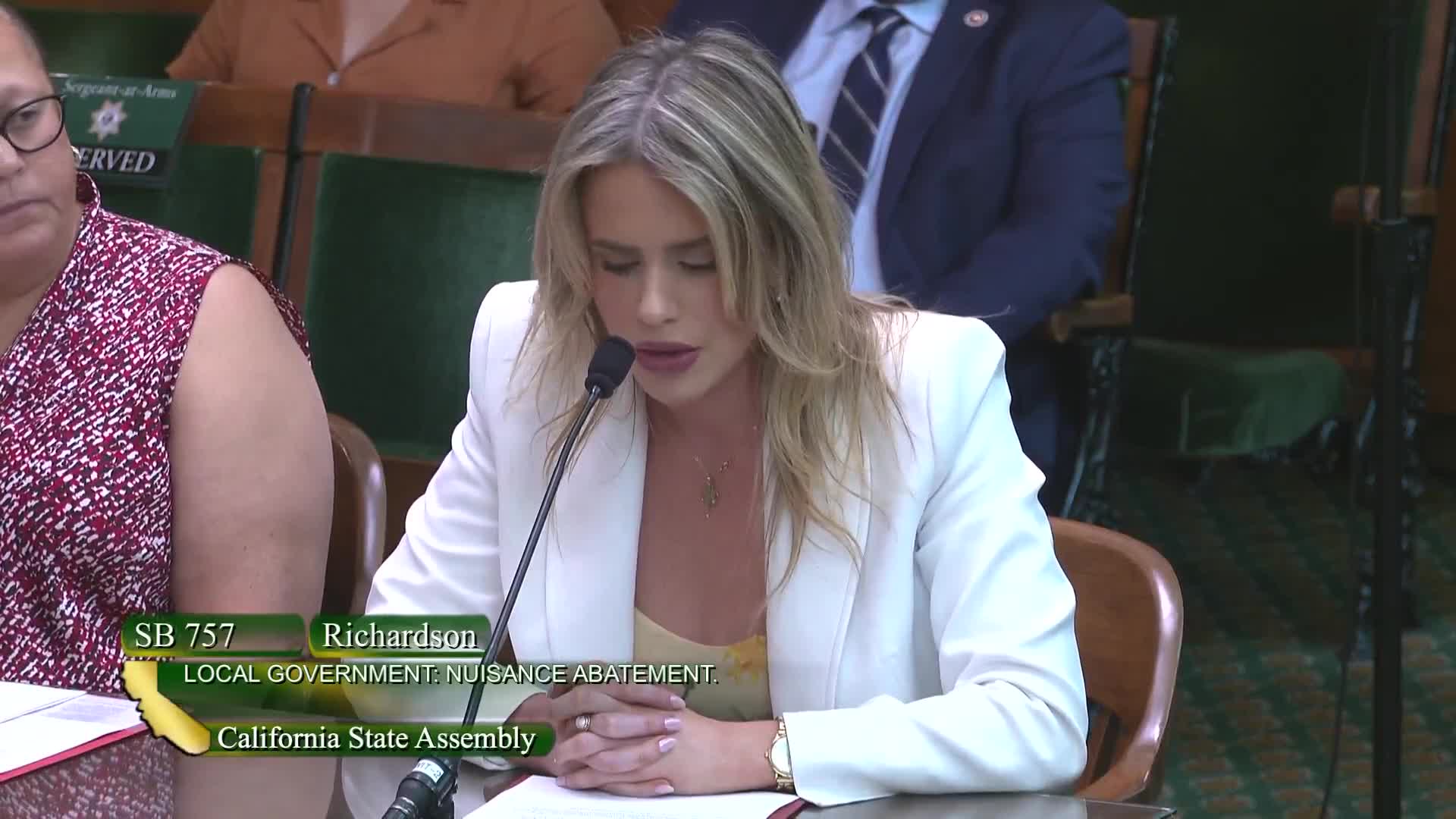
Carly Shelby testified in support on behalf of contract cities including Oakland and Compton, saying the tool would help under-resourced enforcement offices address dangerous conditions and reinvest recovered funds into housing code enforcement and assistance for low-income homeowners. Opponents included Carmen Nicole Cox of the Cox Firm speaking for ACLU California Action, who argued the bill could lead to displacement, undermine judicial due process and disproportionately affect low-income and Black and Brown homeowners.
Sen. Richardson and supporters responded that local governments already follow notice and cure processes, that free pickups and administrative appeals are common, and that the bill includes hardship waivers and notice requirements.
The committee conducted a roll-call vote after debate; the measure was recorded as approved and moved to the next committee or floor consideration as reflected on the hearing record.