Get Full Government Meeting Transcripts, Videos, & Alerts Forever!
Get email alerts on the Medicaid topic
No spam. Unsubscribe anytime.
State health officials warn Medicaid policy changes could cut coverage for tens of thousands in Prince George's County
Summary
Maryland Department of Health officials told the Prince George's County Board of Health that congressional reconciliation language under consideration could remove coverage from thousands of residents, reduce federal matching funds and add substantial administrative burdens if work and eligibility-verification requirements are adopted.
Maryland Department of Health officials told the Prince George's County Board of Health on Tuesday that proposed federal changes to Medicaid could cause substantial coverage losses and a multimillion-dollar reduction in federal funding that supports state and local health services.
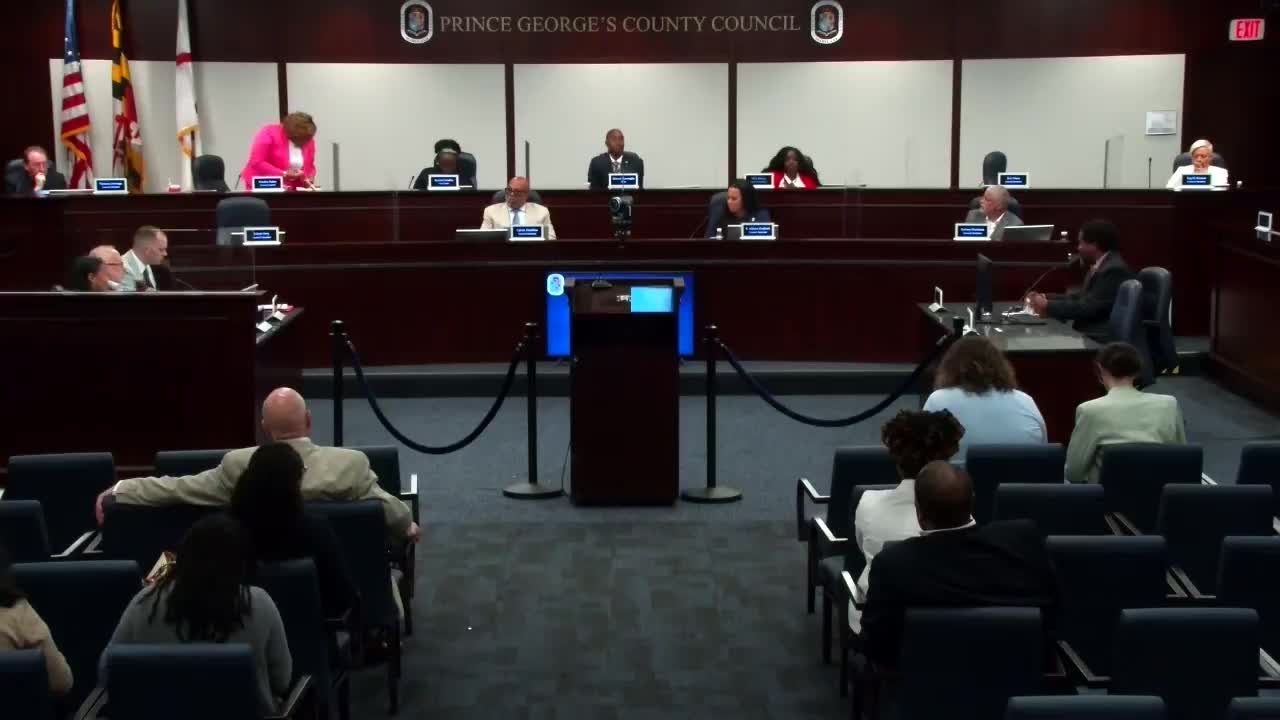
The warning came during a June 17 briefing led by Dr. Ryan Moran of the Maryland Department of Health, who said the plans in House and Senate reconciliation texts would add monthly verification and work requirements for people covered through the Affordable Care Act expansion and increase how often the state must recertify eligibility. "Work requirements are nothing but red tape," Moran said, arguing the provisions would drive people off coverage and disrupt care.
Why it matters: Prince George's County relies on Medicaid funding for hospitals, behavioral health care, long-term care and maternal services. Moran told the board that about 27% of county residents are enrolled in Medicaid and roughly 60,000 are covered through the Affordable Care Act expansion. He said the state estimates that more than 56,000 adults could lose coverage under work requirements and that more frequent eligibility checks could cause churn affecting roughly 130,000 additional Maryland residents. Moran said those shifts could cost Maryland hundreds of millions of federal dollars and create broader economic impacts because Medicaid reimbursements finance thousands of local health-sector jobs.
Details from the presentation: Moran described several provisions appearing in the congressional texts: (1) work requirements for expansion adults (examples in draft text reference about 80 hours per month); (2) more frequent eligibility verifications (from annual to potentially every six months for some populations); (3) limits on states' ability to use provider taxes and assessments to draw federal matching dollars; and (4) penalties tied to state decisions to fund coverage for undocumented immigrants (he cited the 2023 Healthy Babies Equity Act as an example of state policy that could face federal penalties under the proposals). Moran said the proposals remain fluid as House and Senate negotiators reconcile differences, and he noted the White House goal of final congressional action before July 4.
Board reaction and questions: Council members pressed Moran on likely dollar impacts and administrative readiness. When asked what the state could lose, Moran said statewide losses could be in the range of $1 billion to $2 billion depending on the final legislation; he estimated that Maryland could forfeit about $300 million in federal funds tied to the expansion population in a scenario in which tens of thousands of people lose coverage. Moran said the state is exploring technology and process options to limit churn but cautioned the implementation cost would be high and that limited federal transition funding (he cited roughly $100 million nationally in one draft) would not be sufficient to cover full implementation costs for all states.
Context and background: Moran described Medicaid as a joint federal–state program that covers roughly 1.5 million Marylanders (about 25% of the state) and as the largest payer for long-term care and mental-health services. He emphasized that federal matching dollars finance most Medicaid spending, noting the 90% federal match for Affordable Care Act expansion adults and the potential fiscal ripple effects if those matches are reduced or conditioned.
Next steps: Moran and state staff offered to return with ongoing briefings as federal language changes. The board closed the session shortly after the presentations.