Get Full Government Meeting Transcripts, Videos, & Alerts Forever!
Get email alerts on the Budget topic
No spam. Unsubscribe anytime.
Kenai Peninsula Borough boosts school funding after heated public hearing, approves FY2026 budget 8–1
Summary
After public testimony and hours of debate about state vetoes and teacher retention, the Kenai Peninsula Borough Assembly approved the fiscal year 2026 general-fund ordinance with an amendment adding local school funding. The amendment and the final ordinance passed 8–1; one member voted no.
The Kenai Peninsula Borough Assembly on June 17 approved its fiscal year 2026 general-fund appropriation ordinance after adopting an amendment that increases the borough’s local contribution to the Kenai Peninsula Borough School District.
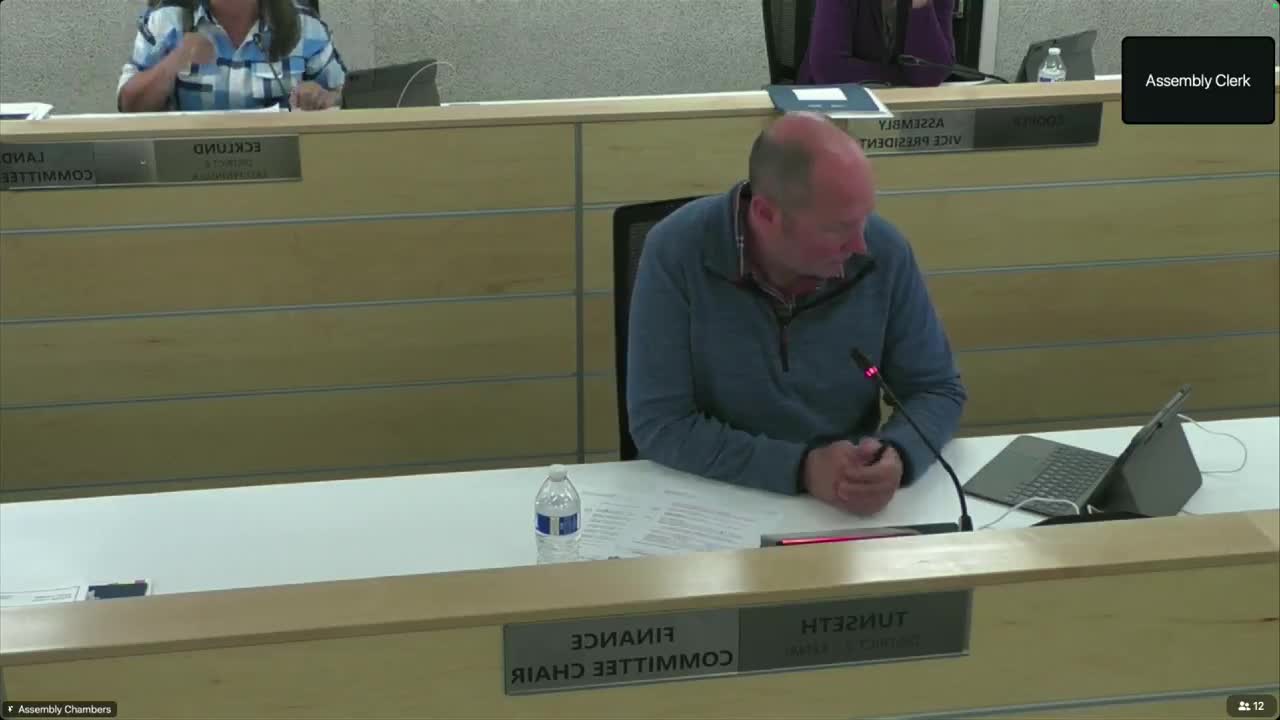
The amendment, moved by Assembly member Johnson and adopted by an 8–1 vote, raised the local contribution line in the ordinance; the assembly then approved the amended ordinance 8–1. Assembly member Tunceth cast the lone no vote.
The vote came after more than an hour of debate among assembly members, a legal presentation about meeting rules and deadlines, and a public hearing in which parents, students, teachers and retired educators urged increased local support for schools.
Assembly member Johnson argued the additional funding was needed to retain teachers and sustain programs. Mayor Michicky cautioned that funding at the higher level is “unsustainable” if repeated every year and warned it would significantly affect borough finances; he said members should understand “what that means to the people of the Kenai Peninsula Borough.” Director Harbaugh told the assembly the amended budget would use a larger share of the borough’s fund balance and that boroughwide education funding would rise substantially with the amendment.
Public commenters at the hearing were sharply divided. Joan Core Kalafonski, a retired educator, said she “does not want to fund to the cap” and urged scrutiny on curriculum and administrative spending. In contrast, high-school student Kate Cox and retired teacher Trina Richardson urged the assembly to increase local funding so their schools could keep AP, language and extracurricular offerings.
Why it matters: the state legislature’s recent budget vetoes reduced anticipated state education funding, prompting local debate over whether the borough should make up the difference. Assembly members noted the borough has finite reserves and that adding recurring local dollars now would raise long-term tax exposure; supporters said immediate local action would prevent near-term program and staff losses.
Key debate points and process - Timing and legal process: assembly members and legal counsel discussed rules about laydown items and required waiting periods between introduction and public hearing, with counsel quoting the borough’s code on the 13‑day requirement for setting a public hearing. Several members proposed scheduling a special meeting later in June if necessary; counsel said the assembly would first need to decide whether to schedule a special meeting to comply with notice rules. - Fund balance and sustainability: Director Harbaugh said the originally proposed budget was balanced and added to fund balance; the amendment increases boroughwide spending and will draw on fund balance. Harbaugh said the amendment will cause the borough to spend approximately $4 million of fund balance in FY2026 and that the boroughwide general-fund mil rate would change by roughly 0.42 mills because of the addition. - State funding uncertainty: Senator Bjorkman (present earlier on the agenda) and multiple assembly members said the state’s vetoes reduced the district’s expected aid and that an override or special session remains uncertain; several members said waiting for a state solution could take months.
Formal actions and outcome - Johnson amendment to Ordinance 20 25-19 (details as read into the record by the clerk): the assembly amended figures in Section 2 and Section 3 to increase the borough’s local contribution to schools. Mover: Assembly member Johnson. Vote: 8 yes, 1 no (Tunceth). Outcome: adopted. - Enactment of Ordinance 20 25-19, appropriating funds for fiscal year 2026 (as amended): Motion to enact carried 8–1 (no: Tunceth). Outcome: ordinance enacted.
What the ordinance does (as discussed in the meeting) - The ordinance appropriates the borough’s general-fund spending plan for FY2026. The base ordinance amount presented at committee was approximately $103.8 million for the general fund; the Johnson amendment raised the local contribution lines in Sections 2 and 3 (figures were read into the record by the clerk during the meeting). - Assembly members and staff repeatedly emphasized that school staffing and program choices remain under the school district’s authority and that increased local funding does not guarantee specific program restorations; several members pressed the administration and school board to be transparent about how additional local funds would be allocated.
Voices from the hearing (selected) - “I do not want to fund to the cap,” said Joan Core Kalafonski, who identified herself as a retired educator. - “The school district is strapped for money beyond belief,” said Assembly member Johnson in debate explaining his motion to increase local funding. - “This year is over. So they did not make a request for these dollars directly to fund the next school year,” Mayor Michicky said earlier when answering whether the district had already requested supplemental funding.
Next steps and context - The amended FY2026 appropriation is effective as adopted; Director Harbaugh noted that the increased contribution will substantially raise the share of the general-fund increase devoted to education for FY2026 and will reduce the borough’s fund balance in the short term. Several assembly members urged continued work with the school board to identify efficiencies and to press the state for durable solutions to education funding.
Sources and evidence: assembly debate and the public hearing recorded on the June 17, 2025 Kenai Peninsula Borough Assembly transcript (see record segments of debate, legal counsel and public comment).