Lifetime Citizen Portal Access — AI Briefings, Alerts & Unlimited Follows
DC witnesses press for clearer funding, faster expansion of curbside composting
Loading...
Summary
Environmental groups and compost contractors urged the Committee on Public Works and Operations to protect and clarify FY26 funding for curbside and drop‑off composting, citing program demand, questions about household counts and concerns about processing capacity in the region.
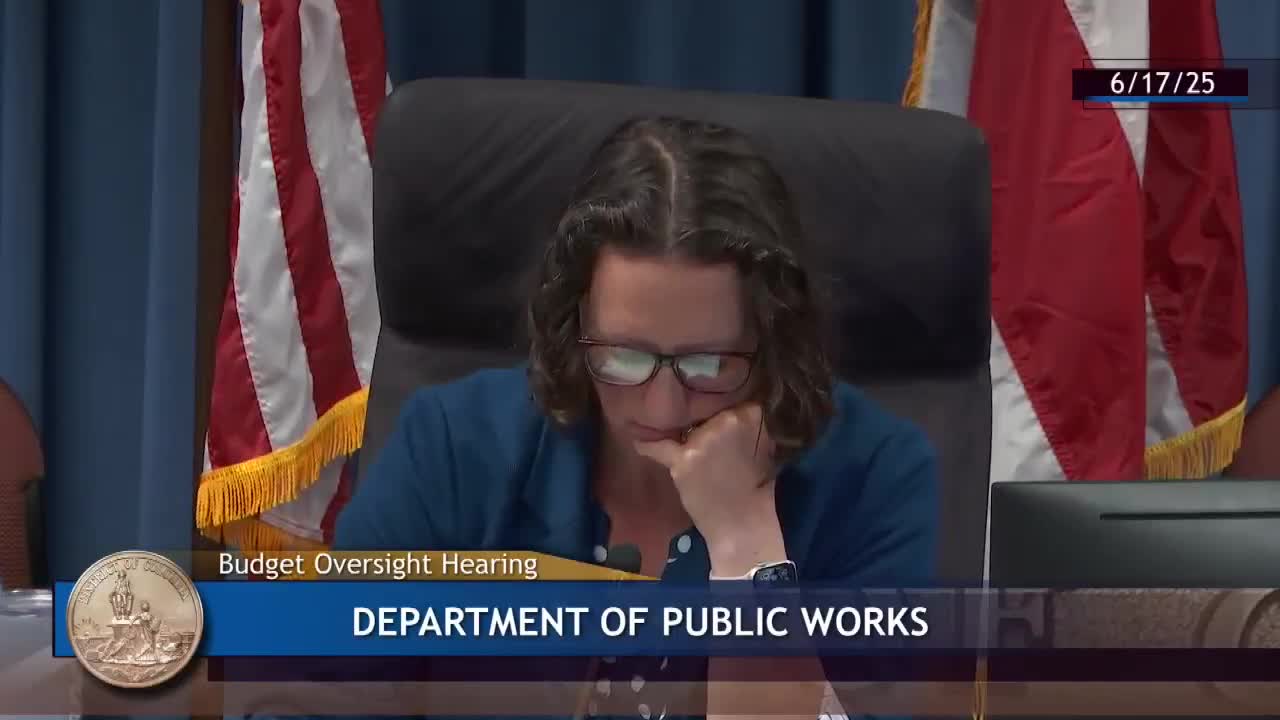
Councilmember Brooke Pinto's Committee on Public Works and Operations heard multiple witnesses on the mayor's proposed Fiscal Year 2026 funding for composting and other zero‑waste programs, with advocates urging clearer line items, more outreach and planning for processing capacity.
The hearing featured testimony from Eve Hamilton of the Sierra Club, contractors that run the curbside and drop‑off programs, and Department of Public Works officials. Hamilton said the mayor's proposed budget includes a one‑time increase of approximately $2,300,000 and 11 full‑time equivalents to expand residential food‑waste collection but asked the committee to clarify how many households that allocation will serve. "While the DPW chapter of the proposed budget states that 12,000 households are currently being served, DPW has stated that there are currently 9,000 households in the curbside compost program at a cost of approximately $3,000,000 as funded in the fiscal 25 budget," Hamilton testified.
Why it matters: Compost programs divert food waste — a major source of methane — from landfills and are cited as a tool to reduce rodent food sources. Advocates said uncertainty over household counts, contract lines and processing capacity could slow expansion and leave the city unable to meet stated diversion goals.
Compost contractors described current service and constraints. Dan Israel of Compost Crew said curbside collection diverted about 2.2 million pounds of food scraps in 2024 and that the contractor network supported the rapid launch that reached roughly 9,000 households. Jeremy Brzozowski of Agricity (Compost Cab) described strong usage at farmers‑market drop‑offs and the early success of the Smart Bin street collection pilot. "When you make it freely available and easy for people at home, they will happily participate," Brzozowski said.
Contracting and processing capacity were recurring themes. Witnesses and contractors told the committee that expanding from a modest pilot to citywide service requires more than route additions: it requires sustained outreach, processing capacity at compost facilities in the region and a procurement process that avoids service gaps. Dan Israel urged the council and DPW to plan now for expanded processing infrastructure in Prince George's County and elsewhere, warning that insufficient processing capacity could undermine the program.
Department of Public Works interim director Anthony Crispino told the committee the FY26 budget proposes to expand the curbside program from about 9,000 to 12,000 households. DPW said contract funding for curbside collection and processing remains on the books and that the agency issued a request for proposals in FY25 to cover collections, hauling and processing for a base year plus options. "The mayor's budget gave us the additional resources to add 3,000 households and bring the program up from 9,000 to 12,000 households," Crispino said. DPW also said the budget chapter shows roughly $3,000,000 on the contractual line for existing service and indicated the total contractual and program funding in the FY26 package is about $5,000,000.
Questions remained about per‑household cost and economies of scale. DPW staff told the committee the FY26 curbside program costs roughly $190 per household under the proposed allocations and that meaningful cost reductions are likely to come only from achieving larger scale.
What was decided or directed: No formal vote or budget amendment was adopted at the hearing. Committee members pressed DPW for clearer breakout numbers in the budget that would reconcile the 9,000 versus 12,000 household figures and asked for follow‑up on the FY25 procurement and whether the agency is on track to meet multi‑year targets.
Looking ahead: Witnesses asked the committee to ensure ongoing funding for the weekend drop‑off sites and Smart Bin program, to fund a statutorily required "Save As You Throw" pilot from the 0 Waste DC plan and to fund education and outreach. Contractors asked the council to monitor the procurement timeline to avoid service interruptions.
Ending: The committee kept the record open for written testimony; witnesses and DPW were expected to submit follow‑up materials on household counts, the procurement timeline and regional processing plans.