Get Full Government Meeting Transcripts, Videos, & Alerts Forever!
Get email alerts on the Flags topic
No spam. Unsubscribe anytime.
San Joaquin supervisors split on commemorative flags after hours of public comment; POW/MIA and Pride flag votes advance
Summary
After more than three hours of public comment and debate, the Board of Supervisors approved flying the POW/MIA flag and the Pride flag on specified dates, while opening a broader discussion of a permanent flag policy. The meeting included passionate testimony from veterans, veterans’ advocates and LGBTQ+ residents.
The San Joaquin County Board of Supervisors on June 17 approved two separate measures allowing commemorative flags to be flown on county property after a long public hearing that drew hundreds of speakers. The board voted 5-0 to permit the POW/MIA flag (item 3) under conditions discussed during the meeting, and 4-1 to allow the Pride flag (item 6) to be flown on a date requested by community groups.
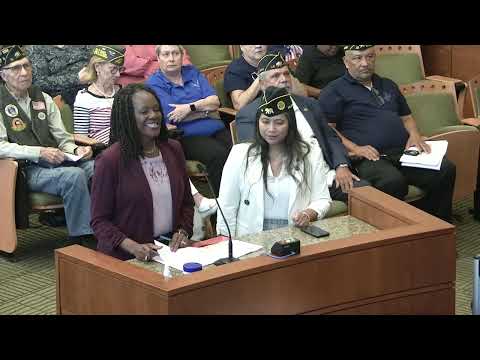
The board’s action followed a lengthy public comment period in which dozens of speakers described the flags as symbols of recognition for different communities. Supporters of the Pride flag said public visibility can reduce social isolation and save lives; opponents said flying flags other than the U.S. flag risks division. Several veterans’ speakers urged that the POW/MIA flag be flown in accordance with federal practice.
Why it matters: The county’s decisions set a local precedent for how commemorative requests are handled and spotlight a broader governance question—whether the county should create a single, written policy governing which non-governmental flags may be raised, when and on which poles.
What the board did: Item 3 (POW/MIA flag) passed 5-0 after veterans and veterans organizations urged its use on specific days. Item 6 (Pride flag) passed 4-1 after extensive public testimony from LGBTQ+ advocacy groups, youth and local officials who described incidents of anti-LGBTQ vandalism and threats to community safety. Several supervisors said they hoped to limit future controversy by revising the county’s flag policy but differed on how prescriptive a new policy should be.
Public testimony: Residents for and against the commemorative requests packed the chamber. Several veterans emphasized the POW/MIA flag’s role in honoring missing service members and cited federal guidance on commemorative days; Marvin Hernandez described June 12 as Women Veterans Recognition Day and urged continued veteran involvement in decisions affecting veteran services. Supporters of the Pride flag, including organizers from the San Joaquin Pride Center, said the single-day display sends an important message to LGBTQ+ youth and community members that they are seen and safe. Opponents, including several speakers who said they are veterans or naturalized citizens, argued the American flag should be the primary symbol representing all residents.
Discussion and next steps: Several supervisors urged a formal policy that sets clear procedures, review periods and outreach steps for future commemorative-flag requests. County staff and counsel said a written policy could include annual schedules, a process to request a third public flagpole for community groups, or a framework for time-limited displays. The board debated whether to refer a draft policy to an ad-hoc group for community input. A motion to accelerate consideration of a new policy was discussed but not finalized; supervisors signaled they will pursue follow-up work on flag policy language and implementation.
Ending note: The votes themselves were procedural approvals of specific request forms on the day’s agenda. Supervisors and staff said they expect to return with proposed policy language in coming months to reduce future disputes and clarify how requests for commemorative flags are handled.