Get Full Government Meeting Transcripts, Videos, & Alerts Forever!
Get email alerts on the Child Welfare Mobile Crisis topic
No spam. Unsubscribe anytime.
Humboldt County approves contract for mobile family urgent response services
Summary
The Board of Supervisors approved a professional services agreement to continue a contracted mobile crisis response for children and families, after officials questioned the program's high per-call cost and unstable state funding.
The Humboldt County Board of Supervisors on June 17 approved a professional services agreement to continue a Family Urgent Response System (FURS) mobile crisis service contract, authorizing subsequent amendments and directing the clerk to return one fully executed copy.
The item, pulled from the consent calendar for discussion, drew questions from Supervisor Virginia Bone about the cost and volume of calls and a staff explanation that the work is state-mandated, uses a specialized outside provider and has seen declining state allocations.
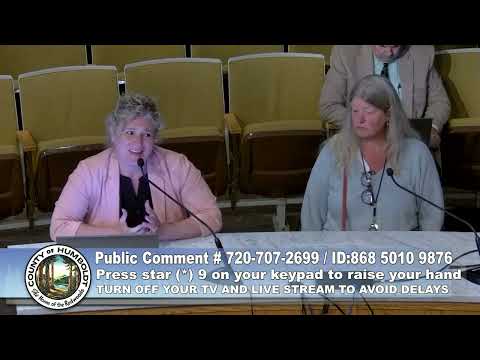
The county moved first to hear from county staff. Michelle Stevens, identified to the board as county staff supporting Child Welfare Services, said the FURS mobile response is intended to provide 24/7 telephone and in-home mobile crisis intervention for youth and families in acute crisis. Stevens told the board the program’s state funding has been “unstable,” that allocations have decreased and that last year the county paid roughly $308,000 under the contract while the prior year’s contract was about $480,000. She said staff evaluated bringing the service fully in-house but concluded that the vendor’s clinicians have specialized crisis-intervention training and that youth and parents often do not want to call CWS directly because they fear child-removal consequences: “Parents don't wanna call CWS when they're in crisis because they're worried, they're scared… that their child's gonna get taken away.”
Supervisor Bone pressed on cost-effectiveness. She said the board’s materials showed about 51 contacts in a prior year with 24 mobile responses and that, based on payments, the county was spending “better than almost $9,000 per individual call” under the prior contract. Bone asked whether the county could provide the service in-house or use different staffing, and said she supported reviewing the program more closely: “We need to all… ground proof because something like this can just fall through.”
Stevens and other staff acknowledged the per-call numbers are low relative to program cost. They said the county cannot repurpose the state allocation for other uses and that the state and County Welfare Directors Association (CWDA) are discussing how to change the program to be more cost-effective. Stevens said the contract is one way to ensure a neutral, externally provided response so families will seek help without contacting CWS directly.
Supervisor Arroyo asked whether other providers are available; staff said the contracted provider (an RCS entity based in Ukiah) is effectively the only nearby organization able to provide both the mobile-response and short-term residential supports. Board members also asked whether some staffing or billing tasks could be charged to the funding stream; staff said a small amount of staff time can be billed but most of the frontline response work is contracted.
After public comment from residents who said they support keeping a local response and from one speaker who urged keeping the service local to reduce fear of contacting CWS, the board approved the contract. The motion as read in the meeting authorized the county to approve the professional services agreement, authorize subsequent amendments and direct the clerk of the board to return one fully executed copy. The measure passed on a 4–0 vote.
The board and staff said they will continue conversations with state partners and CWDA about program design and funding, and staff indicated they will monitor call volumes and costs going forward.
The county’s action maintains the existing contracted mobile crisis option for now while staff and the board continue to explore whether the service can be provided more efficiently or brought in-house.