Get Full Government Meeting Transcripts, Videos, & Alerts Forever!
Get email alerts on the Housing Development topic
No spam. Unsubscribe anytime.
Developer outlines plans for roughly 700 homes in Oroville, urges council to pursue CFD financing
Summary
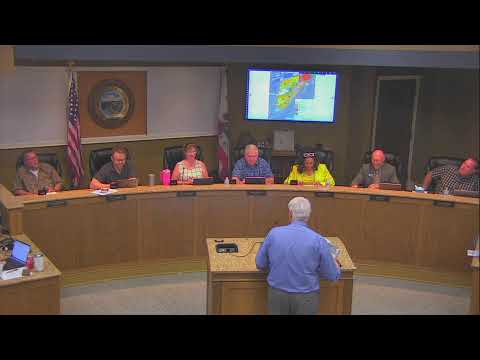
A development group told the Oroville City Council on Tuesday that it has contracts or active plans covering roughly 700 potential home sites across several projects in Oroville and Thermolito and asked the city to support financing those infrastructure costs by forming community facilities districts (CFDs).
A development group told the Oroville City Council on Tuesday that it has contracts or active plans covering roughly 700 potential home sites across several projects in Oroville and Thermolito and asked the city to support financing those infrastructure costs by forming community facilities districts (CFDs), commonly called Mello‑Roos bonds.
Vladimir Caslanka, a principal at Premier Enterprise Inc., said the company’s work in Oroville includes both subdivisions inside city limits and county parcels the developer would like to annex. “What I would like to do today is to show what we’ve been working on, what we’re attempting to do, and why, in order to be successful, we need to pursue the CFD, as a solution to get these projects done,” Caslanka told the council while showing maps and product plans.
Why it matters: the developer said market‑rate housing has not been built in parts of the city for two decades and argued that new, energy‑efficient homes priced near the county median would help local buyers and seed retail and services. The developer requested city guidance and support for the CFD formation process and for steps to fast‑track approvals and possible LAFCO annexations.
What the developer described: Caslanka and his team outlined multiple projects at varying approval stages. Key items mentioned on the record included: - Ruddy Creek (inside city limits): described as an existing approved subdivision with 97 single‑family lots and a five‑acre park; the developer said it is working on erosion control and storm‑drain connections and intends to target prices around county medians. - Linkside (inside city limits, phase 2): described as an infill phase with remaining street/sidewalk work; the developer said it is coordinating with Thermolito Water and Sewer District to repair infrastructure. - Cali Vista Estates (approved county parcel; developer seeks annexation): 55 single‑family lots previously approved as a later phase. - Diamond Oaks and Feather Hills (Thermolito area; require annexation): Diamond Oaks was described as about 94 single‑family lots near Tenth and Twelfth avenues and Feather Hills as roughly 43 larger lots (the presentation said starting prices would be in the “$4.25 or so range” for those larger lots; the transcript did not specify units clearly). - Oro Dam West: two commercial parcels including a 10‑acre parcel with a 3‑acre commercial front piece; the developer said they have conducted traffic counts but have not designed final plans.
Developers’ timeline and economics: Caslanka said the developer believes Ruddy Creek could begin site clearing and SWPPP/stormwater work within weeks and that national supply chain timing (tariffs and materials) is the major scheduling hurdle. He told the council his team’s market analysis shows a strong pool of first‑time buyers in the region and argued that lowering upfront infrastructure financing costs through tax‑exempt CFD bonds can help priced‑constrained buyers.
CFD briefing for council: The council also heard an educational presentation on CFDs from municipal advisors. Dimitri (municipal advisor) and Eric Scriven of NHAdvisors reviewed how CFDs work, who votes, and what types of infrastructure they fund. “CFD stands for Community Facilities District. And it’s a method of financing public infrastructure improvements … by imposing a special tax on real property,” Dimitri told the council. Scriven added that CFDs convert future special taxes into bond proceeds to pay for facilities now and that bond investors underwrite repayment risk; he also emphasized that CFDs are typically limited obligations repaid by the properties within the district and do not create direct general‑fund liability for the city.
Council discussion and next steps: Council members asked about unit counts, timing and annexation pathways; Caslanka said the portfolio he discussed includes “about 700 total” lots across the groups when parcels in escrow are counted and that he expects initial groundwork to begin quickly on Ruddy Creek. Council members and staff discussed LAFCO requirements for annexing Thermolito parcels and the difference between submitting plans to the county versus the city. Mayor Pittman and several councilmembers praised the presentation and emphasized the need to coordinate with special districts (water/sewer) and to engage Thermolito residents on annexation concerns.
Direction from council: staff recorded a recommendation to continue working with the developer and municipal advisors on project and CFD options; the council indicated general consensus to direct staff to continue discussions and return with more detailed analyses and next steps.
What the city will do next: staff expects to work with a municipal advisor, a bond and disclosure counsel and a special‑tax consultant as part of any CFD program; the city will also coordinate with LAFCO on annexation options and with Thermolito and relevant special districts (water/sewer) about infrastructure needs.
Ending: Council members and the developer said they plan to continue technical discussions and to bring more specific CFD and annexation proposals back to the council for formal consideration and any requisite public hearings.