Get Full Government Meeting Transcripts, Videos, & Alerts Forever!
Get email alerts on the Facilities Operations topic
No spam. Unsubscribe anytime.
Rockwall County reviews facilities budget; discusses moving jail maintenance staff under facilities
Summary
Facilities director presented FY2026 operations requests including maintenance agreements, a contingency fund, and a proposal to move most jail maintenance positions into the county maintenance department while keeping some jail-certified staff on site for inmate security.
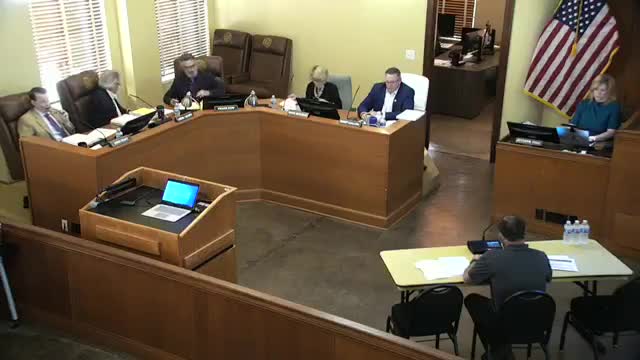
Barry Compton, Rockwall County director of facilities and operations, outlined the department’s FY2026 operating and maintenance requests during the county’s June 17 budget workshop, and answered commissioners’ questions about contracts, staffing and contingency spending.
Compton told the Commissioners Court he is seeking modest increases in some lines — uniforms to cover expected hires — and reductions in equipment and furniture where he expects reuse of furniture from other projects. He explained that maintenance and repair lines are tracked by building to monitor recurring costs, and cited a prior major plumbing failure at the Whitmore Building as an example of unpredictable, high-cost repairs.
The county’s building abbreviations used in Compton’s worksheet include AX (annex), JL (jail/law enforcement center), AP (adult probation), CH/HCH (historic courthouse), NCH (new courthouse) and SB (services building). Compton said the new annex will still require maintenance from start-up even while most systems remain under warranty, which explains an initially low but non‑zero first-year budget for that facility.
On maintenance agreements, Compton described the county’s use of vendor-neutral firms for commercial HVAC inspections (he named Intech Sales and Services), and said proprietary systems such as Siemens fire‑detection equipment require vendor contracts because third parties can be unable to fully service those systems. Commissioners pressed him on competitive pricing and whether contracts were periodically bid; Compton said Intech is on a purchasing cooperative and that alternative quotes he had obtained were more expensive.
Jail maintenance staffing: Compton summarized a longstanding, complicated arrangement in which three certified jailers have performed maintenance duties and the jail’s maintenance budget flows through the county maintenance department. He and commissioners discussed moving two of those positions into the facilities department while retaining at least one sergeant or supervisor inside the jail for inspections and inmate‑area responsibilities. Compton and commissioners said the change would aim to provide qualified maintenance technicians to perform specialized mechanical, plumbing and electrical repairs while the jail retains personnel to provide required inmate escorts and satisfy jail staffing standards. Law‑enforcement command staff and the sheriff’s office have reviewed a memo about this shift and the court said it will examine head‑count and state jail‑standards implications before approving a permanent reorganization.
Fleet management proposal: Compton proposed a new fleet technician position and modest shop equipment (a two‑post lift, basic oil supplies and emissions‑testing gear) to handle in‑house oil changes, basic preventative maintenance and the time‑consuming removal/installation of emergency equipment for law‑enforcement vehicles. He and commissioners noted the county rotates roughly 182 vehicles and that the external cost cited for removing equipment has been about $3,000 per vehicle; Compton said in‑house work could materially reduce downtime and disposal delays. Commissioners asked for a financial analysis that includes equipment costs, expected throughput (oil‑change rates and specialty work such as brakes and emissions), and contingencies for growth to a two‑person shop if demand requires it.
Contingency and unanticipated expenses: Compton asked the court to approve a $25,000 unanticipated expense line (about 5% of the proposed department budget) to allow faster responses to urgent repairs without asking the court for every small expenditure. Commissioners indicated they prefer to minimize open contingencies but accepted that facilities maintenance commonly requires a contingency balance.
What’s next: Compton said he will return with any contract renewals or new project bids and that the court needs to resolve the jail staffing/headcount issues in conversation with the sheriff and state jail standards before shifting positions permanently. Commissioners asked staff to provide the requested fleet cost/benefit analysis and to supply more detail about maintenance agreement bid history.
Ending: Commissioners thanked Compton and his staff for the presentation and asked for follow‑up materials (vendor bid comparisons, proposed organizational chart and projected savings estimates) ahead of the next budget hearings.