Get Full Government Meeting Transcripts, Videos, & Alerts Forever!
Get email alerts on the Golf Course topic
No spam. Unsubscribe anytime.
Consultants tell Universal City golf course brings visitors, council questions methodology
Summary
The National Golf Foundation presented an economic-impact report for Olympia Hills Golf Course; council members pressed presenters on assumptions, data sources and how much local tax revenue the course generates.
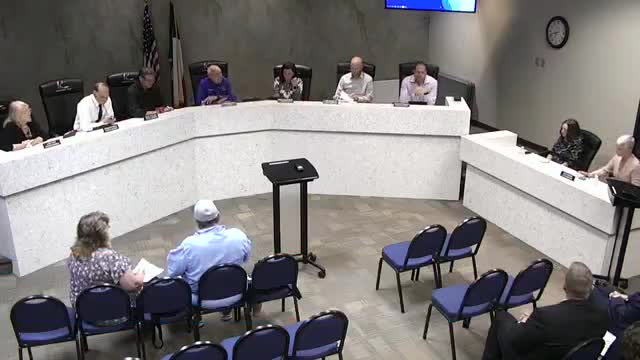
The National Golf Foundation presented an economic-impact analysis of Universal City’s Olympia Hills Golf Course at the June 17 Universal City City Council meeting, and council members spent more than an hour questioning the report’s estimates and methods.
The presentation, led by Richard Singer of the National Golf Foundation, summarized benefits the consultants attribute to the golf course: visitor rounds, charitable fundraising and a claimed property-value premium for nearby neighborhoods. “It’s preserving open space. It’s an avenue of home recreation. It’s a place where social gathering. It’s a venue to raise money, and it’s a major contribution, to the Universal City brand,” Singer said.
The council’s questions focused on data sources and what the report treated as “actual” versus “estimated” values. Council member Bridal repeatedly pressed the presenters for confidence intervals and documentation, arguing the report mixed a best-year revenue figure with separate capital-expenditure years and that labeling those combined results “conservative” is misleading. “When you use the word conservative, it doesn’t match what you did in this report,” Bridal said.
Other council members sought clearer, directly measurable impacts. Council member Clower asked whether the city should continue subsidizing the course and urged examination of opportunity cost: “If we were to spend the 1.2-ish million that we budgeted for 2025 on something else like streets, for example, that would have the same kinds of economic impact,” he said. Singer and his team told the council the report used industry multipliers and several data sources (including Placer.ai visitation estimates) and acknowledged that some numbers are estimates.
Singer said the course had raised money for charities—“we estimated that it’s still raised over $579,000 for charities”—and that the facility draws many nonresident rounds (the report cited about 44,000 rounds in 2024, with roughly 2,000 played at resident rates). The consultants estimated sales-tax and property-tax impacts, but council members questioned the allocation of out-of-area spending to city businesses and whether those spending patterns had been demonstrated clearly.
Council discussion also covered the course’s role in branding and charitable events. Council member Galt said the narrative about visitors and nonprofit events is important even if every numeric estimate cannot be precisely verified: “It is bringing people to our community,” she said.
Mayor Maxwell and staff thanked the presenters and asked them to return for follow-up. The presentation did not include any vote by council; staff will use the report as part of budget and program discussions.
The council’s questions emphasized three themes for next steps: (1) provide clearer documentation for the assumptions and multipliers used; (2) break out direct, local sales- and property-tax receipts versus broader multiplier estimates; and (3) show sensitivity or confidence intervals for headline estimates so the council can compare the golf course subsidy to other spending choices during the budget process.