Get Full Government Meeting Transcripts, Videos, & Alerts Forever!
Get email alerts on the Public Safety Pay topic
No spam. Unsubscribe anytime.
Council reviews ordinance to change police civil-service pay progression
Summary
Grand Prairie staff presented an ordinance (item 19) to amend the civil-service police pay plan, saying it raises the entry pay and shortens the step-progression period from 12 years to seven; no final vote was recorded in the meeting transcript.
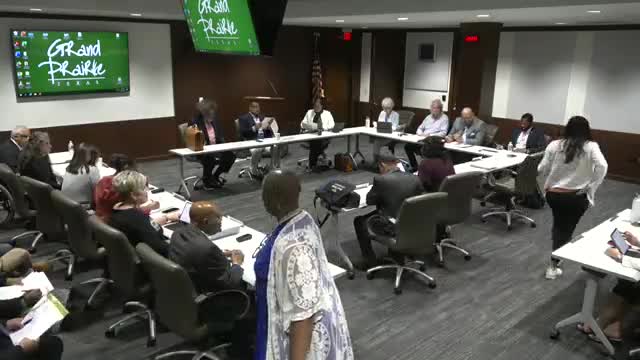
At a Grand Prairie City Council meeting, staff presented an ordinance to amend the civil-service police pay plan, saying it would raise starting pay for police officers and shorten the years-to-top step in the city's step pay schedule.
Tasha Camacho, human resources director, told council that item 19 is an ordinance amending the city's civil-service police pay plan and that changes to pay require council approval by ordinance. “And every time there's any changes made, it has to be approved by council and by ordinance,” Camacho said. She said the amendment adjusts the salary for entry ranks and shortens the step-progression period so officers reach the maximum step sooner.
Camacho described two specific changes: raising the entry salary (the transcript records the presenter saying “It will now be 99,” but the unit or currency for that figure is not specified in the meeting record) and changing the maximum-years-to-top-step from 12 years to seven years. She also said the city compares pay to other jurisdictions in the state “to make sure we're staying competitive.”
The item was discussed during agenda review and presented as part of the consent/individual consideration process. The transcript records staff explanation but does not record a council vote or final action on the ordinance.
Background: the city’s civil-service pay plans are adjusted by ordinance and require council approval. The meeting packet included the ordinance as item 19; the transcript does not show a final vote or adoption on the record.
Looking ahead: the council may take formal action at a later point when the ordinance is placed on a scheduled vote or returns from the consent/individual consideration calendar.