Get Full Government Meeting Transcripts, Videos, & Alerts Forever!
Get email alerts on the Noise Ordinance topic
No spam. Unsubscribe anytime.
Parker council delays vote on new noise ordinance after hours of public comment
Summary
After extensive public comment and council questions, the Parker City Council voted 5-0 to postpone a final vote on Ordinance No. 894 (noise regulations) and asked the noise committee to return with revisions addressing distance measurement, minimum fines and who is responsible for violations.
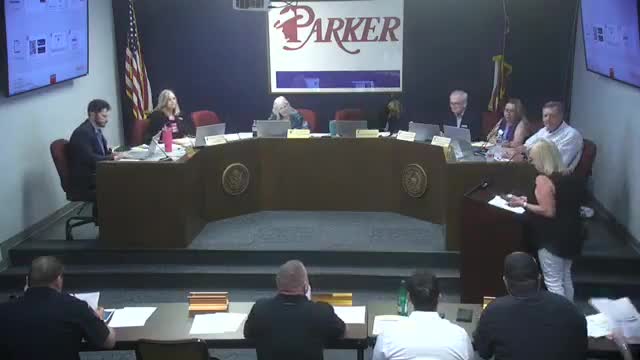
The Parker City Council on June 17 postponed a vote on Ordinance No. 894, a rewrite of the city's noise regulations, after more than an hour of public comment and extended council discussion. The council voted 5-0 to defer final action and asked the city's noise committee to return with a revised draft addressing three specific items: the 30-foot measurement provision, a suggested minimum fine, and language identifying the responsible party for commercial or construction-related violations.
The ordinance would have lowered the city's daytime/nighttime decibel thresholds and explicitly given police officers discretion to issue violations without a sound-level meter in many residential complaints. The measure was introduced by the city's police and the ad hoc noise committee, which compared Parker's draft to ordinances in nearby cities such as Allen and Garland.
Why it matters: The proposal prompted strong reactions from residents who said it either did not go far enough to help neighbors or was too broad and would criminalize ordinary activities. Council members sought clarity on enforcement, contractor activity (notably early-morning concrete pours), the 30-foot rule for measuring audible sound, and the range of fines.
Public commenters described repeated neighborhood disturbances and urged both stronger enforcement and sensible exemptions. Laura Mulaney Walsh, a Parker resident who said she served on the noise committee, told council the draft "adjusts the decibel levels for daytime and nighttime hours" and "gives police more discretion to issue violations without having to rely on a sound meter." Other residents, including Terry Lynch and Amanda Knoll, urged the council to reject or substantially revise the draft, saying it would restrict normal activities such as lawn mowing, parties, and routine yard work.
Police Chief Price and members of the noise committee explained their rationale during the council presentation. Chief Price told council that many larger municipalities use technical sound teams to perform long-term measurements for commercial or industrial noise complaints, but those resources are not available for routine neighborhood disputes. "We wanted to create a noise ordinance that put the ability, discretion level, at a police officer level and not walking around with technical equipment," he said, adding officers would first seek voluntary compliance.
Council members pressed on specifics. Several asked whether the $2,000 fine cited in the draft is a maximum under state law rather than a mandatory penalty; staff confirmed it is the statutory maximum and recommended adding a minimum and guidance about when the maximum should apply. Council members also asked whether construction contractors who begin work very early would be subject to citation; staff said permitting language and responsible-party definitions could assign liability to the contractor or permit-holder but that the ordinance draft needed clearer language.
During debate, council discussed alternatives to rigid decibel-only enforcement, pointing to a "reasonable person" standard used by neighboring cities and acknowledging that large properties and varied lot sizes in Parker complicate a single fixed-distance rule. Several council members said the ordinance intended to preserve routine daytime activities: exemptions in the draft include normal property maintenance, generators during outages and permitted construction activity within daytime hours.
The council ultimately voted to postpone final action and directed the noise committee to meet and return with revisions addressing the distance measurement, a minimum fine, and the responsible party for violations. Mayor Pro Tem Pilgrim and other council members also asked staff to ensure the revised draft clearly lists existing exemptions so residents are not surprised by enforcement.
What's next: Council and staff said the ordinance will be returned after the noise committee finishes the requested revisions; a specific date will depend on the committee's work and public input.