Get Full Government Meeting Transcripts, Videos, & Alerts Forever!
Get email alerts on the Roads And Infrastructure topic
No spam. Unsubscribe anytime.
Lubbock County road program seeks equipment, staff upgrades and $3.9 million boost to FY‑26 budget
Summary
Road and Bridge requested a 26% increase to its special funds budget for fiscal 2026, seeking equipment replacements, personnel upgrades and a plan to convert select gravel/rap roads to caliche or pavement; commissioners set a July 15 deadline for precincts to decide conversion priorities and moved into an executive session on unrelated matters.
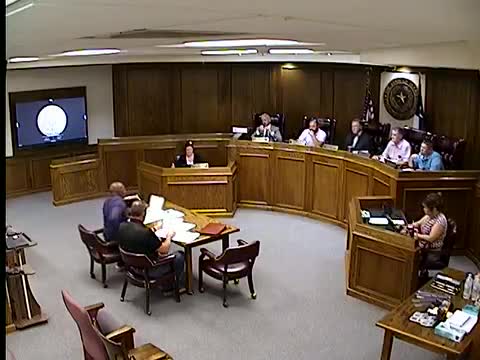
Lubbock County’s Road and Bridge department asked the Commissioners Court on Tuesday to approve a multi‑year plan and a $3.9 million net increase in its FY‑26 budget for equipment, contract services and programmatic work, including a priority list for converting certain gravel and reclaimed roads to caliche or pavement.
The request, presented by Roshani Moore, director of Road and Bridge, included a $50,000 increase in contract services for development and plat review; a $100,000 contingency tied to an ongoing RFP to replace aging fuel pumps; purchases of heavy equipment (including three motor graders, a loader and a chip spreader); and personnel upgrades for three truck driver/operator positions and a safety officer. Moore told the court the department is also pursuing a fuel‑management software system to integrate fuel, mileage and maintenance records if the RFP is awarded.
Why it matters: Road and Bridge handles county road maintenance that affects rural residents, school and commercial traffic and long‑term capital planning. The department said some requests respond to wear from increased truck traffic on routes near new development and to replace aging equipment that has driven up maintenance costs.
Court members and staff discussed specific program details and timing. Moore said the department’s goal is to return to 40 miles of caliche application per year (the department is currently about 10 miles short of that target) and that the $50,000 contract increase covers additional plat‑review work while a public‑works engineering position remains vacant. She said in‑house work has reduced some operations costs but highlighted remaining capital needs: a road reclaimer the county owns is aging and buying a new unit would be “a million‑plus‑dollar” purchase.
Commissioners raised several questions about road conversions, reclaimed ("wrap") roads and priorities. Commissioners discussed two larger engineering projects for which Moore asked for funding for engineering and design: improvements along 114th Street (to the city limits and U.S. 87) and 90 Eighth Street south of Wolfforth/Alcove — roads expected to face heavier traffic from nearby development. Moore warned that engineering plans often lead to later bonding for construction because the projects are likely to be multi‑million dollar efforts.
Precinct planning and timeline: Court members asked precincts to confer with residents and report back by July 15 with which roads they want converted to caliche or pavement so the department can produce accurate cost estimates. Moore and staff said full reclamation of the backlog will likely span two to three years, depending on equipment availability and capital funding.
Equipment and operations: Moore outlined a request to replace several pieces of heavy equipment and add a second fully equipped service truck to reduce the need to move equipment between locations. The department also reported a $100,000 decrease in an operations line (reflecting more in‑house work) and a $300,000 reduction in the vehicle operations line due to improved fuel pricing.
Personnel and pay: Moore proposed pay upgrades for three truck drivers who also operate heavy equipment and for a safety officer who has completed additional OSHA and related certifications. HR staff (Melody) flagged a pay‑compression concern: promoting or reclassifying those positions could place them above county peers in the same classification, which the court said would need further review and suggested might be discussed in executive session when personnel and compensation specifics are considered.
Fuel tanks and pumps: Moore said tank restoration is complete (tanks have been blasted and painted) and the open RFP covers replacing pumps and implementing a fuel‑management system; the budget includes $100,000 in contingency to cover possible RFP‑related shortfalls.
Program priorities and contingency planning: Moore provided the court a prioritized list of line items to cut if necessary, and the department emphasized those not highlighted are items the department considers essential. She told the court that some recent staffing increases were funded with one‑time ARPA (American Rescue Plan Act) dollars that were not continued as recurring revenue, which reduced the department’s recurring maintenance budget even as payroll increased.
Finance and reserves: Court discussion broadened into fund balance and reserve policy. Budget staff said auditors have reported the county’s fund balance is roughly five to six months of operating reserve; some advisers have recommended a six‑to‑nine‑month target. Commissioners noted that using fund balance to support recurring expenses is unsustainable and that large capital items would likely require bonding.
Administrative items: The court announced it planned a short executive session at about 2:38 p.m. under multiple provisions of the Texas Government Code to consult with counsel and to discuss real property, donations, personnel and other listed topics; court minutes record the session beginning at 02:38 and reconvening at 03:20.
The Road and Bridge presentation left the court with direction on specific next steps — precincts must report road‑conversion preferences by July 15, staff will return with refined cost estimates and the court will continue weighing capital purchases and personnel compensation in coming budget meetings.