Get Full Government Meeting Transcripts, Videos, & Alerts Forever!
Get email alerts on the Retail Safety Self Checkout topic
No spam. Unsubscribe anytime.
Long Beach council directs ordinance to require staff monitoring of self-checkouts after weeks of worker testimony
Summary
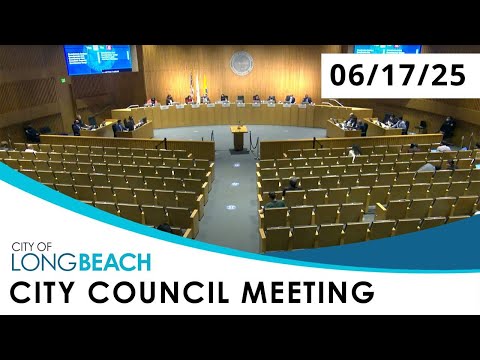
After hours of public testimony from grocery and drug store workers, the City Council voted to direct the city attorney to draft an ordinance (Option 4) requiring dedicated staff to monitor self-checkout stations; the measure includes a private right of action and required customer signage.
Long Beach City Council members voted to direct the city attorney to draft an ordinance setting minimum staffing and operational standards for self-checkout stations in grocery and retail drug stores, following lengthy public comment that included multiple accounts from frontline workers who said understaffed self-checkouts expose employees and customers to theft, harassment and violence. The motion instructs staff to prepare legislation based on Option 4 in the city manager’s memo and adds an enforcement mechanism through private right of action and required on-site signage explaining enforcement options.
Supporters told the council they experience harassment and physical threats at self-checkout areas. “I do not feel safe at work,” said Jose Espinosa, a store supervisor, describing repeated theft and confrontations that employees are not allowed to escalate. Union, faith and community groups urged the council to act; Steve Neal of the Los Angeles County Federation of Labor said the proposal is “thoughtful policy” that will protect workers and shoppers.
Why it matters: Council members and speakers said automation, reduced cashier staffing and retail theft have combined to produce unsafe conditions for workers and customers. Proponents argued local regulation is lawful under city police powers and necessary because many incidents are not reflected in police statistics when stores ask employees not to call law enforcement.
Council debate and amendments
Councilwoman Mary Zendejas, who introduced the item, pressed for a local standard after the city’s April roundtable on retail theft and repeated testimony from workers. Councilmember Joanie Ricks-Ode, a coauthor, said the council had heard worker accounts of verbal and physical abuse and that “safe stores are staffed stores.” The motion directed the city attorney to draft an ordinance modeled on Option 4 in the staff memo, and included a clarifying amendment accepted by the sponsor requiring on-site signage informing the public and workers about enforcement options and a QR link to resources. Councilmember Thrash Ntuk said the ordinance would include a private right of action so “workers and community members” could seek enforcement if obligations were not met.
Industry opposition and council questions
Retail industry representatives urged caution. Tim James of the California Grocers Association said the proposal “hurts grocers” and warned it would raise operating costs at a time when groceries are already expensive; he urged the council to wait for pending state legislation. He said existing company policies and state laws protect employees and that mandating staffing levels risks increasing prices and pushing businesses out of the city.
Councilmember Joanie Duggan, who pressed staff on data, said she worried an ordinance could shift responsibility for public safety onto store workers and asked whether increasing security staffing would be a better approach. Chief Hebeis (Long Beach Police Department) told the council that the department must rely on reported crimes and that underreporting is a key issue; he said additional staffing by retailers and better reporting both play roles in improving safety.
Outcome and next steps
Council members voted to approve the direction. The city attorney was instructed to prepare ordinance language reflecting Option 4 and the amendments accepted during the meeting (required signage and private right of action). The council asked for the draft to be returned within 30 days for review. The motion was made by Councilwoman Mary Zendejas and seconded by Vice Mayor Rex Richardson (motion carried).
Ending note
Supporters said the ordinance is aimed at reducing understaffing, reducing theft through visible staff presence, and improving customer service. Opponents representing major retailers warned of higher costs and urged reliance on state policy or law enforcement; the council chose to move forward with a local ordinance draft nonetheless.