Get Full Government Meeting Transcripts, Videos, & Alerts Forever!
Get email alerts on the Archaeology topic
No spam. Unsubscribe anytime.
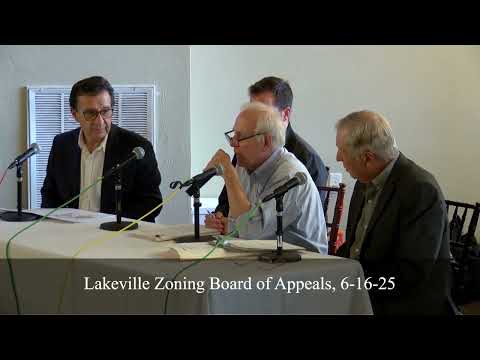
Lakeville zoning board hears archaeological review for Simmons Hill development, continues hearing to Oct. 20
Summary
The Town of Lakeville Zoning Board of Appeals reopened the continuation of Simmons Hill LLC’s comprehensive permit application at a meeting held at Loon Pond Lodge, focusing on an archaeological review of the proposed subdivision and public concerns. Duncan Ritchie of Public Archaeology Laboratory (PAL) presented a September 2024 memorandum summarizing a background archival review and walkover survey of the project area.
The Town of Lakeville Zoning Board of Appeals reopened the continuation of Simmons Hill LLC’s comprehensive permit application at a meeting held at Loon Pond Lodge, focusing on an archaeological review of the proposed subdivision and public concerns. Duncan Ritchie of Public Archaeology Laboratory (PAL) presented a September 2024 memorandum summarizing a background archival review and walkover survey of the project area.
Ritchie said PAL’s work identified zones of “moderate and low archaeological sensitivity” in the project area and that there are no known or recorded archaeological or historic sites on the Massachusetts Historical Commission (MHC) statewide inventory within the Simmons Hill parcel; the nearest recorded sites lie more than a half‑mile to the south across the town line in Freetown. He explained the inventory map showing recorded sites and the project’s half‑mile search radius could not be included in the public memorandum because the MHC restricts public access to that dataset to protect sites from unauthorized excavation or vandalism.
The applicant’s team provided project details. Robert Mather, attorney for the applicant, told the board the developer had revised the plan to reserve 25% of the 176 single‑family units — 44 units — for residents 55 and older, and that 25% of those age‑restricted units (11 units) would be designated affordable. Mohammed Itani, who identified himself as representing Simmons Hill, said the entire property is about 238 acres and the developer plans to build on 86 acres, or roughly 36% of the site. Itani added the typical lot size would be about 22,000 to 23,250 square feet and that some yard areas would remain wooded. He said the applicant expects to need about three months for engineering work and site testing, including perk tests and surveys.
Tribal representatives and local residents urged more outreach and additional review. The meeting record shows that Bettina Washington, identified as the tribal historic preservation officer for the Wampanoag Tribe of Gay Head (Aquinnah), joined part of the walkover survey. A speaker identifying themself as deputy TPO for the Narragansett Indian Tribe said tribal representatives were not included in some of the consultations and asked that federally recognized tribes be notified and consulted before the board accepts the report. A resident identified as Mary Jean (32 Freetown Street) questioned parts of PAL’s sensitivity ratings and asked what further study would follow if the project encountered sensitive areas. Ritchie responded that further study would typically be requested by the Massachusetts Historical Commission as a project moves forward and that PAL used environmental attributes such as soils, surface drainage and slope to assign sensitivity ratings.
PAL reported a small stone‑lined well in the southern approach to the property, which it classified as an isolated historic‑period resource. Speakers from local historical groups and tribal communities told the board they have records and photographs of stone features and petroglyphs in the area and asked the developer and reviewing agencies to consider that local knowledge in any further cultural resource work.
Board members and staff noted the limits of the board’s authority: engineering, site testing and limited disturbance for perk testing may occur on private property even while broader project permitting remains pending. The applicant said that if construction uncovers significant archaeological materials, work would pause and archaeologists would be invited back to evaluate and, where appropriate, preserve or fence features.
At the meeting’s close a board member moved and another seconded to continue the Simmons Hill hearing to Oct. 20 at 6 p.m. at the Lakeville Public Library. The motion passed on a unanimous voice vote; the applicant agreed to add the differential to avoid losing any of the statutory 180‑day review period. The board’s regular meeting schedule was unchanged and the hearing will resume on Oct. 20 at the library.
Votes at a glance: motion to continue Simmons Hill comprehensive permit hearing to Oct. 20 — moved by a board member, seconded by a board member; outcome: approved (unanimous voice vote).