Get Full Government Meeting Transcripts, Videos, & Alerts Forever!
Get email alerts on the Airport Finance Operations topic
No spam. Unsubscribe anytime.
Lewiston Airport projects $661K operating deficit after United pullout; director outlines capital plan and terminal options
Summary
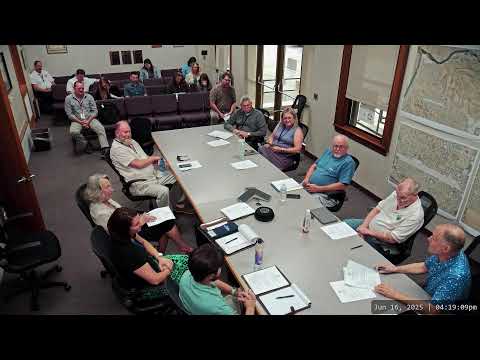
Lewiston Airport Director Michael Isaacs told a joint Lewiston City Council and Nez Perce County Commission meeting on June 17 that the airport anticipates a $660,981 operating deficit for fiscal 2025 after United Airlines ended service in February and outlined both short-term cost reductions and multi-year capital plans.
Lewiston Airport Director Michael Isaacs told the June 17 joint Lewiston City Council and Nez Perce County Commission meeting that the airport expects a fiscal-year operating shortfall of approximately $660,981 in fiscal 2025 after the loss of United Airlines service in February. Isaacs presented revenue and expense projections, planned capital projects largely funded through Federal Aviation Administration grants, and options from a recent terminal-area study.
Isaacs said the airport’s non-air revenue (land and non-aviation leases) is the largest single revenue source at about $336,000, followed by parking at $251,000 and aeronautical revenue at $168,000. He said the airport board voted to increase daily parking from $5 to $6 to remain competitive and recoup lost ancillary revenue after United left. "Last year, the board voted the airport board voted to increase our parking fees from $5 to $6 per day per car…to make up the loss revenue for less vehicles in the parking lot," Isaacs said.
Isaacs attributed an estimated $173,500 in lost revenue to United's departure and said prior to the pullout Lewiston fares had briefly been 33% above national averages then fell to 12% below, a swing he said equated to about $6 million in passenger savings compared with national averages. He said the airport reduced personnel costs by 8.53% (eliminating one full-time and two part-time customer-service positions) and is running a slim operations staff.
On capital work, Isaacs described a robust FAA Airport Improvement Program (AIP) entitlement that, combined with other bipartisan infrastructure funds, yields roughly $2 million available for improvement projects. He described planned work to add lighting to Taxiway Bravo (noting the airport’s FAA inspector observed the main taxiway currently lacks lighting), install new LED elevated runway lights, purchase snow-removal equipment and complete taxiway rehabilitation. He warned that FAA grants retain 10% until project closeout, requiring the airport to carry cash flow for months while awaiting final reimbursements.
Isaacs reviewed a terminal-area study that estimated remodeling the existing terminal could cost about $30–$38 million, while building a new terminal would cost about $56.6–$72.3 million; local matches would be roughly $6 million for a remodel or $15–$18 million for replacement, longer if areas are not FAA-eligible. He said FAA funding timing and multi-year environmental and construction cycles mean any major terminal project would take several years to reach completion.
Isaacs also presented local capital needs not covered by FAA funds — an estimated $80,000 in local projects including HVAC replacement, a mower deck, engineering services for non-FAA items, and security software replacement. He offered a parcel of surplus airport land on the north side of Bridal Canyon Road that had a recent appraisal figure discussed in the meeting (approximately $303,003.35) and said the airport board had FAA approval to surplus the parcel; disposition would require city and county surplus actions.
Council and commissioners raised questions about passenger service, charter activity, fuel revenue and prospects for attracting replacement scheduled service. Isaacs said one private company, Schweitzer Engineering Laboratories, is negotiating to base aircraft and facilities at the airport and could add fuel and ancillary revenues; their aircraft delivery is expected August 1. Commissioners discussed pursuing state legislation to increase grant support for regional airports to improve competitiveness in attracting airlines.
Isaacs said the airport maintains a roughly $300,000 cash reserve to cover grant reimbursement timing and that the airport will continue to pursue FAA grants and use passenger facility charges for local match funding. He noted some capital projects will not require a local subsidy but that larger terminal funding would require local commitment and FAA availability.