Get Full Government Meeting Transcripts, Videos, & Alerts Forever!
Get email alerts on the Housing Displacement topic
No spam. Unsubscribe anytime.
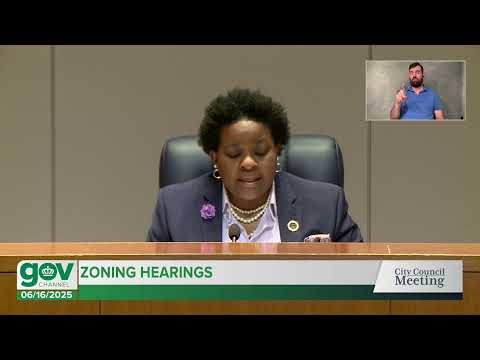
Residents urge council to halt displacement as Wood Partners rezoning proceeds in Forest Park area
Summary
At a June 16 Charlotte zoning hearing, dozens of Forest Park mobile home residents opposed a Wood Partners rezoning that they say would displace long‑time households; the petitioner and staff described a sale and a planned transition timeline and workforce housing commitments but no final council decision was taken.
A heated public hearing on a proposed Wood Partners rezoning in the Forest Park mobile home community drew residents, council members and developers to the Charlotte zoning meeting on June 16, 2025. The petitioner, Wood Partners, plans a mixed residential and neighborhood‑serving development on a 19.49‑acre site currently occupied by a mobile home park; the hearing drew sustained public comment opposing the rezoning on the grounds that it would displace long‑time residents.
The proposed rezoning would allow up to 395 residential units across two development areas and up to 25,000 square feet of nonresidential uses, staff and the petitioner said. Bridget Grant, land use consultant with Moran Van Allen, told council the plan includes transportation and on‑site infrastructure commitments, a proposed roundabout at Prosperity and Benfield roads, new sidewalks and bike lanes, and design commitments for housing. "There is a workforce housing commitment within this project," Grant said, describing a pledge that at least 5% of units in Development Area 2 would be income‑restricted at no greater than 80% AMI for at least 15 years.
Why it matters: Forest Park residents said they face direct, imminent displacement if the land sale and potential redevelopment proceed. Dozens of residents and community organizers urged the council to delay or reject the rezoning until relocation plans and protections are firmly in place. Council members and staff framed the issue as both a land‑use hearing and a separate property‑owner decision: the current mobile home park owner notified residents in May 2024 that park operations were expected to cease in May 2026, a notice residents said they received with uneven communication.
In public comments, several residents described decades of residence and investment in their homes and pleaded for options that would let them stay. "I've been living in the park for 20 years. I found neighbors that I consider friends and family," resident Joshua Teague said. "I don't want to leave the park. I want to stay with my family. Please vote no on this." Leonel Chavez described family ties and the financial impossibility of finding comparably priced housing in the area: "Nowhere in the Charlotte area will we find $500 affordable housing and apartments around Forest Park cost three times that for a studio," he said.
Petitioner response and timeline: Carter Siegel, speaking for Wood Partners, said the current property owner — who has owned the park for about 60 years — notified residents in spring 2024 of an intent to close operations and sell. Siegel said that notification provided up to two years for residents to plan and that Wood Partners has committed to working on a transition plan and to offer assistance. "We will do everything. We will work hard to try to make that transition reasonable," Siegel said in a brief rebuttal.
Legal and policy context: Staff said the petition is inconsistent with the 2040 policy map's Neighborhood 1 place type but recommended approval "upon resolution of outstanding issues related to site design," noting the site's adjacency to an activity center and the petition's transportation and workforce housing commitments. Council members noted that statutory and regulatory protections for mobile homeowners are set at the state level; Council Member Braxton Mayfield (appeared as "Miss Mayfield" in the transcript) referenced a state bill described in testimony as a Mobile Home Park Act (House Bill 1110 was cited in the hearing) and asked staff and the city attorney to clarify residents' rights under state law.
Council and staff follow‑up: Council members asked the petitioner and staff for concrete relocation and anti‑displacement measures, and for a staff follow‑up on (1) the number of occupied units and affected residents, (2) the lease terms residents hold on their lots, and (3) whether state law provides protections for mobile homeowners that apply here. Staff said the owner delivered a notice in May 2024 and that the two processes — the owner's notice of intent to sell and the city's rezoning process — are distinct but overlap in effect. Petitioner representatives said relocation assistance plans and weekly coordination with social service partners would be part of discussions going forward.
Outcome and next steps: The council closed the hearing for this petition on June 16; no final zoning vote was recorded at the meeting for this petition. Several council members said they would continue engagement over the summer, and staff agreed to provide follow‑up materials on legal protections for residents, an occupancy count and potential anti‑displacement measures to inform any future decision.
Ending note: Residents leaving the meeting asked for continued, direct contact with their district council member and with staff for assistance. Council members urged residents to remain engaged and to use upcoming outreach meetings to press for concrete relocation plans and documentation of any assistance the petitioner and property owner will offer.