Get Full Government Meeting Transcripts, Videos, & Alerts Forever!
Get email alerts on the Federal Relations Grants Healthcare Pnnl topic
No spam. Unsubscribe anytime.
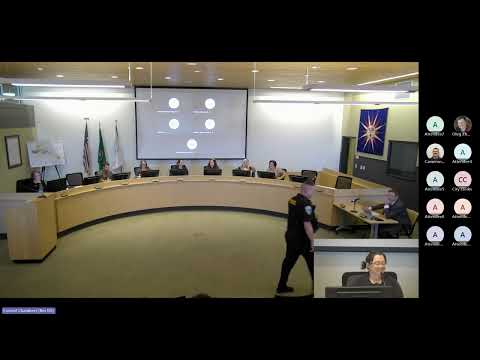
Congresswoman Emily Randall meets Sequim leaders to discuss grants, PNNL, health care and HUD concerns
Summary
Congresswoman Emily Randall visited Sequim at the Sept. 22 work session to hear local leaders, describe federal gaps in grant communication and advocate collecting local stories to oppose grant rescissions. She highlighted support for Pacific Northwest National Laboratory and warned about federal health‑care funding cuts.
Congresswoman Emily Randall, who represents the district in the U.S. House, spoke at a Sequim work session Sept. 22 and urged local officials to share on‑the‑ground stories about the effects of federal grant pauses and agency funding changes.
Randall said one of her biggest challenges in Congress has been a lack of advance notice when federal agencies pause or cancel grants. “One of the biggest challenges right now is that…federal agencies, they don't always give Congress a heads up when they're gonna cancel a grant or put a pause on funding,” she told council members. She asked municipal officials to forward grant‑related information and local impact stories so her office can push for reversals or raise issues in committee.
Randall discussed the role of local storytelling in oversight and advocacy. “Local stories are so powerful,” she said, describing how her office shares constituent examples in committee records, newsletters and letters to the administration. She said her staff collected accounts during the first funding pauses after the presidential inauguration and used them in oversight work.
Scientific research and national laboratories were a focal point. Randall said she and her staff contacted the Pacific Northwest National Laboratory after proposed national budget cuts and that “so far, none of the budget or position cuts have directly impacted PNNL's work here in Sequim, but we will stay really on top of that.” She described PNNL as “high on our list” for congressional attention because of its local employment and research roles.
Health‑care funding also drew extended remarks. Randall, a member of the House Oversight Committee, said cuts to Medicaid and other public‑payer programs threaten rural providers. “When you have a hospital system or a health care clinic that is 70‑plus percent public payer, then cutting public health care funding…is like throwing a wrecking ball at their budget,” she said. Randall said preserving Medicare and Medicaid was a top priority and that her office seeks stories and testimony from providers and patients to amplify in Washington, D.C.
Randall explained how residents can reach her office (randall.house.gov) and described constituent services handled by a three‑person casework team that has returned more than $4 million this year to district residents in matters such as IRS issues and VA benefits.
Councilors asked about specific topics including HUD‑managed housing. Randall said she would help make federal contacts and noted uncertainty as the HUD regional office in Seattle has been closing staff positions. “Everyone deserves a safe place to live,” she said, and offered to work with the council to connect with federal officials on property maintenance and voucher oversight.
Randall outlined her committee assignments — Oversight and Natural Resources — and several caucus activities tied to ferry systems and the Northwest Straits. She also described legislative progress: an office‑authored amendment added to the National Defense Authorization Act and several bills referred to committee on tribal trust land transfers.
The visit included brief remarks from residents and local leaders and concluded with an offer from Randall’s office to host youth and council members in the district or in Washington for shadowing opportunities.