Get Full Government Meeting Transcripts, Videos, & Alerts Forever!
Get email alerts on the Composting Feasibility topic
No spam. Unsubscribe anytime.
Consultants recommend Moto Park site, phased plan for county composting facility
Summary
GT Environmental recommended an 18‑acre turned‑windrow composting facility at the Moto Park closed‑landfill site, with a phase‑1 mulching/grinding startup, estimated site‑development costs of about $275,000, and potential operation by spring 2026 if grant funding is secured.
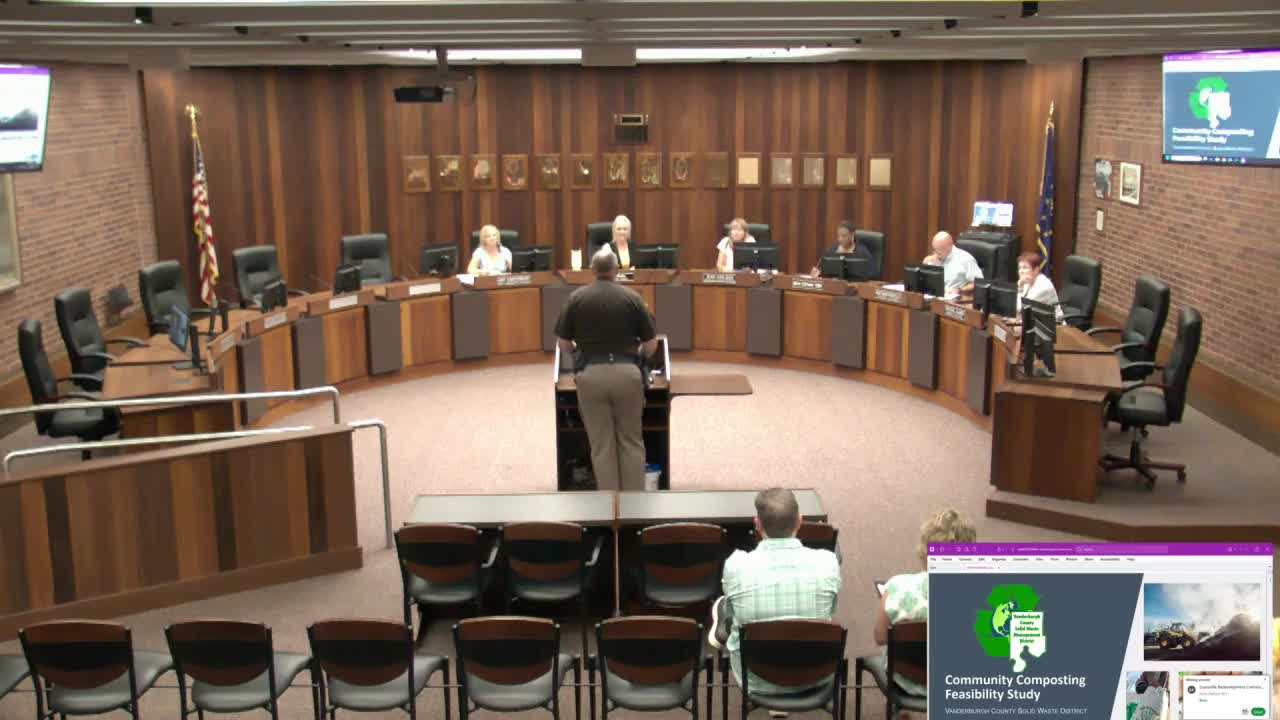
GT Environmental told the Vanderburgh County Solid Waste Management District Board that a 15‑month study shows Vanderburgh County could recover substantial yard waste and that Moto Park’s closed‑landfill area is the most viable in‑county site for a new composting facility.
Danny Schaus, project manager for GT Environmental, presented study findings that the county currently generates an estimated 2,800 tons a year of yard trimmings sent to landfill (state‑scale estimate applied to county population) and that combined resident and municipal operations generate over 30,000 tons annually with only about 3,000 tons currently captured.
Schaus recommended a turned‑windrow system and estimated the facility would need roughly 18 acres for year‑round processing; he identified a Moto Park parcel of about 47–48 acres owned by the City of Evansville and described that the recommended area is an old, closed landfill north of the park that already has passive gas vents. He said the engineering review with Pioneer Environmental and Engineering found the site feasible.
Costs and revenues: Schaus said site development would be roughly $275,000 and that an incoming tipping fee modeled at about $20 per ton, combined with compost sales at about $15 per cubic yard, would make the project viable. He presented two financial scenarios: without grant funding the modeled operation would run at a loss of about $115 per ton; with roughly 50% grant support the model turned profitable, with a modeled return of roughly $130 per ton.
Phasing and next steps: GT Environmental recommended a phased approach. Phase 1 would start with grinding and mulching and municipal/county operations only; phase 2 would expand to resident and commercial drop‑off and possibly curbside collection later. Schaus said, assuming grants and approvals, a site could be operational by spring 2026. He recommended pursuing state grants from the Indiana Department of Environmental Management and other sources to subsidize upfront equipment and site costs.
Board questions focused on staffing, hours of operation, whether the facility would accept public drop‑off in later phases, and how the facility would relate to existing in‑county operations (Mesker Park Zoo and the Lobster Meadows/Republic Services permited site). Staff noted the initial plan is to start as a municipal/county operation and later broaden access after building operational experience and securing funding.
The presentation did not require an immediate vote; board members indicated they would consider the findings and that any shared‑cost city/county proposal would likely require additional presentations to the county council and city leadership.