Get Full Government Meeting Transcripts, Videos, & Alerts Forever!
Get email alerts on the Nuisance Code Amendment topic
No spam. Unsubscribe anytime.
Resident raises legal concerns as council advances nuisance code amendments (G 2025-14)
Summary
A resident raised Fourth Amendment and procedural concerns about proposed changes to the Evansville municipal nuisance code (Ordinance G 2025-14) during public comment; city staff said much of the proposed language reflects existing authority and clarifications were offered on scope.
Ordinance G 2025-14, a first-reading amendment to Chapter 8.1 (Nuisance) of the Evansville Municipal Code, was on the council’s consent agenda and subject of public comment on July 14.
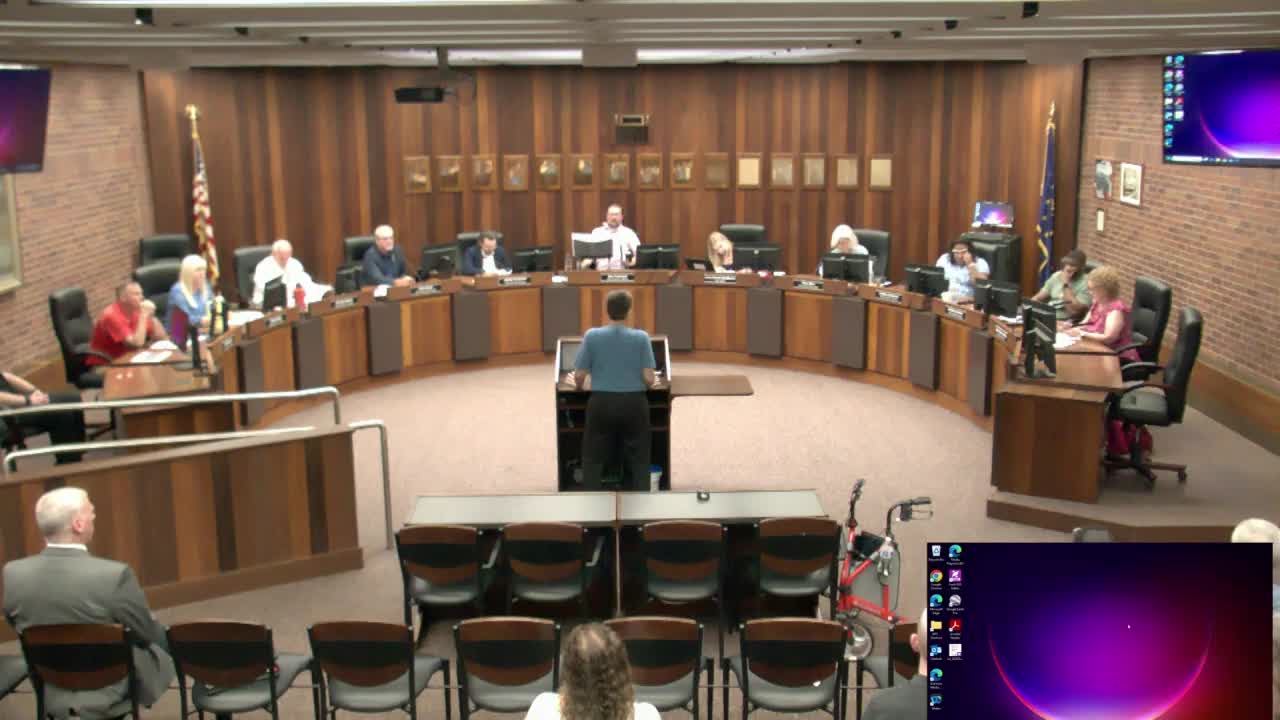
Angie Bullock, 825 East Mulberry Street, addressed the council during public comment and said she had saved four houses with restraining orders and expressed concern that new language in section 8.100.03(b) could authorize inspections or entry based on a determination that a property is "abandoned." Bullock asked how a property would be labeled abandoned, cited Fourth Amendment concerns about warrantless entry, and questioned whether the ordinance could permit interior searches when the cited violations are exterior issues such as overgrown weeds and disrepair.
A council member replied that much of the amended ordinance represented existing language rearranged to allow the Building Commission to clean up trash and debris on property, not to authorize entry into occupied homes, and invited Bullock to discuss details after the meeting. The council also noted a change from "10 business days" to calendar days in a timing provision and offered to discuss access and process clarity with the resident.
The ordinance had been placed on the consent agenda for first reading and was carried forward in the packet; the council adopted the consent agenda. Council and staff comments during the exchange indicated an intent to limit administrative inspections to areas pertinent to the complaint or based on court-approved inspection warrants and to avoid unlawful entry. Bullock asked to follow up for clarity on how inspectors will determine abandonment and how interior entry will be constrained by the Fourth Amendment and state law.
Because this was a first-reading item on the consent agenda and substantive legal concerns were raised in public comment, council staff indicated they would provide Bullock additional clarification on the ordinance language and enforcement process.