Get Full Government Meeting Transcripts, Videos, & Alerts Forever!
Get email alerts on the Public Defense And Caseload topic
No spam. Unsubscribe anytime.
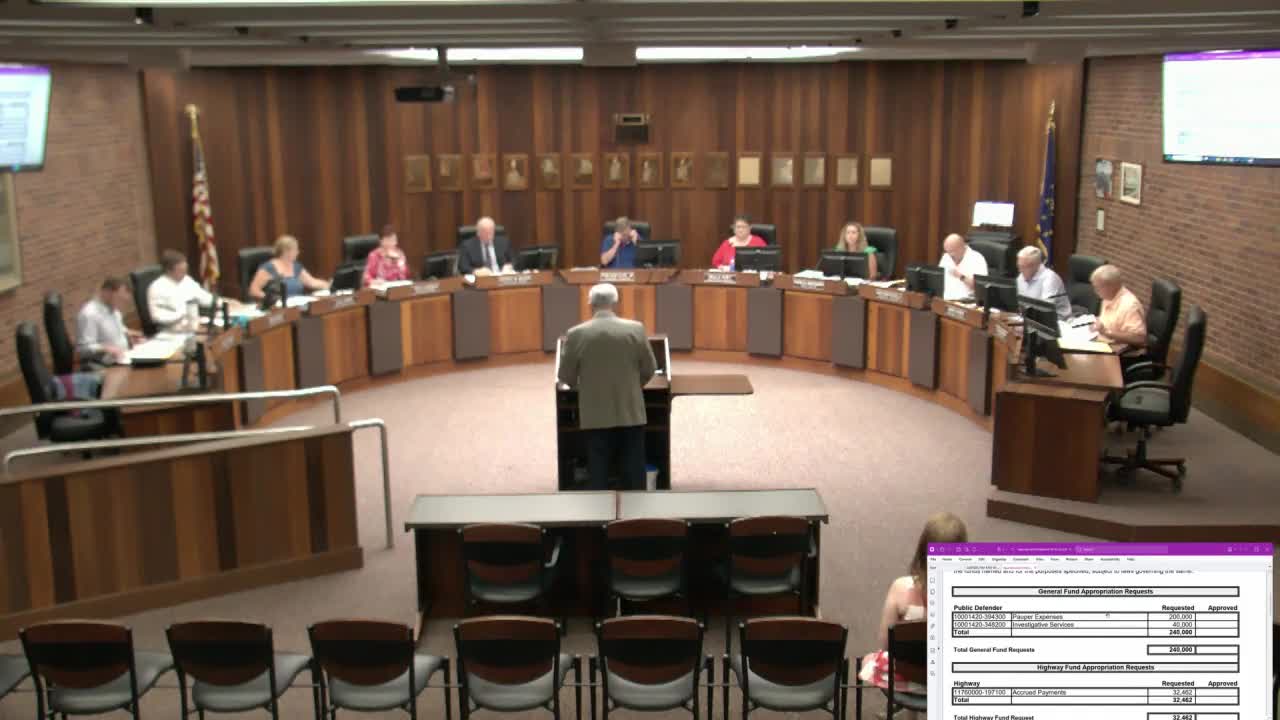
Commission discusses appropriation for public defenders as county confronts high felony caseload
Summary
Commissioners heard a request to appropriate funds to cover bills for special public defenders and outside investigative and litigation‑support services while staff and commissioners described high felony counts, data collection underway and possible longer‑term fixes.
Vanderburgh County commissioners on an agenda item reviewed an appropriation request intended to pay outstanding bills for special public defenders and consultants handling investigative and litigation‑support work. The request was presented during the meeting; no final vote or dollar amount for this line item was recorded in the public transcript.
The item drew extended discussion about the county’s high felony caseload, how judges determine indigency, and whether the county can better target public‑defender appointments. A representative from the public defender’s office said, “we don't take appointments unless the court gives them to us,” and explained courts make an indigency determination that considers more than bond amount. The same speaker noted operational limits: when a defendant posts a bond that could be used to retain private counsel the office files motions asking the court to relieve the public defender’s office, but judges do not always grant those motions.
The public defender’s office told commissioners that current caseloads exceed staffing guidelines. “If we take the 2024 caseload appointments that we received and we plug them into that public defender commission maximum caseload per quarter, we're 7 full time attorneys short today. Or if we go with part time lawyers, we're 14 short,” the office reported.
Commissioners and staff said the problem is multi‑departmental and not limited to funding the defender’s office. Commissioner James and other commissioners pressed for more data and for conversations with judges and the prosecutor’s office about appointment practices. County staffers Joey and Nick described an ongoing data‑collection effort; Joey said the review was broader than just the defender’s office because the county’s felony filing rate per capita is high and multiple departments’ practices likely feed the demand for appointed counsel.
Suggested longer‑term remedies discussed included: asking state legislators to clarify eligibility standards for indigency, resurrecting a bond‑commissioner interview process like one used decades ago, and requiring more systematic pretrial screening so judges have standardized information at first appearance. Commissioners also discussed the tradeoffs of any new screening mechanism, noting additional personnel and administrative costs would themselves require funding.
No formal vote or final appropriation outcome for the public‑defender request was recorded in the transcript. Presenters said they would continue to collect and format data for the county’s upcoming budget process so commissioners could assess funding options alongside operational reforms.