
Mustang to move autism-specific classrooms into students' home schools; district adds behavior supports
Get AI-powered insights, summaries, and transcripts
Subscribe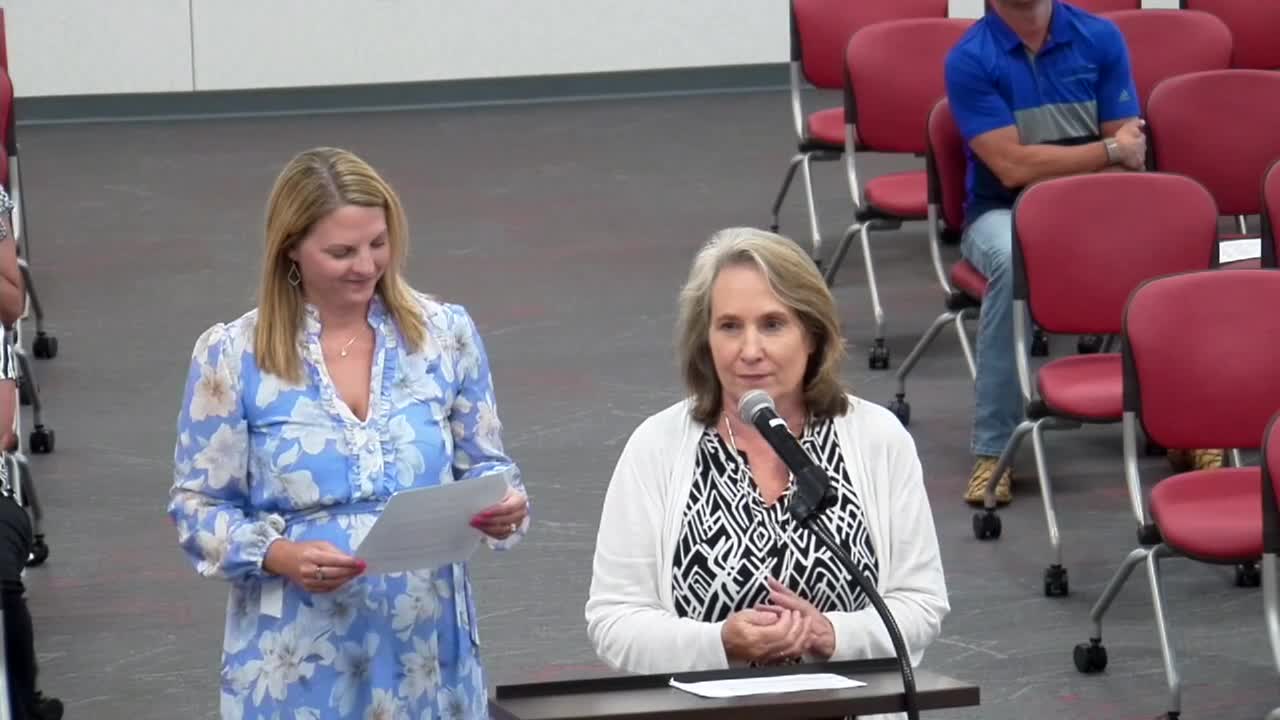
Summary
District staff said 15 students previously served in two autism-specific classrooms housed at a single site will be transitioned to their home schools with added behavior interventionists, paraprofessionals and monitoring; staff noted IEP-team meetings and continued individualized services.
Karen Wilson, executive director of student services, and Stephanie Matthews (special education lead) briefed the board about a planned reconfiguration of the district's autism-specific programming.
Background and change: The district said it served 15 students in two autism-specific classrooms housed at a single elementary site during the previous school year. Citing guidance from the Oklahoma State Department (Special Education division) and the district's inclusion goals, staff described a shift away from placement decisions driven by disability labels toward individualized, team-driven decisions focused on each student's needs and data.
Transition process and supports: For each of the 15 students, special education teams scheduled IEP meetings with parents, principals, related-service providers and staff to review individualized education programs (IEPs) and behavior intervention plans and to plan transitions to students' home schools. The presentation listed the receiving sites for those students (as recorded in the staff handout) and said some students will remain at the original site if that is their home school.
Site-level investments: To support transitions, the district added special-education staff and behavior interventionists at receiving sites, expanded the behavior interventionist team districtwide, and assigned paraprofessionals to classrooms as needed. Summer training opportunities were provided (IRIS Center resources and OSDE sessions) and the district scheduled autism-specific and behavior-intervention training for special-education teams upon staff return in August.
Monitoring and parental engagement: Staff said they will monitor student progress throughout the year and adjust services as needed. During board questions, members asked whether parents were invited to and attended IEP meetings for the 15 students; staff said invitations and multiple meeting opportunities were offered and that they would verify attendance records and report back to the board. Staff emphasized that services listed on IEPs remain in force and that placement changes do not reduce students' services.
Safety and escalation: Staff explained layers of supports for staff responding to behavioral incidents: site-level core staff assigned for behavior, district behavior interventionists who can be deployed, crisis-prevention teams at each site and continued access to the special-education teacher responsible for each student's program.
Ending: Board members requested a follow-up summary showing how many staff (teachers and paraprofessionals) each receiving site received and how those positions will be used to support students. Staff agreed to provide that breakdown and to confirm which parents attended the planning meetings.