Get Full Government Meeting Transcripts, Videos, & Alerts Forever!
Get email alerts on the Public Safety Marine topic
No spam. Unsubscribe anytime.
Council hears how new Florida laws will change marine enforcement and speed derelict‑vessel removals
Summary
Chief Curry told the Vero Beach City Council the Florida Voter Freedom Act narrows the circumstances for stopping boats without probable cause but will not significantly hamper local marine safety work; council also heard that SB 164 expands tools and penalties for derelict vessels and could speed removals.
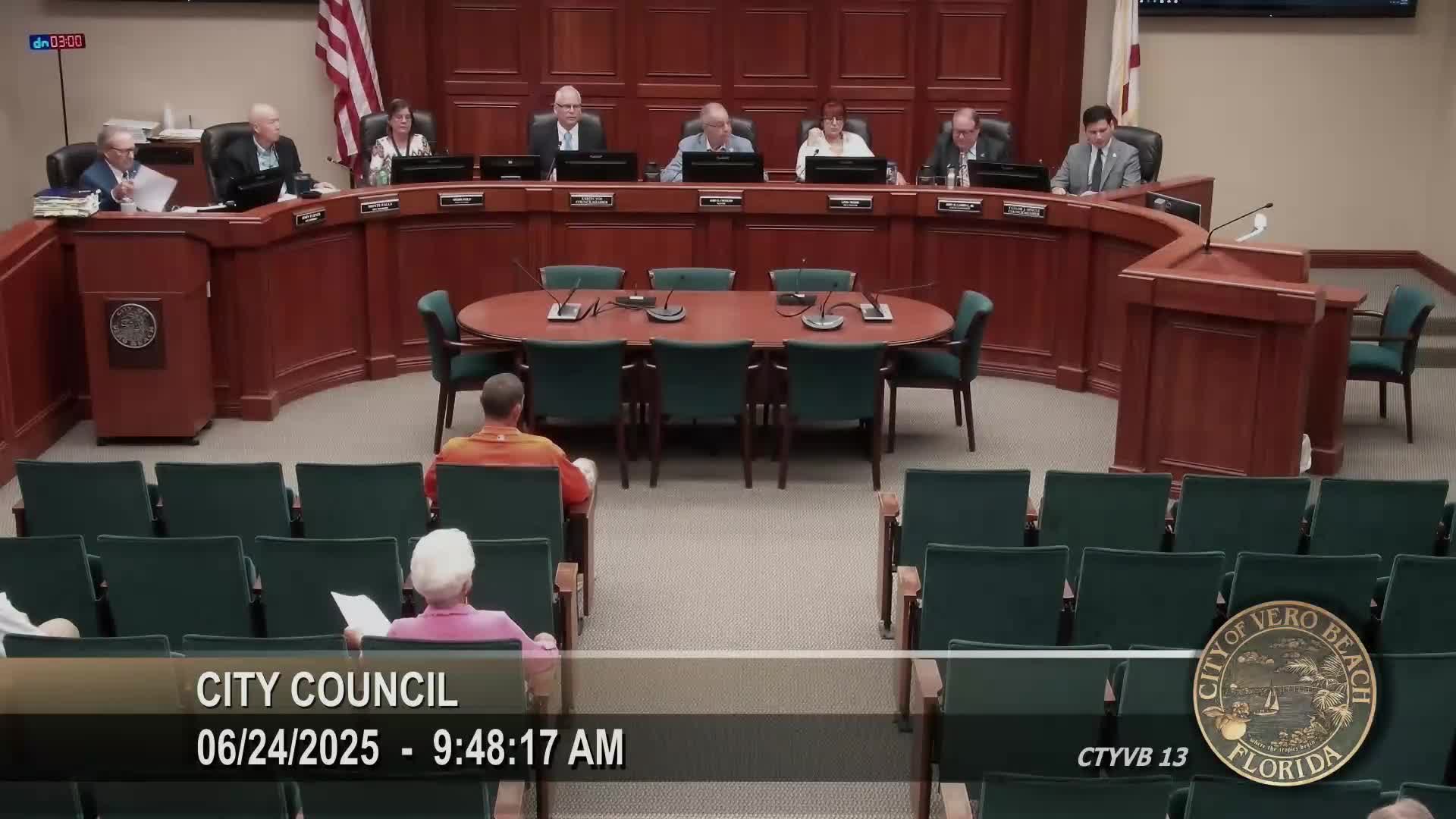
The Vero Beach City Council received briefings on two recent state laws that affect waterway enforcement.
Council member Carroll asked Police Chief Curry to explain the impact of the Florida Voter Freedom Act, which the chief said was enacted May 19, 2025. Chief Curry said the law restricts officers’ ability to stop and inspect vessels without probable cause, putting boat stops closer to the same probable‑cause standard used for vehicle stops. He told council the department will continue marine safety enforcement using probable‑cause stops, consent contacts and decal checks when registrations and decals are displayed.
Curry said the department has made recent staffing gains—one full‑time marine officer—and does not expect “a large difference” to day‑to‑day operations, calling the change “a tool we no longer have in our toolbox” but not a crippling restriction. He noted the decal program (registration decals displayed on vessels) may help reduce the need for some stops. The chief also said the law becomes effective July 1.
Council then heard a separate presentation on SB 164 (derelict vessel enforcement) from Keith Drewitt, who said the bill adds enforcement tools, raises penalties and creates new offenses for at‑risk, public‑nuisance and derelict vessels. Drewitt said there are currently about 18 vessels between the bridges that the city tracks; he cited a state study that estimates average removal costs at about $750 per foot and said statewide funding for removals has increased from a few million dollars in 2020 to $13 million in 2024. Drewitt said SB 164 will allow earlier intervention—including a vessel turn‑in program—and that state and local agencies can now take swifter action to prevent vessels from sinking and becoming expensive to remove.
Chief Curry and staff reported coordination with the Florida Fish and Wildlife Conservation Commission and with local marine officers; Lieutenant Brian Karrinsky, Officer Hurtado and Sergeant De Acetas were identified as marine team members. Council asked staff to present to the marine board and to continue coordinating with state agencies as rules and decal timetables are finalized.
No formal action was taken; council requested continued updates from the police and marine team.
Direct quotes on the record included Chief Curry’s statement: “We will continue to do that” (regarding making waterways safe) and Drewitt’s remark that derelict vessels “are just the tip of the iceberg.”