
Mustang schools outline AI guidance, plan staff training and limited paid access to ChatGPT and Gemini
Get AI-powered insights, summaries, and transcripts
Subscribe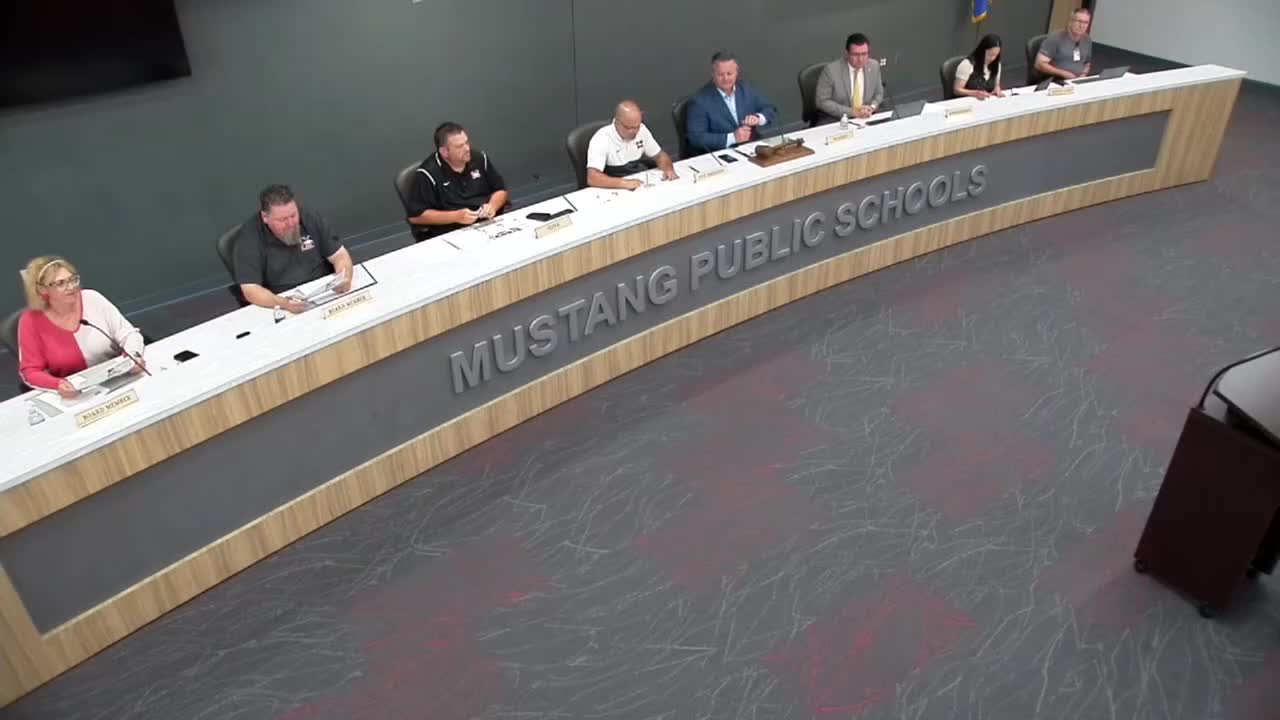
Summary
The district presented an AI implementation overview, proposed guidance (not a binding policy), plans for professional development this fall, and limited paid accounts for staff to support classroom use while protecting student data.
Shanda, the district director of instructional technology, told the Mustang Public Schools Board of Education that the district has begun a phased rollout of artificial-intelligence tools for teachers and students and will present a general AI policy to the board in coming weeks.
Shanda said the district has used AI-generated materials experimentally and has observed limits in accuracy and images. She described a year of research and outreach — including attendance at the TCEA technology conference in Austin, webinars, and conversations with other districts — and said Mustang decided to create "guidelines" rather than an immediately binding policy so the rules can be updated quickly as the technology changes.
The presentation outlined three uses demonstrated during 2024–25: classroom editing and revision (senior English teachers allowed students to use AI for editing and drafting with teacher direction), an assessment-driven phonics intervention workflow (described in the presentation as a program called UFLY), and teacher-facing productivity tools that generate sub plans, quizzes, question sets and differentiated lesson materials. Shanda showed examples of browser extensions and teacher platforms she used in demos and told the board the district tested no-cost versions first before moving to paid accounts for staff where needed.
Why it matters: District leaders said AI will be part of students' lives and that the district wants to adopt it “responsibly” — by protecting student information, clarifying acceptable classroom uses and training teachers to spot errors in AI output.
What the guidance will cover: Shanda said the draft guidance addresses acceptable and strictly prohibited uses, academic integrity, and data protection. The guidance document referenced in the presentation is titled "MPS AI guidance"; Shanda said the district will bring a general AI policy to the board so the district can add guardrails (for example, to prevent inadvertent disclosure of student data into public models) while avoiding overbroad bans that would block instructional uses.
Professional development and access: District staff plan multiple short PD formats (30-minute after-school sessions, video-based modules, a mini‑conference and “tech takeout” instructional packets) beginning in October. The academic team will survey early adopters and "guinea pig" teachers to gather implementation feedback. Shanda said the district will make paid versions of ChatGPT and Gemini available to principals and some staff because many teacher-facing tools draw on those underlying models; district teachers may continue to use free versions on their own.
Academic integrity and classroom practice: Board members asked how teachers would prevent misuse and cheating. Shanda said teachers must design assignments with tools in mind and suggested rubrics that specify when students may use AI (for example, for editing versus for original composition). She quoted Alvin Toffler (paraphrased in the slide deck) about the need to “learn, unlearn and relearn.”
Limits and accuracy: Shanda repeatedly emphasized that AI outputs require human review; slides shown during the presentation included examples where images or text produced by AI were inaccurate or contained misspellings. She said some districts reported it took about a year to fully implement classroom AI workstreams.
Examples shown: The presentation demonstrated teacher tools that generate sub plans, create differentiated student activities, and produce answer keys on request. Shanda named several third‑party tools during the demo (names reproduced as used in the presentation) and said the district tested free versions before considering paid subscriptions.
Next steps: The district will finalize the written guidance, bring a general AI policy to the board for consideration, begin targeted PD in October and monitor teacher adoption. Shanda said the district would protect student privacy and update guidance as the technology evolves.
Ending: Board members thanked Shanda and asked for follow-up materials; Shanda said the academic team — including Ryan McKinney, Stacy Metcalfe and Jeremy Shrick (members of the internal AI kickoff team identified during the presentation) — will continue piloting uses and reporting results to the board.