Get Full Government Meeting Transcripts, Videos, & Alerts Forever!
Get email alerts on the Grants Administration topic
No spam. Unsubscribe anytime.
LCCMR reviews 2025 session outcomes and DNR explains fiscal oversight for trust fund grants
Summary
The Legislative Citizen Commission on Minnesota Resources received a session report summarizing 2025 legislative actions affecting the Environment and Natural Resources Trust Fund and a detailed briefing from the Department of Natural Resources on how DNR administers and monitors pass-through trust fund grants.
The Legislative Citizen Commission on Minnesota Resources on July 18 reviewed legislation enacted during the 2025 session affecting the Environment and Natural Resources Trust Fund (ENRTF) and heard a detailed presentation from the Department of Natural Resources on fiscal oversight of pass-through grants.
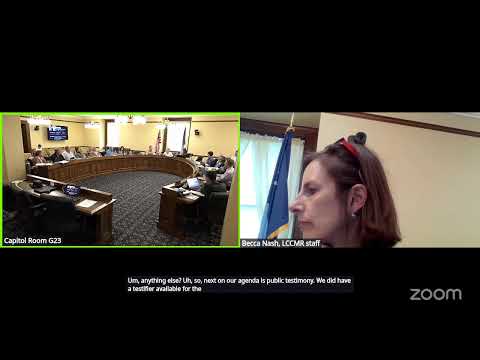
Director Becca Nash told the commission the session produced several items members should note, including E and RTF funding for the new community grants program (authorized by the 2024 ballot measure additional draw from the fund). She said the program will be administered by the DNR and is separate from the LCCMR recommendation process. Nash also summarized bills introduced during the session that would have used ENRTF funds for projects not recommended by LCCMR and a bill that would have changed LCCMR policy; none of those bills passed. She also summarized recently passed laws that increase reporting and training requirements tied to suspected fraud, allow agencies to withhold or cancel grants where fraud is suspected, and prohibit retaliation against employees who report misuse of funds.
The commission then heard a fiscal-administration briefing from Catherine Sherman Hohen, grants manager in the DNR Office of Management and Budget Services (pass-through grants unit). Sherman Hohen described the division of responsibilities: LCCMR retains programmatic oversight and work-plan review, while DNROMBS provides additional fiscal administration and compliance for pass-through grants to non-state entities (nonprofits, tribes, local governments and others) including payment, monitoring and financial reconciliation.
Sherman Hohen said the DNR manages roughly 2,220 active grants annually and about 150 trust-fund grants in an average year; her pass-through unit for trust funds has five staff (the manager, two coordinators and two grant specialists). She listed key pre-award and post-award controls that guide DNR grant work: conflict-of-interest checks, pre-award financial reviews (now statutorily required for many grantees), grant agreements that incorporate LCCMR work plans and budgets, a DNR reimbursement manual, and an Attachment E for land-acquisition requirements.
Sherman Hohen emphasized practical differences for ENRTF grants: statutes allow some grantees to begin work before a fully executed state grant agreement, but reimbursement rules mean they cannot be paid until a signed agreement is in place. The DNR generally pays on a reimbursement basis, requires timely status reporting, conducts annual monitoring for most trust fund grants and performs at least one financial reconciliation during a grant. Monitoring may be virtual or on-site and includes review of progress against the approved work plan.
Sherman Hohen also described new statewide requirements, effective for grants beginning after April 1, 2024, that require posting grant closeout evaluations on the Department of Administration website and additional record retention to facilitate audits.
Why it matters: the session changes and the DNROMBS briefing clarify both new sources of ENRTF-funded activity (the DNR-administered community grants) and the operational checks that will govern pass-through recipients. Commissioners asked how the DNR separates its fiscal pass-through role from other DNR grant-making and how suspected fraud reports are handled; Sherman Hohen said the pass-through unit is deliberately separated from programmatic divisions and that DNR works with internal audit, the Office of the Legislative Auditor and the Bureau of Criminal Apprehension as appropriate.
Looking ahead, staff said it will continue assessing the sessionlaw changes for specific impacts on how LCCMR-funded projects are managed and will bring additional implementation guidance to future meetings if appropriate.