Get Full Government Meeting Transcripts, Videos, & Alerts Forever!
Get email alerts on the Facility Use Policy topic
No spam. Unsubscribe anytime.
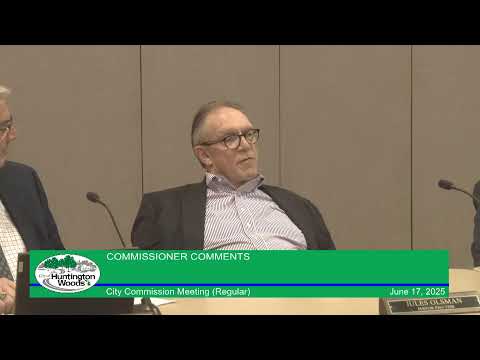
Huntington Woods hears wide public comment on draft facility use policy; commission to vote in July
Summary
City commissioners on June 17 heard more than a dozen residents on a draft facility-use policy that would centralize reservations and set limits on advance bookings, fees and cancellation authority. Commissioners did not vote; staff will revise the draft and return in July after additional board review and written input.
Huntington Woods commissioners on Tuesday discussed a draft city facility use policy and heard extensive public comment from residents concerned about fees, resident priority and content neutrality. The commission opened the topic for public input but did not vote; commissioners said they will accept written comments and return the policy for consideration at the July meeting.
The draft consolidates room reservations under a single application manager in the city clerk’s office, sets a minimum five-day processing window and an eight-week maximum for advance bookings (both with manager discretion to waive), and gives the commission authority to adopt a fee schedule by resolution. The draft also retains language allowing the city to cancel reservations when necessary for public health, safety or administration.
Supporters and critics told the commission the document needs revisions. Opponents said the draft, as written, would eliminate resident priority and recognized community-group exemptions and could create backdoor limits on speech. Pam Haxton, a Huntington Woods resident, said charging fees to recognized city organizations would burden groups with limited funds and exclude older residents who use small rooms for card games. “If the seniors can’t use it, what are you really accomplishing?” she said.
Several speakers urged keeping the library’s existing meeting-room policy, which they said follows American Library Association (ALA) guidance on limited public forums. Mary Maslin Cooper and others said earlier, incorrect versions of the draft were posted online, causing confusion; Commission staff confirmed a corrected version was posted and provided copies at the meeting.
Local commenters raised specific legal and procedural concerns. Steve Gold cited several draft sections (including provisions on capacity, application timing and cancellation) and warned they could be applied unevenly to deny access for controversial viewpoints. Don Greenspan and others praised language requiring content neutrality but opposed a clause he said gave the city “unlimited discretion to cancel a meeting.” Sid Carden urged narrowing the phrase that an approval “would threaten the public health, safety and welfare,” calling it overly broad and suggesting a standard such as a “credible threat.”
Commissioners and staff responded to specific points. Mayor Robert Paul said no fee schedule has been adopted; the commission would have the option by resolution to set fees and could exempt particular rooms or groups. Mayor Pro Tem Olsman clarified that Chapter 169 of state law (the Michigan Campaign Finance Act) limits fundraisers by candidates but does not bar town halls or nonfundraising political events. Commissioner Roselle said the draft preserves a priority for residents and allows the library and parks & recreation to add facility-specific rules so long as they do not conflict with the overarching policy. City Manager Matt Zalewski said in practice staff in each facility would continue to help residents identify available dates; requests would be funneled to the clerk for final approval, not handled solely online.
The commission will accept written comments by email at citycommission@hwmi.org and said it will circulate the draft to the library advisory board, recreation advisory board and the anti-racism committee for additional review. The item will be on the July agenda for a formal vote.
The discussion clarified several operational points without producing a formal decision: the fee structure is not final; recognized community groups were listed by commenters and could be treated specially but the draft removes automatic special status; the five-day/8-week timing and cancellation language remain under review; and the city manager may waive timing limits for unusual circumstances.