Get Full Government Meeting Transcripts, Videos, & Alerts Forever!
Get email alerts on the Community Survey topic
No spam. Unsubscribe anytime.
Washington County survey: residents give county high marks for quality of life; taxes and housing top concerns
Summary
Washington County’s 2025 community survey found an all-time high overall quality‑of‑life score of 80 on a 0–100 scale, while taxes and affordable housing rose as leading concerns. The county will publish the full report and a one‑page summary for staff and the public.
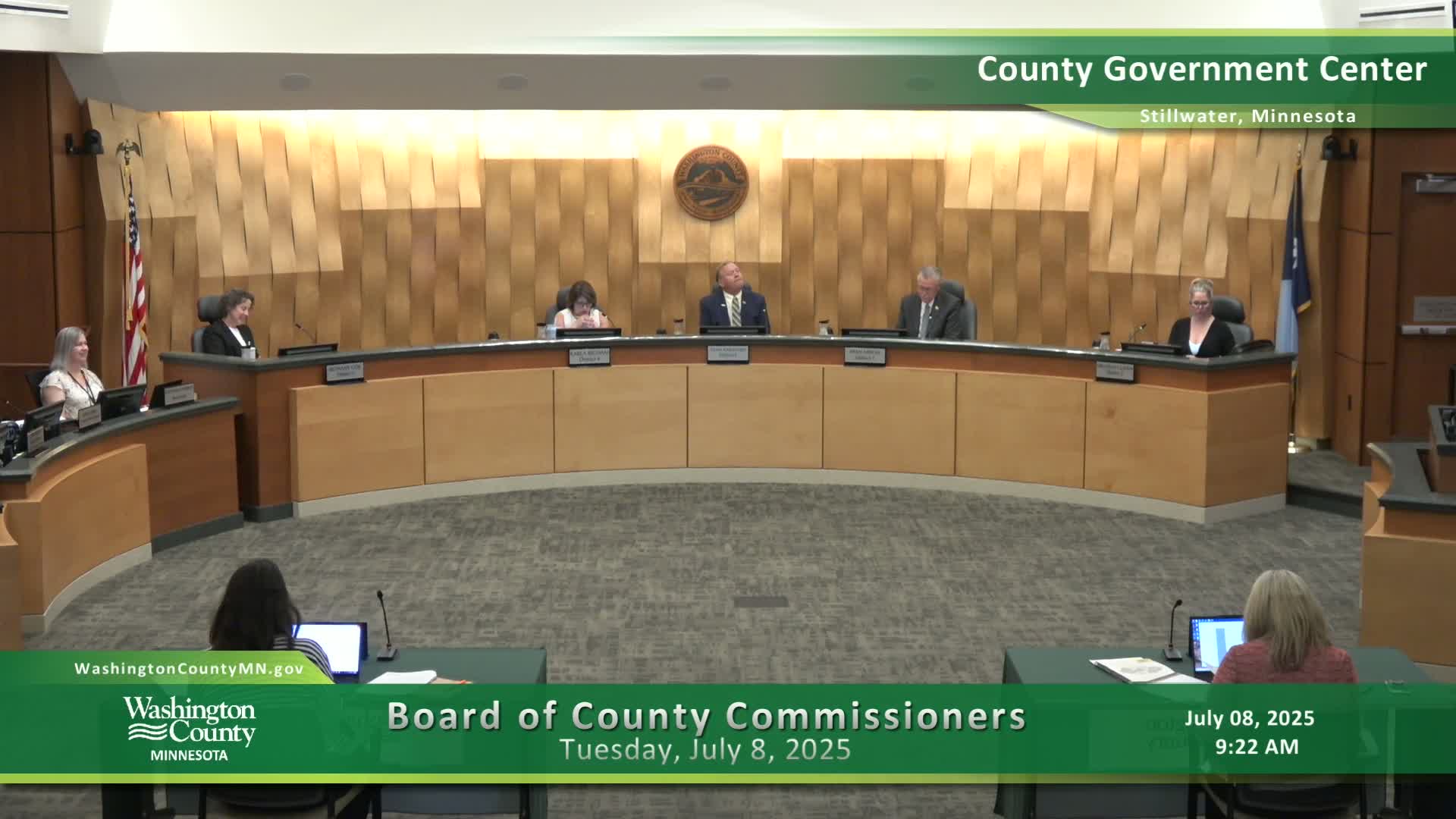
Washington County officials presented results of the 2025 Washington County Community Survey at the July 8 county board meeting, showing residents gave the county an average quality‑of‑life score of 80 on a 0–100 scale and named taxes and affordable housing among their top concerns.
The county contracted with POCO/National Research Center (NRC) to conduct the statistically valid survey. Erin Caldwell, the consultant who presented the findings, told the board that "Washington County received an average rating of 80 for the overall quality of life." Caldwell said 4,500 households were selected and "673 households completed the survey resulting in a 15% response rate," and that results were weighted to reflect county demographics.
Survey highlights: residents ranked Washington County’s overall quality of life above national county benchmarks and highest among participating Minnesota peer counties. Concern about taxes rose sharply since the last survey, while concern about crime decreased from 2022 levels. Specific measures noted by the consulting team included a housing stability concern score of about 57, an affordable housing problem rating near 53, a property‑crime average rating of 41, and a violent‑crime rating of 32 on the 0–100 problem scale. Water quality and drinking water were also highlighted; quality of drinking water scored about 62.
Caldwell emphasized how the scores are calculated: they are average ratings on a 0–100 scale rather than simple percentages. She explained margins of error for the survey are roughly plus or minus two points on the 100‑point scales and that the report includes comparisons to national county benchmarks and to four partner counties in a joint powers agreement.
Board members used the presentation to discuss how the survey will inform budget and policy decisions. Commissioner Claussen said she would like more detail on employment and job trends in future surveys. Commissioner Begum told staff she frequently uses survey findings for budgeting and thanked county employees for the results reflected in the data. Kelly Matzak, senior planner in the Office of Administration, said the full report and printed copies would be posted to the county website the same day and that staff will prepare a one‑page summary to make key findings more accessible.
The consultant recommended that departments review demographic and district breakouts in the full report to inform program planning. County staff told the board they will distribute the report to department heads and post accessible summaries online.
The board did not take formal policy action during the presentation; staff will use the survey results in ongoing budget and program planning.