Get Full Government Meeting Transcripts, Videos, & Alerts Forever!
Get email alerts on the Strategic Planning topic
No spam. Unsubscribe anytime.
School board adopts new strategic‑planning language as public debate over DEI and book vetting continues
Summary
The board approved revisions to Chapter 1 that set updated vision, mission and key priorities for 2025–2029. Dozens of public commenters urged protections for library funding, diversity, equity and inclusion language, and transparency on charter spending and policies.
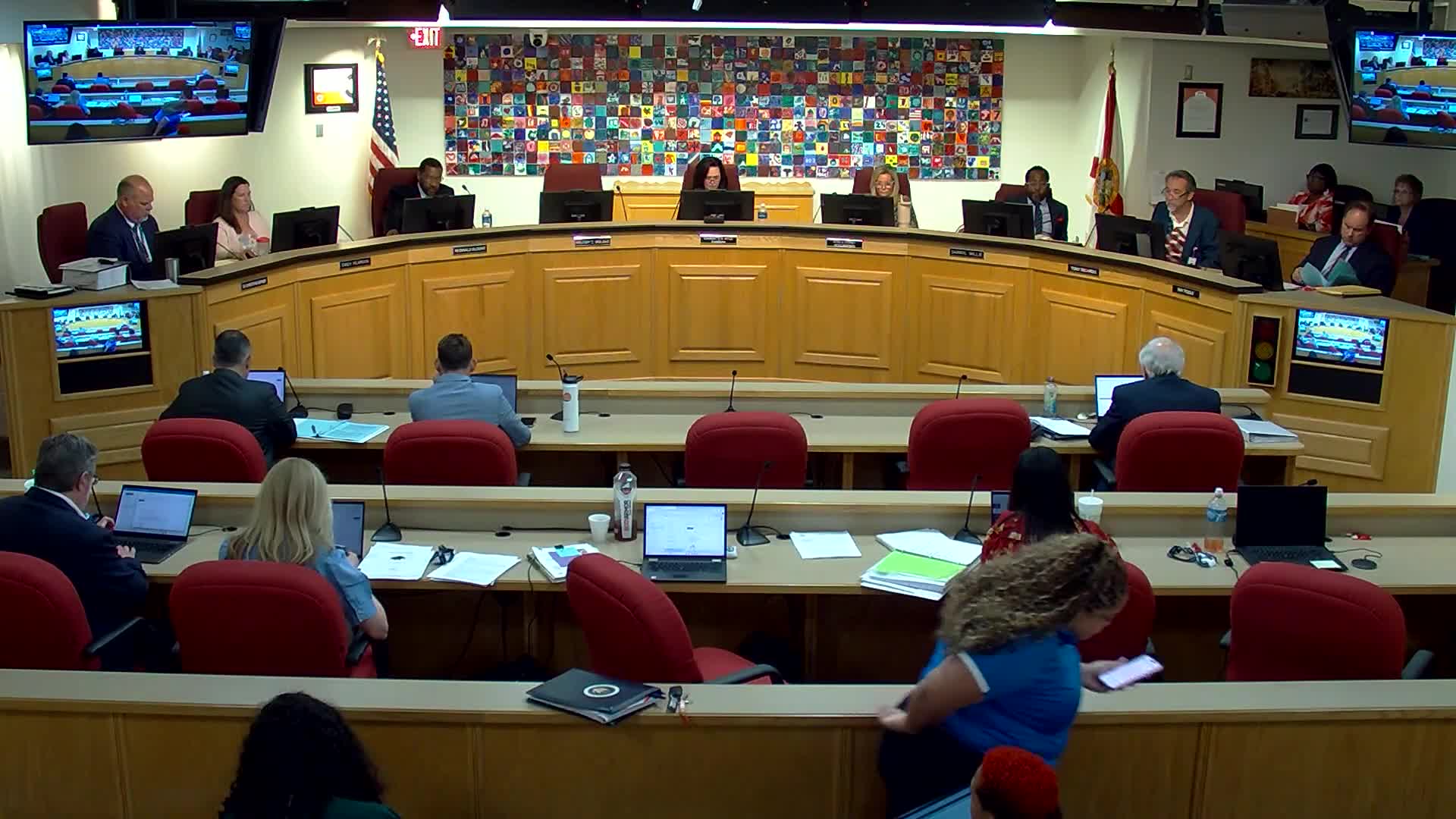
The Duval County School Board on July 1 moved its district vision, mission and strategic‑planning language into a revised Chapter 1 of the board manual, adopting new "key priorities" for 2025–2029 that emphasize safety, academic growth, workforce recruitment and community partnerships.
Board members approved the package in a 7-0 vote after a public hearing that drew broad comment on topics ranging from library funding to diversity, equity and inclusion (DEI), charter spending and classroom book vetting.
Under the revisions, the district’s strategic plan components were restated to emphasize a multi‑year time horizon and to replace the previous "goals and guiding principles" format with a list of board‑approved key priorities. The key priorities enumerated in the revised policy include: fostering a safe learning and workplace environment; advancing student academic growth and achievement; recruiting, developing and retaining teachers and district staff; improving operational and financial efficiency; ensuring effective communication; and enhancing community collaborations.
The public-comment period was lengthy. Several speakers urged continued support for DEI and inclusive school climates. "Diversity, equity, and inclusion is a framework used by organizations to promote the fair treatment and full participation of all individuals," said Denise Scott, a long‑time Jacksonville volunteer. Students and family advocates also appealed for full funding of school libraries and certified media specialists. Emily Gideon, who identified herself as a media specialist, called for restored funding after categorical supports were cut and for full‑time media specialists in every school.
Others urged additional transparency around charter school spending and raised concerns about proposed policy language that some speakers said could be used to limit classroom materials. "Public school parents are tired of the double standards and uneven playing fields," said Katie Hathaway, who urged the board to prioritize public‑school funding over vouchers.
Board members said they expected the approved changes to provide the framework for the superintendent and staff to develop measurable key performance indicators and a management oversight calendar. The policy text adds that KPIs will be included as annual targets in the performance plans of the superintendent and relevant staff and that updates will be provided to the public through workshops and noticed meetings.
Board discussion acknowledged concerns raised by speakers. Board Member Willie said she supported continuing the underlying recruitment and diversity work even if specific words about "diverse teachers" were not preserved verbatim in the revised chapter: "I really believe that our teacher population, our workforce population should reflect" the student population, she said.
The adoption was moved by Vice Chair Carney and seconded by Board Member Blunt; the vote was 7-0.