Get Full Government Meeting Transcripts, Videos, & Alerts Forever!
Get email alerts on the Employee Health Clinic topic
No spam. Unsubscribe anytime.
Okaloosa district advances plan for employee clinic with Marathon Health; contract presented for approval
Summary
District staff presented a proposed contract with Marathon Health to operate an employee clinic funded from the district's medical fund; staff described expected benefits (reduced claims, zero co‑pay for employees), an initial single South End modular site, and a target go‑live in January 2026.
School district staff presented a proposed employee health clinic contract with Marathon Health and described plans to site a modular clinic on the South End, fund the contract from the district medical fund, and aim for a Jan. 26 go‑live date if approved.
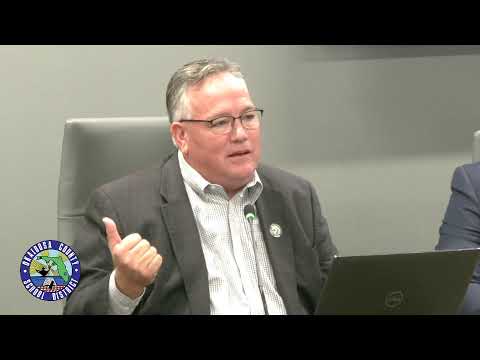
Director of Risk Management Sarah Cato and benefits oversight members said the clinic would offer primary‑care‑style services for employees and covered family members (patients age 2 and up), with an emphasis on reducing claim costs and lowering employee time away from work. Cato explained the model: “If we're redirecting those claims through this contracted agreement with Marathon Health…it never hits the claims. So in essence, the return on investment is supposed to be those savings.”
Board members and benefits oversight leaders stressed the clinic would be operated by Marathon Health (not district staff) and that patient privacy is protected under HIPAA. Dr. Hale and others noted many public entities use Marathon, and Escambia County cited as a nearby example. The board heard the clinic would be available to employees and covered family members, that Marathon would staff and operate the facility, and that the district would use the self‑insured medical fund to finance initial setup and operations.
Operational details discussed included a modular building delivered and sited on district land with some site‑preparation costs borne by the district; Marathon would handle module delivery and medical build‑out. Cato gave a typical implementation timeline: begin work July 1 if approved, with a target operational date in late January 2026 to align with open enrollment and employee education efforts. The board discussed expanding from an initial single location to additional sites later if utilization supports expansion.
Board members asked about access, hours and cost to employees; staff said a key incentive would be a $0 co‑pay for district employees on the district plan and that Marathon can provide virtual visit options and lab services. Julie Perry confirmed the contract and site work would be funded from the district’s medical fund — reserve dollars accumulated as the district moved to partial self‑funding of health care.
The contract and scope appear on the consent agenda for board consideration; in the workshop the item was presented and discussed but a formal vote is not recorded in the workshop transcript excerpt.