Get Full Government Meeting Transcripts, Videos, & Alerts Forever!
Get email alerts on the Land Use topic
No spam. Unsubscribe anytime.
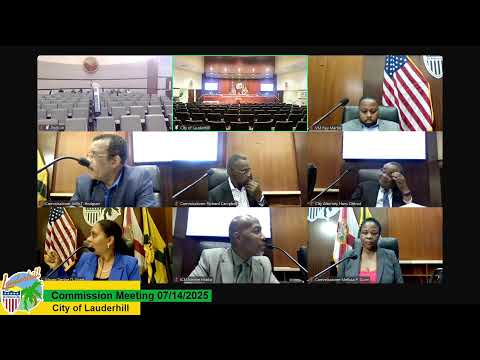
Lauderhill commission approves first reading to reallocate residential units for Inverrary golf-course redevelopment
Summary
The City of Lauderhill on Monday approved on first reading an ordinance to amend the city and county future land‑use maps so a roughly 131‑acre portion of the inactive Inverrary golf course can be developed for residential use while a remaining portion of the site would be retained and reopened as a golf course and public green space.
The City of Lauderhill on Monday approved on first reading an ordinance to amend the city and county future land‑use maps so a roughly 131‑acre portion of the inactive Inverrary golf course can be developed for residential use while a remaining portion of the site would be retained and reopened as a golf course and public green space. The vote was 5‑0.
The change approved for first reading would reassign a block of residential entitlements that already exist in the broader dashed‑line land‑use area to the Inverrary property. City staff and the applicant gave different figures: city planning staff described a proposal that referenced about 800 dwelling units within the amended pods, while the applicant asked the commission to allocate a maximum of 888 units to the parcel. The applicant said the full project covers roughly 295 acres; about 131 acres are included in the residential amendment, about 164 acres would remain as golf course and open space, and 13.2 acres of new parkland are proposed inside the residential pods.
The item advanced as a legislative, not quasi‑judicial, matter. Planning consultant Craig Pinder told the commission the amendment does not increase the total number of units already shown in the county’s dashed‑line area and that, in his view, concurrency and public‑facility capacity tests had been satisfied for water, sewer and schools. The city’s Planning & Zoning Board failed to reach a recommendation in June on the application (a 3–3 split) and the matter therefore came to the commission without a formal board recommendation.
Applicant land‑use counsel Hope Calhoun told the commission the filing is “the very first step” in a long entitlement process that will produce more detailed traffic, drainage and site plans for later hearings. She said the team is already preparing traffic studies and drainage designs and that the developer will run the land‑use entitlement process “at our own risk” while the parties concurrently seek to amend record restrictive covenants that currently constrain use of some parcels within Inverrary. Calhoun also said the developer has met repeatedly with area homeowners’ associations and that negotiated commitments include cash contributions to a master HOA and ongoing funding from home sales to support reserves.
The first reading prompted lengthy public comment from homeowners and residents who said they bought properties for views of the golf course, expressed concern about traffic, drainage and wildlife displacement, and asked for clear maps showing exactly which neighborhoods would abut new housing. Tom Harney, identified at the meeting as president of the Inverrary Association, urged the commission to approve the amendment and told commissioners the redevelopment would restore the golf course and return ownership of the course to the community. Several speakers said they had not seen specific engineering and traffic studies and asked the developers and the city for more outreach.
Commission discussion mixed support for preserving an 18‑hole golf course with recognition that the application is only a land‑use step. Commissioner John (last name on file) framed the decision as personal and said he would “push and fight with every energy” to prevent Inverrary from decaying further; other members asked for diligent follow‑up on traffic, drainage and HOA agreements.
What happens next: if the commission adopts a second reading later in the city’s process, the application will be transmitted to the Broward County Planning Council and Broward County Commission for county hearings, then to state reviewers, back to county second reading, and finally return to the Lauderhill Commission for the city’s final adoption step. The applicant and staff said traffic and drainage studies are already underway and will be presented in follow‑up hearings.
Votes and procedural notes - Item: Ordinance 25O‑07122, comprehensive‑plan map amendment for portions of the Inverrary (Embraer/Emery) golf‑course property. - Commission action: Approved for transmittal/first reading, 5‑0. - Planning & Zoning Board: split vote (3–3) — no formal recommendation. - Next steps: county transmission, county/state review, county second reading, return to city for final adoption.
Local voices: Resident Dorothy Rich said the project raised unresolved questions for owners on Embraer Boulevard and asked, “I don't want my taxes to go up,” while Tom Harney, Inverrary Association president, told the commission the developer had pledged to restore and turn the golf course over to the community.
Why it matters: The amendment would convert a long‑idle amenity into a mixed golf‑course and residential project that proponents say will generate new property tax revenue and reopen the course; opponents say the plan risks increased traffic, higher local costs and loss of private green space without fully vetted traffic, drainage and fiscal studies.
Provenance: City attorney reading of Item 1 (land‑use amendment) opened the topic; final recorded vote was entered later in the meeting after public comment and commission debate.
Ending: Commissioners stressed the application is a high‑level allocation, not a final site plan, and said they expect more detailed engineering, traffic and HOA documentation in subsequent hearings.