Get Full Government Meeting Transcripts, Videos, & Alerts Forever!
Get email alerts on the Water Infrastructure topic
No spam. Unsubscribe anytime.
Staff outlines denitrification, tertiary‑treatment options; initial cost estimates range from $60M to higher for full program
Summary
City staff described regulatory drivers and preliminary cost estimates for denitrification at Porterville's wastewater treatment plant and the broader tertiary/recycled‑water program, noting a three‑year exemption and the need to seek grants and low‑interest loans for implementation.
Porterville staff briefed the council on options to meet state discharge requirements for nitrates and on a broader recycled‑water/tertiary treatment plan that could protect potable supplies and create irrigation water for parks and other uses.
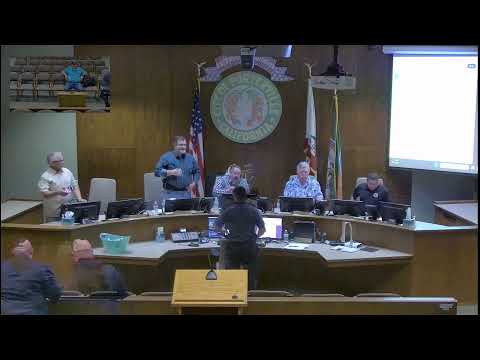
Assistant City Manager Michael Knight told the council that the immediate denitrification component under study would be a membrane bioreactor (MBR) implementation and that, "the $60,000,000 is essentially just an implementation of an M B R filter that will remove nitrates out of our wastewater discharge." Knight said the denitrification step is one element of a larger tertiary plan that staff have estimated at roughly $160,000,000 in earlier feasibility work and that the city will need design and environmental work to apply for grants and low‑interest loans.
Why it matters: the Regional Water Quality Control Board has discharge requirements tied to the city’s reclamation area; staff said the city is currently operating under a limited exemption and must show progress toward a solution or risk enforcement actions later.
Key technical and financial points - Denitrification estimate: staff cited a ~$60 million preliminary cost for denitrification (MBR) at the wastewater plant. - Program scale: when combined with distribution, UV/filtration and related upgrades a prior compilation of projects suggested a larger program on the order of roughly $160 million (staff said they will update cost estimates during design and environmental steps). - Exemption status: staff said the city has filed for a limited exemption and is "3 years under the exemption"; staff warned enforcement or further action could follow if the city does not show implementation progress. - Funding approach: staff urged an iterative approach—complete environmental and design phases to qualify for state and federal grants and low‑interest financing before committing to full construction. Knight said, "there's always a way" to combine grants, loans and local funding but cautioned there is no single grant that will likely cover the entire program.
Council concerns and technical notes Council members asked whether surrounding unincorporated areas using septic systems were treated differently; staff replied the city is accountable for discharges from its own wastewater operations and for the reclamation area defined in the studies.
Staff also discussed alternatives to direct potable reuse, including expanding recycled water for irrigation, exchanges and cropping changes on city land that could leverage any surplus tertiary water created.
Ending: Staff said the near‑term work will be environmental review and preliminary design to produce up‑to‑date cost estimates and to position the city to pursue grant funding. No formal decisions or votes were taken at the meeting.