Get Full Government Meeting Transcripts, Videos, & Alerts Forever!
Get email alerts on the Pine Ridge Metro District topic
No spam. Unsubscribe anytime.
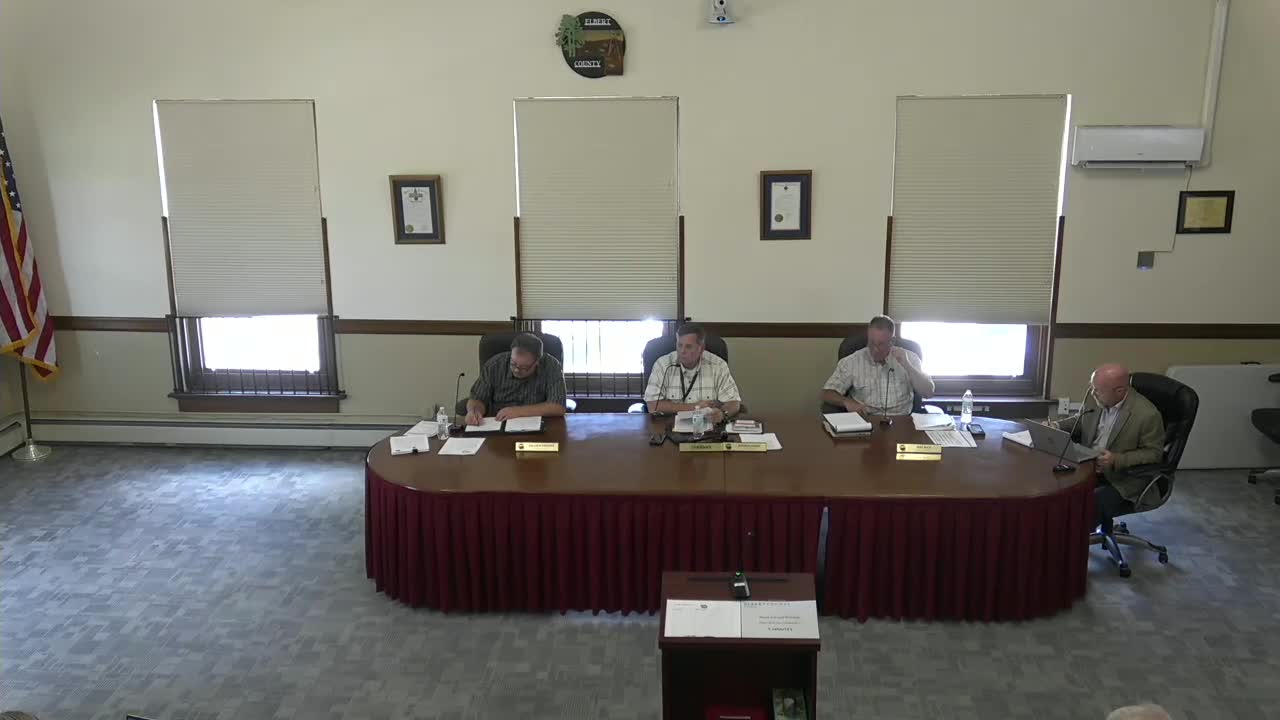
Elbert County approves Pine Ridge Metropolitan District service plan, authorizing up to $70 million in debt
Summary
The Elbert County Board approved the Pine Ridge Metropolitan District service plan, authorizing a maximum general‑obligation debt limit of $70 million and a maximum debt levy of 65 mills; operations and maintenance levy is uncapped. The approval applies to the service plan only; district formation and bond issuances require later actions.
Elbert County commissioners voted to approve the Pine Ridge Metropolitan District service plan, a financing framework for an approximately 420‑acre development west of the town of Elizabeth.
The approved service plan authorizes a total general‑obligation debt limit of up to $70,000,000 and sets a proposed maximum debt levy of 65 mills (computed on a baseline assessment-rate example). The plan does not cap the district’s operations and maintenance (O&M) mill levy. The numerical plan included in the service plan illustrates a hypothetical buildout of 186 single‑family homes with an average market value of $1,050,000 and a one‑time tap & facility fee of $35,000 per home in the numerical example.
Graham Anderson of Anderson Analytics, the county’s financial reviewer on the item, told the board the numerical plan is a hypothetical “bond sizing” illustration prepared by an investment bank; the plan showed two principal bond issuances sized at the proposed maximum debt levy and a projected net of roughly $31.3 million in bond proceeds available for eligible public improvements under that illustration.
Suzanne Minster, attorney for the petitioner, explained the purpose and limits of a service plan and emphasized that metropolitan districts are governmental entities subject to Colorado open‑records, open‑meetings and audit laws. "Metropolitan districts are governmental entities," Minster said. "Once formed, we are subject to all the same local government laws that you folks are subject to." She also reminded the board that approval of a service plan does not itself create the district; formation requires a separate district‑court petition and election process.
Developer representative Jim Marshall and other proponents said the numeric plan uses assumptions about market values, inflation and bond market parameters; they told the board those assumptions can change and that actual bonding terms will be set at issuance. Marshall noted the district expects to be the water and sanitation provider if those improvements are not taken by other entities and that the developer plans to establish reserve accounts to cover long‑term maintenance costs if the county does not take roads and other infrastructure for maintenance.
Public commenters and several commissioners pressed for clarity on several points: whether streets would be conveyed to and maintained by the county or retained by the district, how much O&M mill levy would be needed to cover major repairs decades from now, what reserve accounts (if any) would be established, and what fees future homeowners might face. A public commenter asked directly whether a reserve account would be established for future major road repairs; the developer group said they planned to include reserve funding and to complete a rate‑and‑reserve study as the project details are finalized.
Commissioners discussed the statutory criteria for approving a service plan and the practical need for flexibility in long‑range financing assumptions. After discussion, the board voted to approve the Pine Ridge Metropolitan District service plan; commissioners and petitioners noted that the approval sets parameters for future financing but that specific bond issuances, rates and operational levies will be determined later and remain subject to additional legal and financing steps.