Get Full Government Meeting Transcripts, Videos, & Alerts Forever!
Get email alerts on the Running Creek Rv Storage topic
No spam. Unsubscribe anytime.
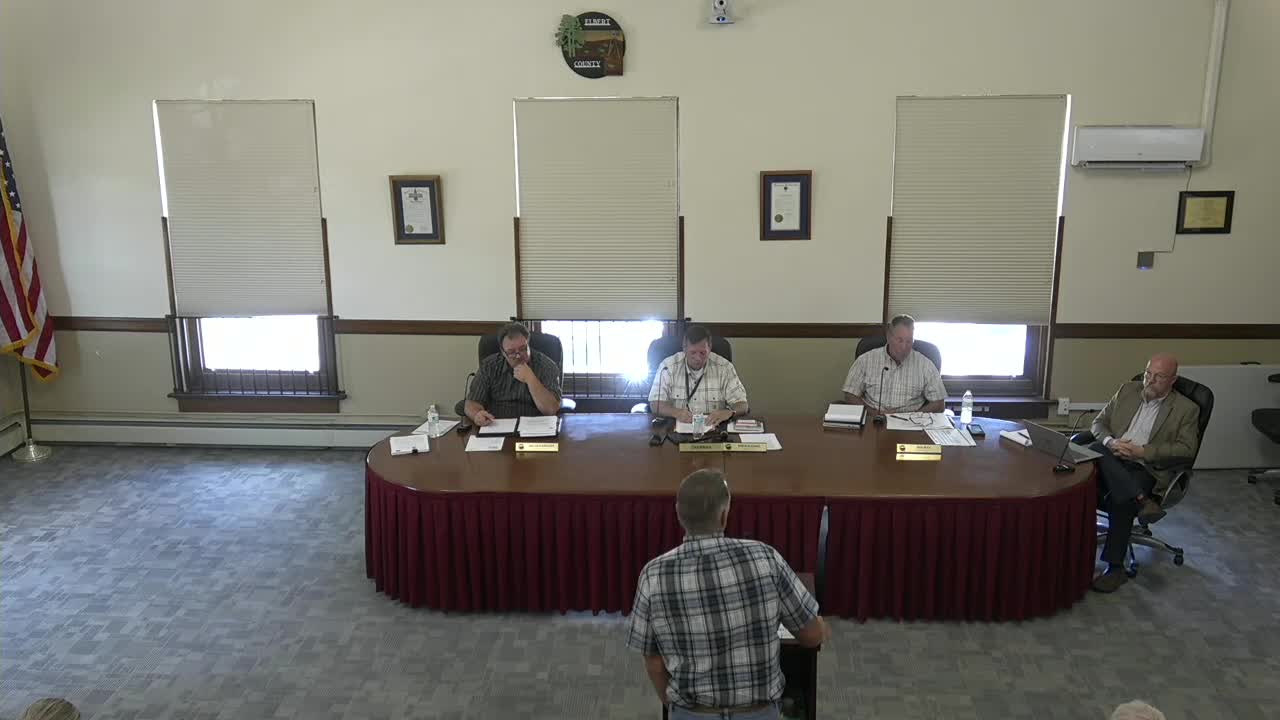
Elbert County approves Running Creek RV storage permit after traffic-safety debate
Summary
Elbert County commissioners voted to approve the Running Creek RV Storage EDZ 20243548 after an extended hearing that focused on traffic safety near a nearby high school and whether turn lanes should be required.
Elbert County commissioners voted to approve the Running Creek RV Storage EDZ 20243548 after an extended hearing that focused on traffic safety near a nearby high school and whether turn lanes should be required.
The vote, taken after presentations from the applicant’s consultants and county staff, approved the project with the four conditions of approval listed in the staff report and closed the public hearing.
Traffic consultant David Ruble, who identified himself as a traffic-engineering consultant with 26 years of experience in Colorado, told commissioners that auxiliary lane requirements should be determined by the State Highway Access Code and by vehicle movements at the site, not by generalized safety reports. He said the access-code thresholds are based on peak-hour entering and exiting trips and that, for the roadway in question, the code requires more than 10 peak-hour trips before a left-turn lane would be required. "When you talk about the need for auxiliary traffic lanes, it is solely based on the traffic entering and leaving that access," Ruble said.
County staff and a county review letter prompted by public concern recommended more caution. Monty Hankins, Elbert County public courts director, described staff's review and said county engineers later recommended turn lanes because of the site's proximity to a school and the grade of the adjacent hill. "The new traffic study, I've read it. . . . The school is less than three quarters of a mile away from the location," Hankins said, and he said he stood by his recommendation for turn lanes to address safety given the hill and the school.
The applicant’s representative said the project’s traffic engineers (Kimley‑Horn in the record) had concluded the site met access-code criteria and that weekday peak trips were minimal — typically one vehicle in the morning and one in the afternoon — and therefore did not meet the threshold for a required left-turn lane. The applicant and the owner's representative said the project already met county criteria noted in prior staff reports and that a recent county‑commissioner‑sourced accident-investigator letter arrived late in the review process and introduced new concerns. The owner, John Goudreau, told the board he had invested more than $60,000 in approvals and landscaping and said he would add trees and fencing to buffer the site.
Commissioners debated competing technical views. One commissioner said the late accident‑investigator letter did not carry the same technical weight as traffic‑engineering analyses and criticized the process for introducing new recommendations late in review; another commissioner said the board’s primary obligation was safety for schoolchildren and supported conditions and potential mitigations. Commissioners discussed lowering the posted speed limit in the area as a possible mitigation, a step staff said could be pursued with road and bridge.
After discussion, a motion to approve the Running Creek RV Storage EDZ 20243548 with the four conditions listed in the staff report carried; the chair then closed the public hearing on that item.
The approval grants the conditional access and land‑use permissions described in the staff packet; commissioners and staff indicated they expect follow-up on design details and any turn‑lane or speed‑limit mitigations before final permitting.