Get Full Government Meeting Transcripts, Videos, & Alerts Forever!
Get email alerts on the Public Health Climate Adaptation topic
No spam. Unsubscribe anytime.
Residents urge permanent cooling infrastructure after 48-hour heat wave; councilors note shelter/library limits
Summary
Multiple public commenters at the July 2 Erie City Council meeting urged expanded permanent cooling infrastructure, hydration stations and better outreach to the unhoused after a recent 48-hour heat wave; council members acknowledged capacity limits at existing facilities and discussed follow-up outreach.
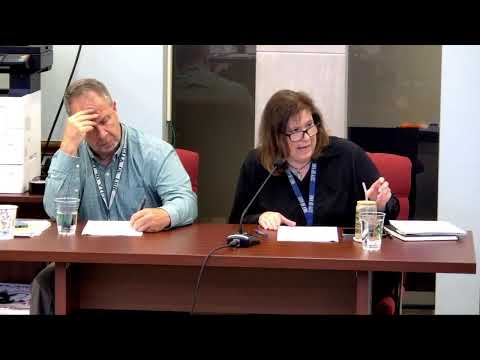
Several Erie residents used the July 2 public-comment period to urge City Council to establish permanent public cooling infrastructure and better services for people most vulnerable to extreme heat.
Michael Ortenby, one of the speakers, framed the issue as part of government’s role to protect public health and social welfare during environmental emergencies. He said governments must “identify resources both financial and for these sorts of events in the future” after the city experienced more than 48 consecutive hours of unusually high temperatures.
Wednesday Kennedy, who said she moved to Erie from New York City, described choosing Erie as “positioning itself as a climate haven” and urged the city to plan for people who cannot relocate. Nathan George (registered as living in Fairview Township) recommended establishing permanent cooling infrastructure — examples he and other speakers cited included public showers, air-conditioned community centers and hydration stations. Jane Deutschlander called for temporary cooling stations and water in central locations such as Perry Square during extreme heat.
Speakers pointed to existing local and regional examples: the recent pop-up cooling station run by the Erie Downtown Partnership at Perry Square (which distributed more than 100 cases of water), public showers at Beaches 8 and 11, and shelter models used in Cleveland and other cities. Commenters said many existing cooling or shelter options are inaccessible to pedestrians or are geographically concentrated on the Peninsula, limiting access for people without transportation.
Council members acknowledged the concerns. Councilwoman Jasmine Flores said the Blasco Library serves as an important cooling place for many residents and called for prioritizing “our most vulnerable communities” and expanding community spaces. In committee discussion later in the meeting a council member invited public commenters to share contact information so staff and council could follow up about crisis planning.
No formal council action was recorded in the meeting minutes to create new permanent cooling infrastructure. Council members and staff said they would continue outreach and consider next steps; staff noted that some funding approved later in the meeting (Community Development Block Grant and ESG appropriations) will be routed to community centers and shelters that provide services during heat events.
What residents asked for: permanent climate emergency shelters downtown, more hydration stations and water-bottle refill stations in public buildings, improved accessibility to existing air-conditioned facilities, and coordinated outreach and transport during extreme heat.
What council said: Council members expressed sympathy and noted capacity and access constraints at existing facilities; they asked staff to pursue outreach and to receive follow-up input from residents who spoke.