Get Full Government Meeting Transcripts, Videos, & Alerts Forever!
Get email alerts on the Behavioral Health Stabilization Center topic
No spam. Unsubscribe anytime.
Lane County updates plan for International Way stabilization center, partnership with PeaceHealth
Summary
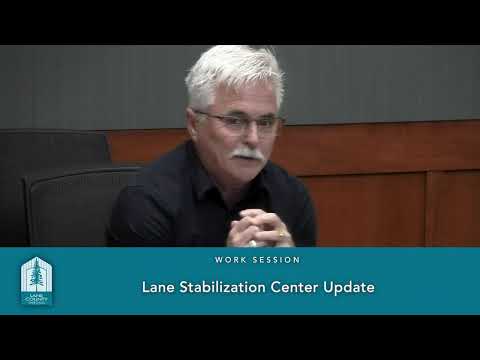
Lane County staff told the Board of County Commissioners on July 23 that due diligence is advancing on a planned behavioral health “stabilization center” and a co-located PeaceHealth inpatient psychiatric unit on a roughly 17.8-acre site on International Way in Springfield.
Lane County staff told the Board of County Commissioners on July 23 that due diligence is advancing on a planned behavioral health “stabilization center” and a co-located PeaceHealth inpatient psychiatric unit on a roughly 17.8-acre site on International Way in Springfield.
The presentation said county staff entered a purchase-and-sale agreement in October and extended it while conducting site feasibility work. Staff said the property meets the project’s primary criteria: centrality to Eugene–Springfield, access by multiple modes of transport, proximity to partners such as law enforcement and the hospital, and sufficient acreage for both a short-term stabilization facility and an inpatient unit.
County Health and Human Services Director Eve Gray said the project would provide a range of behavioral health care on a single campus, from 24/7 urgent care and short-term stabilization stays to inpatient psychiatric services. "We have $35,000,000. It is our intent to build a $35,000,000 facility," Gray said when summarizing the capital budget for the proposed campus.
Why it matters: County staff and several commissioners said the site and the PeaceHealth partnership are intended to reduce reliance on emergency rooms and jails for people in behavioral health crisis and to provide more accessible, trauma-informed care. Staff also told the board the state legislative delegation supported expedited siting for this and similar behavioral health facilities.
Key findings and outstanding work: Lauren Blythe, director of operations, reviewed the due-diligence items completed and in progress. Completed work includes a geotechnical feasibility study, a Phase 1 environmental site assessment (which found no recognized environmental conditions), an ALTA/NSPS land survey scope, and transportation/traffic analysis. Because the property historically was a filbert orchard, the Phase 1 recommended a Phase 2 environmental study; that Phase 2 is pending. The transportation analysis concluded no off-site mitigation was required for the planned uses, and the study noted current traffic volumes on the corridor are lower than during earlier industrial occupancy of the area.
Site constraints and design points: Staff said the site lies in a flood plain and will require flood-mitigation measures including approximately 3–4 feet of structural fill and on-site excavation for stormwater detention with an outfall toward Babylon Brook. Architects are planning two primary access points: International Way (anticipated primary access to the PeaceHealth inpatient unit) and Sports Way (the planned access to the stabilization center). Staff said the stabilization center entrance will be set back to reduce impacts on existing businesses and neighbors.
Public engagement and neighbor concerns: County staff described a multi-year site search that reviewed about 36 properties, including walking tours and a site-selection committee of local stakeholders. For the International Way parcel, staff said they held five meetings with neighbors (three broadly advertised, two limited to adjacent neighbors) and conducted listening sessions and a public survey with more than 500 participants. Staff acknowledged a mix of reactions: enthusiasm from nearby health-care employers and businesses, questions from listeners seeking more detail, and a small number of neighbors who remain opposed.
Tax and jobs: Staff said they worked with the county assessment and taxation department to estimate the combined annual tax revenue if the facilities are taxed as commercial property; the estimate presented to the board was about $1,900,000 annually (distributed across local districts, assuming annexation and normal taxation). Staff also said the campus would create a payroll of roughly 300 living-wage or better jobs.
Timing and funding: Staff and the county’s architects provided a high-level schedule that would aim for construction in roughly 2028, contingent on securing and confirming funding and completing annexation, permitting and design. County staff and commissioners emphasized that operating funding and rate-setting remain to be resolved before construction begins.
Remaining requests and board concerns: Commissioners asked staff to include detailed maps, easement drawings and the full traffic and environmental reports in the next board packet so residents and the city of Springfield can review them during annexation and permitting. Several commissioners urged more public outreach and suggested arranging site visits to comparable facilities so skeptical neighbors can see operations and speak with nearby businesses. One commissioner also asked staff to explain why other previously considered sites—such as a Chad Drive location and the MLK campus—were not chosen or were less feasible given mitigation costs.
No formal action was taken at the July 23 work session. Staff said they will return with the packet material, outstanding Phase 2 environmental results, a finalized memorandum of understanding with PeaceHealth describing property division, and any additional technical studies requested by the board.
At the end of the session, Commissioner Trigger summarized the moment: "It is no longer a theoretical, what if we had a stabilization center? This is a very real project site funding," he said, praising the apparent convergence of funding and partnership that staff presented.