Get Full Government Meeting Transcripts, Videos, & Alerts Forever!
Get email alerts on the Ipa Modernization Ab1337 topic
No spam. Unsubscribe anytime.
Committee considers overhaul of Information Practices Act to extend privacy protections to local governments
Summary
AB 1337 would modernize the Information Practices Act of 1977 to align definitions with current privacy law and apply similar protections to local governments as to state agencies; sponsors said the bill would close gaps but many local agencies opposed citing operational and statutory conflicts.
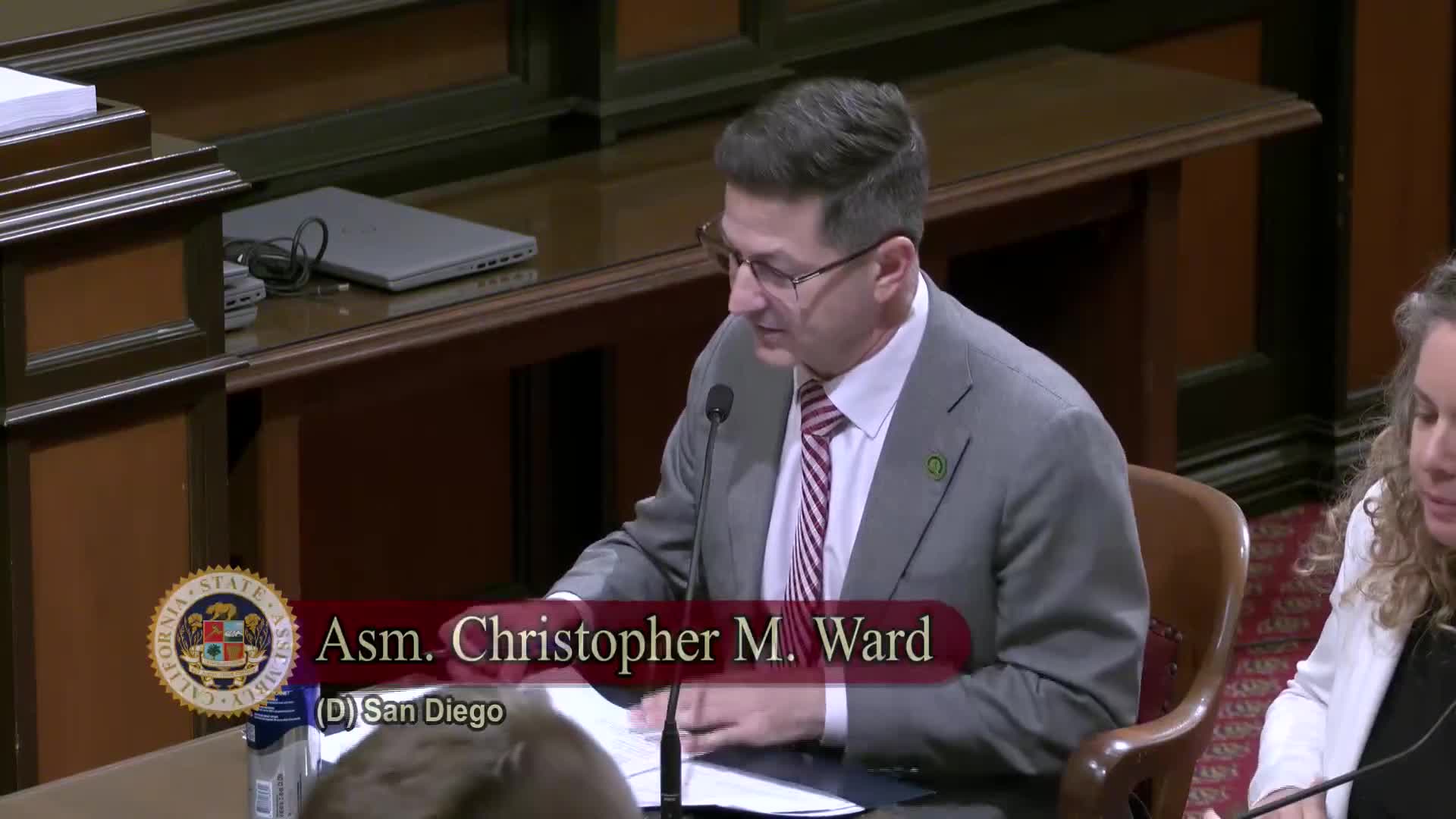
Senator Ward presented AB 1337 (Information Privacy Act reform) to update the state's Information Practices Act (IPA) to modern definitions of personal information and to extend key protections to local governments and agencies. Supporters said the IPA has not kept pace with the digital era and that local agencies increasingly collect sensitive information with inconsistent protections.
Supporters including the Electronic Frontier Foundation and Oakland Privacy said AB 1337 would align IPA definitions with the California Privacy Rights Act and add protections such as limitations on secondary uses, a three-year record retention requirement for disclosures, and a misdemeanor for negligent release of personal data that causes harm. "Why should a resident in one county have fewer privacy protections than someone in another county?" asked Becca Kramer Mauder of the Electronic Frontier Foundation.
Local governments, county health departments, hospitals and welfare directors testified in opposition, arguing the bill would disrupt integrated service delivery models ("no wrong door" approaches) such as CalAIM, and could conflict with HIPAA, CMIA and other sector-specific protections. Opponents said the bill would impose costly system overhauls and could impede billing, charitable care, and federally required reporting. The author said he accepted committee amendments and would work on technical fixes to avoid unintended consequences.
Committee members asked detailed questions about healthcare operations, conflicts with HIPAA, and whether the bill would jeopardize federal funding. The author and supporters said the bill contains mechanisms to allow disclosures "furthering the purpose" of collection and that they were working on clarifying language; opponents said that approach leaves open serious legal conflicts. No committee vote is recorded in the portion of the transcript provided.