Get Full Government Meeting Transcripts, Videos, & Alerts Forever!
Get email alerts on the Language Access topic
No spam. Unsubscribe anytime.
Language‑need study: California courts recorded 2.5 million interpreter uses; Spanish and a small set of languages dominate demand
Summary
The Judicial Council’s 2025 Language Need and Interpreter Use Study found courts recorded more than 2.5 million interpretation events across fiscal years 2020–21 through 2023–24; in‑person interpreting remained predominant and Spanish accounted for the largest share of demand.
The Judicial Council received a presentation of the 2025 Language Need and Interpreter Use Study, a statutorily required five‑year report that analyzed interpreter usage from fiscal year 2020–21 through 2023–24.
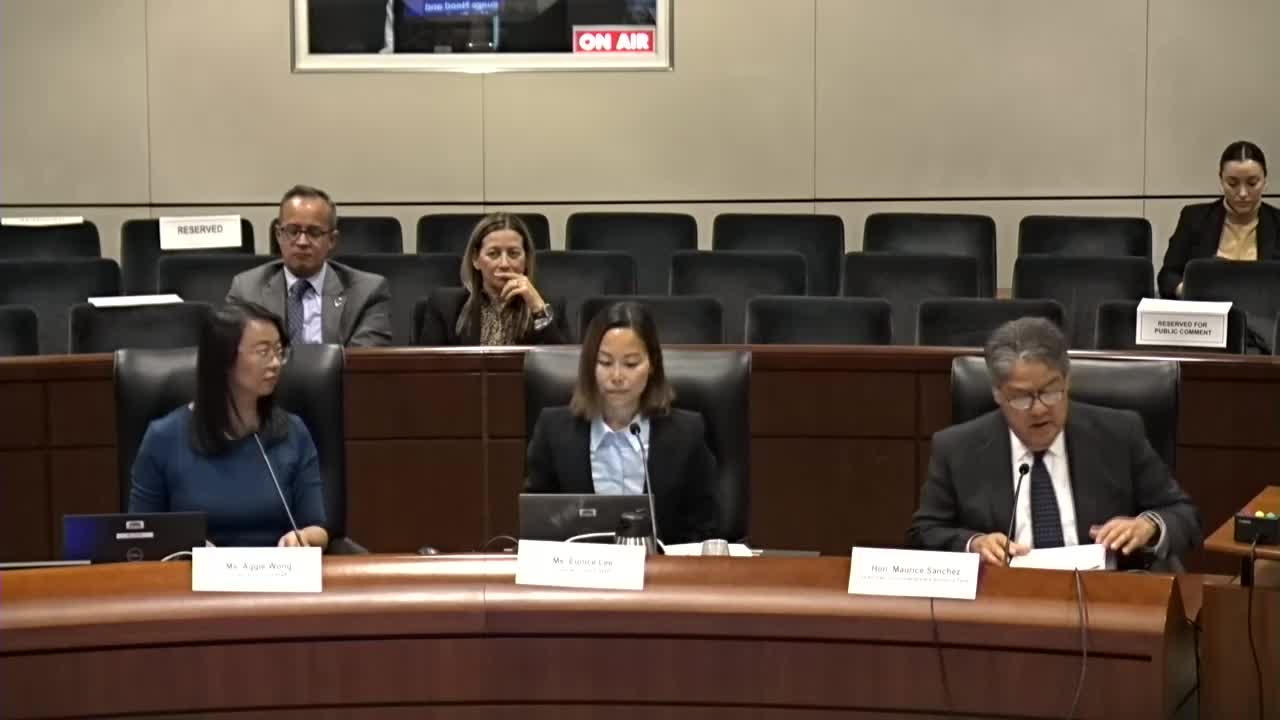
Justice Marie Sanchez, vice chair of the Court Interpreters Advisory Panel, and center staff Eunice Lee and Aggie Wong presented key findings: courts recorded more than 2.5 million interpretations over the study period, a decline of roughly 45% relative to the prior study period attributed to reduced filings during the COVID‑19 pandemic; in‑person interpretations accounted for about 93% of assignments; remote and telephonic interpreting spiked during the pandemic and remain an important flexible option; and the state’s master list included 1,856 certified or registered interpreters covering 114 spoken languages plus American Sign Language. The presentation noted 32% of that interpreter pool is over age 65, and courts are pursuing recruitment and credentialing initiatives.
The study listed the top 13 most‑interpreted languages (in order of prevalence) as: Spanish, Mandarin, Vietnamese, American Sign Language, Punjabi, Cantonese, Arabic, Korean, Russian, Eastern Armenian, Farsi, Tagalog, and Portuguese. Spanish accounted for the large majority of assignments. The study also highlighted increasing demand for indigenous languages from Mexico and Guatemala; seven of the top‑30 interpreted languages were indigenous languages.
Statewide, an average of 69% of assignments during the study period were handled by employee interpreters and 31% by contractors; expenditures for contractor interpreters rose 42% in fiscal year 2023–24 versus the prior year. The presenters recommended maintaining the current designation of the most‑frequently used languages, expanding testing and training resources for emerging needs (including indigenous languages), strengthening credentialing and recruitment pipelines (including court partnerships with colleges and community organizations), and expanding remote interpretation options for coverage gaps in rural courts.
Council members thanked the Court Interpreters Advisory Panel and branch staff; one member asked for more granular regional data on Guatemalan languages, which staff said they could provide.