Get Full Government Meeting Transcripts, Videos, & Alerts Forever!
Get email alerts on the Housing Affordable topic
No spam. Unsubscribe anytime.
Rapid City committee approves creation of Sunridge Senior Affordable Housing TIF district, 3-1
Summary
The Legal and Finance Committee voted 3-1 to create a tax increment financing district to support a 38-unit senior affordable housing project on the 300 block of North Street; the developer and city staff said the project requires TIF to be feasible and Blue Line Development offered a corporate guarantee.
The Rapid City Legal and Finance Committee voted 3-1 on July 16 to create the Sunridge Senior Affordable Housing tax increment financing (TIF) district, a step the developer and staff said is needed to build a 38-unit senior affordable apartment project on the 300 block of North Street.
Mike Dugan, a finance staff member, told the committee the district would support construction of 38 units targeted to tenants age 55 and older with income limits at 60% or less of area median income (AMI). "The project would be structured as a grant in the amount of $2,221,000," Dugan said, adding that the figure does not include financing costs and that the city would underwrite the loan similar to past projects.
The developer, Jason Bull of Blue Line Development, said the project could accept Housing Choice (Section 8) vouchers depending on voucher rules and tenant incomes and that financing commitments are already in place. "The South Dakota Housing Development Authority has committed $512,000 in annual tax credits for this project," Bull said. "That equates to a roughly $4.2 million investment into Rapid City. We also have a $700,000 commitment for financing through the state agency. The last piece of our financing stack is our TIF." He added Blue Line was willing to provide a corporate guarantee to ensure repayment.
Why this matters: city staff and the applicant told the committee the development is not financially feasible without TIF because higher primary debt would push rents up and jeopardize affordability and other state funding sources. Staff also said the city's internal financing program uses below-market interest rates as gap financing to make affordable housing projects viable.
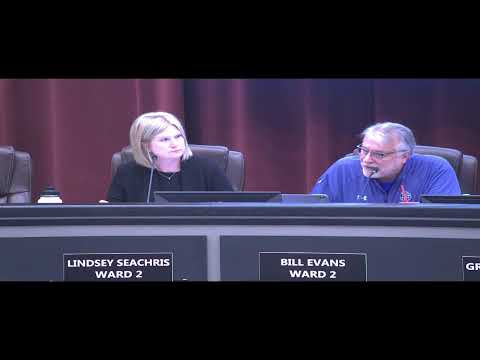
Committee debate and vote: Councilmember Lindsay Seacrest said she would not support the city lending funds to a private developer and noted outside consultants she had spoken with do not support city-funded developer TIFs. "That's where I stand on this," Seacrest said. Councilmember Bill Evans and other committee members emphasized infill and density goals and said the city has limited capacity for internal loans but has used them for affordable housing previously. Finance Director Daniel Ainsley explained the city typically keeps the bulk of its assets in short-term instruments and that the portion used for loans would be a small share of total assets. After debate, Councilmember Lehman moved to approve and Councilmember Meyer seconded; the motion carried 3 to 1.
Project details and risks: The proposal calls for 34 one-bedroom units and four two-bedroom units, with stated rents of $955 for a one-bedroom and $1,145 for a two-bedroom (figures presented by staff). Dugan said the South Dakota Department of Revenue would certify the assessed valuation and projected tax increment; the presentation estimated an assessed valuation of a little over $15 million and identified about $2.221 million in TIF-eligible costs. Dugan and Bull acknowledged a refinancing mechanism would be used to retire TIF-related debt before the statutory 20-year risk point, and Bull said Blue Line would provide a corporate guarantee to back that payoff. Staff warned the city faces some risk if economic factors prevent payoff or refinancing.
Background: Blue Line Development previously built Sagebrush Flats, a 180-unit affordable project in Rapid City. Dugan said the city currently has 20 active TIF districts of various types and remains well under the statutory 10% cap on certified assessed valuation for TIFs.
What happens next: Creation of the district advances the TIF process; a revised project plan will return to the Planning Commission and then to City Council for approval of the plan and financing details. Dugan said the Planning Commission would consider a revised project plan on Aug. 21.
Votes at the committee on this item: motion to create the district — approved 3 to 1.