Get Full Government Meeting Transcripts, Videos, & Alerts Forever!
Get email alerts on the Housing Affordability topic
No spam. Unsubscribe anytime.
Bill targets algorithmic rent‑setting practices; landlords and vendors ask for liability clarifications
Summary
SB 52 would ban the use of non‑public competitor data in algorithmic rent‑setting and make certain collusive algorithmic pricing practices unlawful. The bill’s author and supporters framed it as a targeted consumer-protection measure to combat algorithmically driven rent increases; apartment-owner groups and software vendors sought clearer
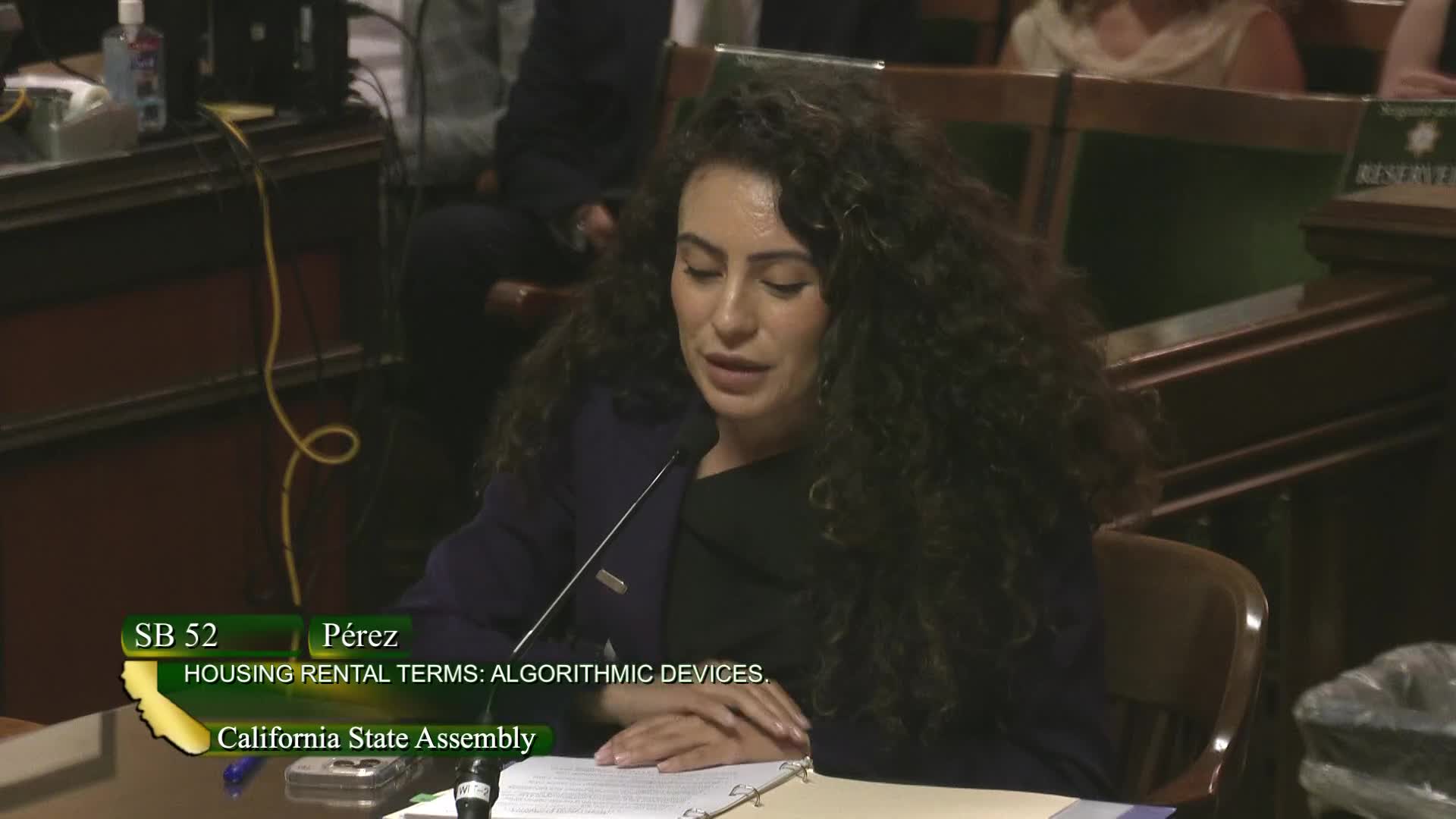
Sen. Maria Elena Perez presented SB 52, the “End AI Rent Hikes” act, which would prohibit algorithmic practices that use non‑public competitor data to coordinate rent prices and would create a pathway for enforcement and remedies for unlawful collusion facilitated by such tools.
Supporters from Tech Equity, county boards and tenant‑advocacy groups said the proliferation of price‑setting algorithms has contributed to rent increases and eviction risk; the Biden White House Council of Economic Advisers was cited in testimony estimating substantial rent increases attributable to such pricing tools. Megan Abel (Tech Equity) testified the bill bans the exchange of non‑public competitor data used to coordinate prices and that the measure is an important step to disrupt rent‑setting collusion.
Opponents — principally the California Apartment Association, Regional rental‑housing associations, and software vendors — said the bill can impose liability on users who may not know how vendor software uses data, argued for a higher evidentiary standard and asked for carveouts for aggregated or anonymized market reports. They warned the current text’s “should have known” standard could create litigation risk and chill legitimate uses of aggregated market data.
Committee members acknowledged competing concerns and the author said she had accepted amendments to address some outstanding issues. The author and stakeholders agreed to continue technical conversations. The committee recorded a motion to pass as amended to Appropriations; the transcript shows the roll was called and the measure advanced with votes recorded and additional negotiations expected.