Get Full Government Meeting Transcripts, Videos, & Alerts Forever!
Get email alerts on the Land Use Solar topic
No spam. Unsubscribe anytime.
AB 1156 would permit voluntary solar easements on water‑constrained Williamson Act land; backers say it aids communities facing falling farmland, critics seek a
Summary
AB 1156 would let landowners and local governments opt to suspend Williamson Act contracts and grant a locally approved easement allowing solar on lands facing long‑term water shortfalls, rather than rescinding contracts; supporters called it a voluntary, locally driven option to repurpose non‑viable farmland, while farm and conservation groups
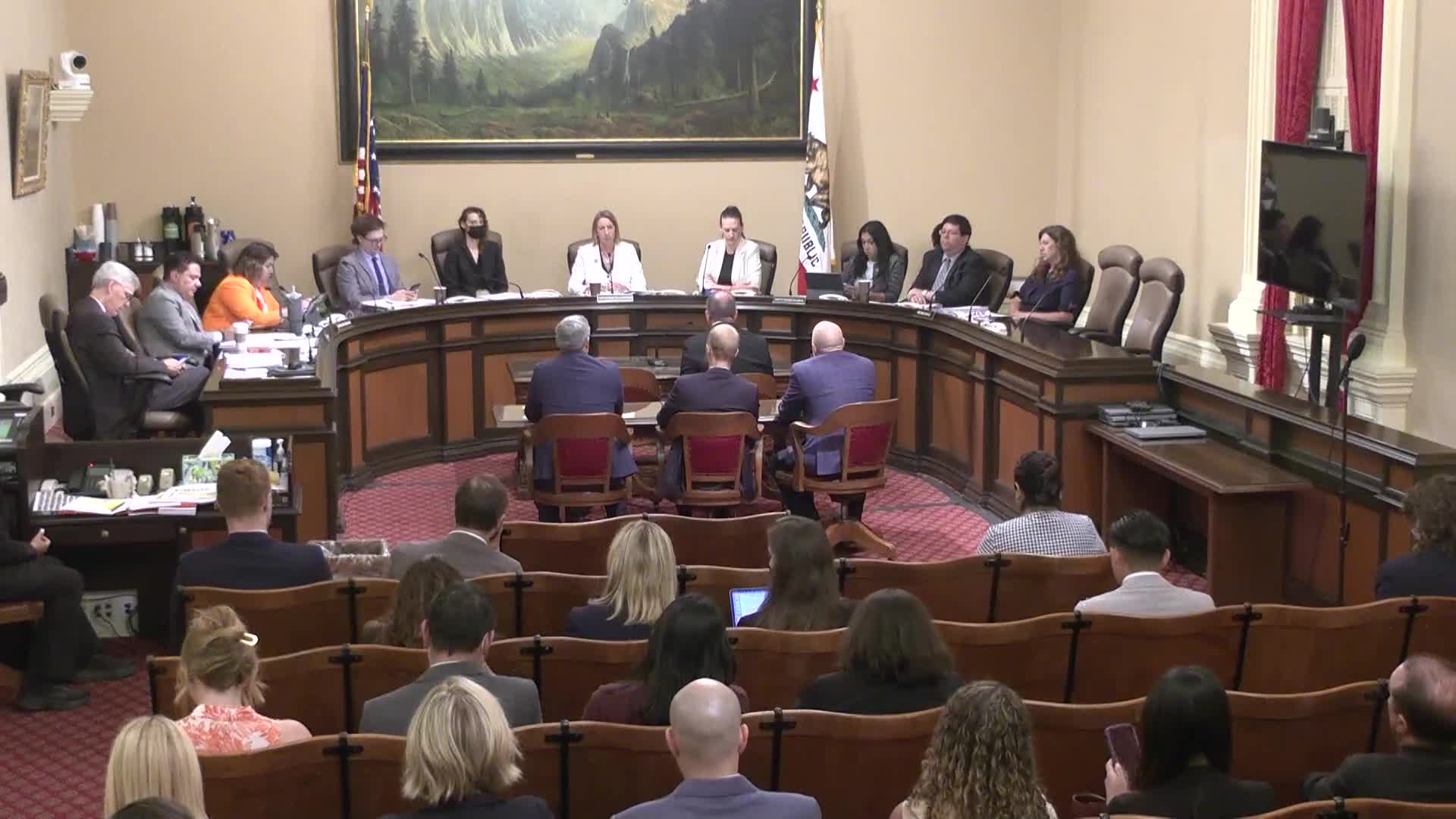
Assemblymember Buffy Wicks (the transcript shows Assemblymember Wicks presenting AB 1156) presented AB 1156, which would update the state’s existing solar‑use easement authority for Williamson Act lands to allow local governments and willing landowners to authorize solar projects on lands that are effectively no longer viable for farming because of water constraints.
The author framed the bill as a voluntary, locally governed option for landowners who face a ‘‘stark reality’’ of falling water supplies and the potential for land to fall out of agricultural production. She stressed the measure suspends, rather than cancels, Williamson Act contracts for the duration of a solar project and requires local government approval, community outreach, CEQA review, mandatory community benefit agreements and full property tax payments during the solar easement term.
Supporters including the Large‑Scale Solar Association and several utilities said groundwater sustainability programs and allocations are forcing thousands of acres out of production and that the state needs a voluntary, local option to site clean energy while preserving the option to return land to farming if water returns.
Opponents including American Farmland Trust, CalCAN, Farm Bureau and other agricultural and conservation groups said the bill risks development of prime soils and called for clearer, narrower definitions of ‘‘insufficient water’’ and stronger location limits tied to transmission and brownfield sites. They urged geographic and acreage limits and alternative criteria based on UC Cooperative Extension cost‑and‑return thresholds to better target lands truly unsuitable for agriculture.
Committee adopted amendments intended to narrow the definition of insufficient water and add public notice and community benefits requirements; author and stakeholders said discussions would continue about target geography and definitions before the bill moves to appropriations.