Get Full Government Meeting Transcripts, Videos, & Alerts Forever!
Get email alerts on the Traffic Safety topic
No spam. Unsubscribe anytime.
Bill to modernize red‑light camera enforcement advances with civil fines and privacy guardrails
Summary
The committee advanced SB 720, which lets cities opt into a modernized automated red‑light enforcement program that uses rear‑facing license‑plate imaging, shifts civil liability to vehicle owners, eliminates facial-identification requirements and directs funds to street‑safety projects.
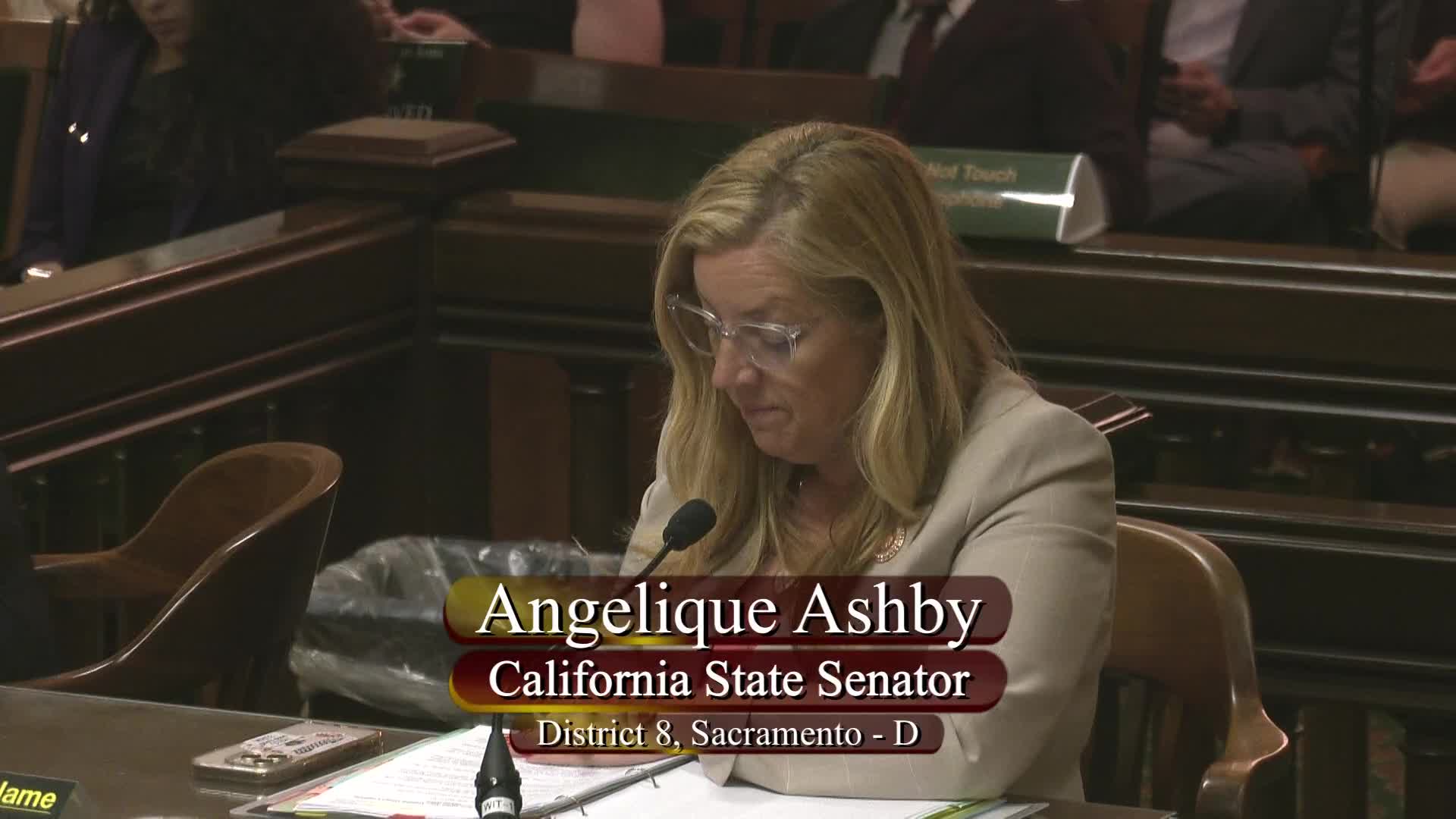
Sen. Ashby presented SB 720, the Safer Streets Act, to allow local jurisdictions to opt into a modernized automated traffic enforcement program for high‑collision locations. The bill would shift liability for red‑light camera citations to vehicle owners (not criminal driver identification), convert violations to civil penalties (no driver's-license points), restrict the use of facial recognition and require procedural safeguards for vendor contracts and data retention.
Sponsors and safety advocates — including Sacramento Area Bicycle Advocates, Streets Are For Everyone and People for Bikes — framed the bill as a public‑safety measure to reduce T‑bone and red‑light collisions that disproportionately injure cyclists and pedestrians. Witnesses described evidence of crash reductions where modern automated enforcement was implemented and urged a local‑opt‑in model with collision-based location selection, calibrated yellow‑light timing and limits on vendor incentives to profit per ticket.
Opponents were not prominent in the committee record reported here. Committee members asked technical questions about data retention, who owns the video and plate data, contract models and prohibitions on pay‑per‑ticket vendor arrangements. The author and advocates described provisions (including monthly rental-style contracts and limits on sharing) intended to prevent perverse incentives and to scrub sensitive location data after set periods unless a court order is issued.
Outcome: Committee recorded a motion to pass SB 720 as amended to Appropriations and later reported the measure to Appropriations; members praised negotiated safeguards on yellow‑light timing, vendor payment structures, local opt‑in controls and data-retention limits.