Get Full Government Meeting Transcripts, Videos, & Alerts Forever!
Get email alerts on the Deepfakes topic
No spam. Unsubscribe anytime.
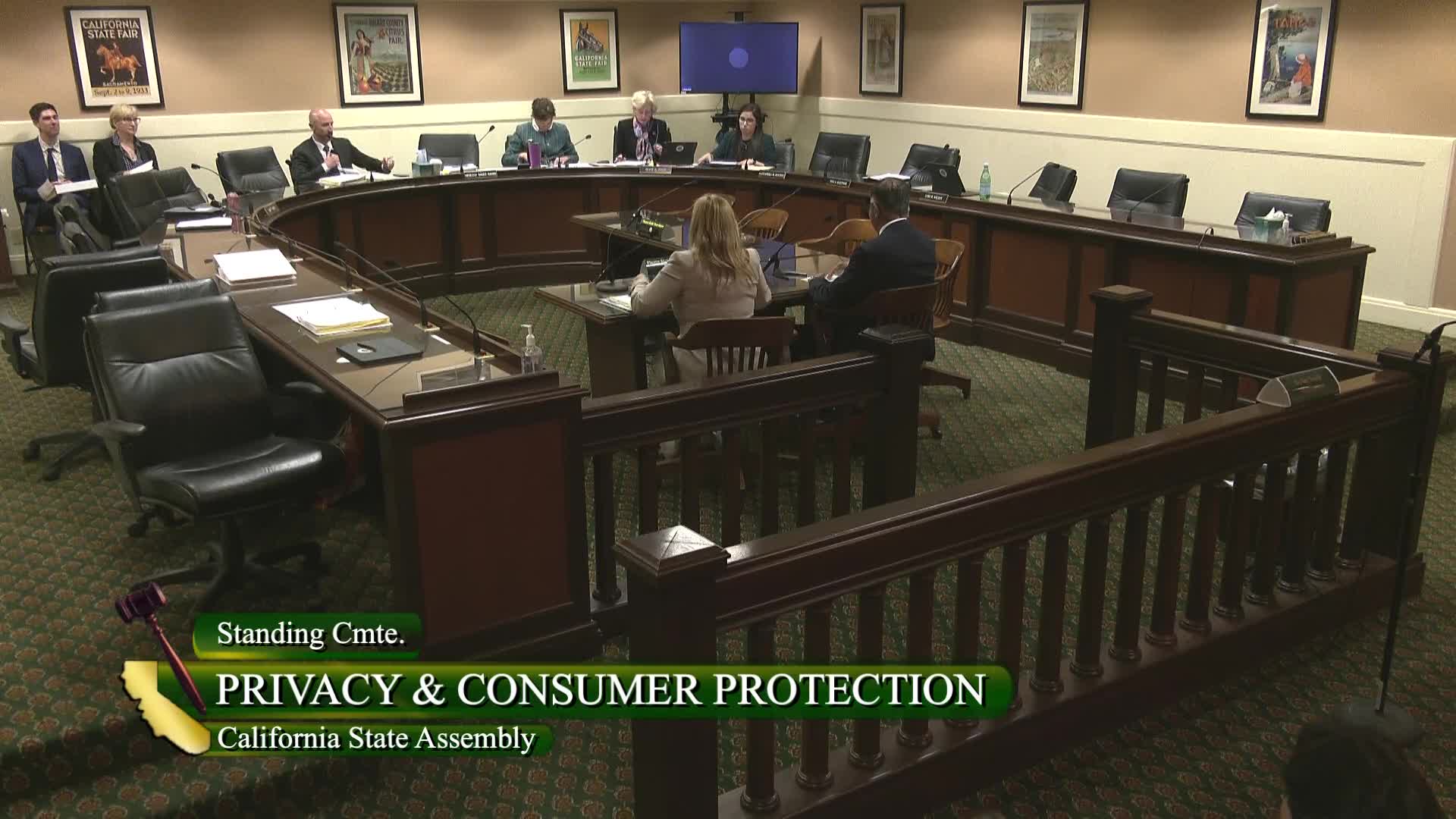
Assembly committee moves bill to criminalize some nonconsensual AI-generated likenesses, require consumer warnings
Summary
SB 11, the AI Abuse Protection Act, would clarify that AI-generated high-quality voice and image replicas are treated as a person’s likeness, require consumer warnings on software that creates such replicas, and prohibit certain nonconsensual uses; bill drew broad cosponsor support from public-safety and civil‑rights groups and technical concerns
Sen. Ashby introduced SB 11, the AI Abuse Protection Act, which the committee accepted amendments to narrowly regulate nonconsensual AI-generated face, voice and image replicas.
The bill would expand the statutory definition of “likeness” to cover AI-generated images and voices, require software that can create high‑quality replicas to include a consumer warning, and make certain nonconsensual uses unlawful. The measure also includes provisions to address AI-generated material as potential evidence tampering in court proceedings.
Supporters included the Transparency Coalition and the Chamber of Progress; the California District Attorneys Association, Teamsters and public-safety advocates testified in favor. Chamber and industry witnesses expressed conditional support for the consumer‑warning approach but asked for lower civil‑penalty caps than the $25,000-per-day level printed in early drafts and sought clarifications regarding business-to-business and employee-use cases, and the placement and format of warnings in some contexts (for example, in real‑time video games or bulk business services).
Committee members said they wanted to avoid chilling legitimate business uses and requested continued technical work on penalty levels and exceptions for lawful and consented uses. Several cosponsors and public-safety witnesses urged passage to protect victims of nonconsensual explicit‑image creation and other harms.
Outcome: The committee took a motion to pass SB 11 as amended to Appropriations and recorded a committee vote in favor; supporters said they would continue negotiations with industry over specific penalty levels and warning placement.