Get Full Government Meeting Transcripts, Videos, & Alerts Forever!
Get email alerts on the Artificial Intelligence topic
No spam. Unsubscribe anytime.
Sen. Wiener advances AI safety transparency bill, including Cal Compute and whistleblower protections
Summary
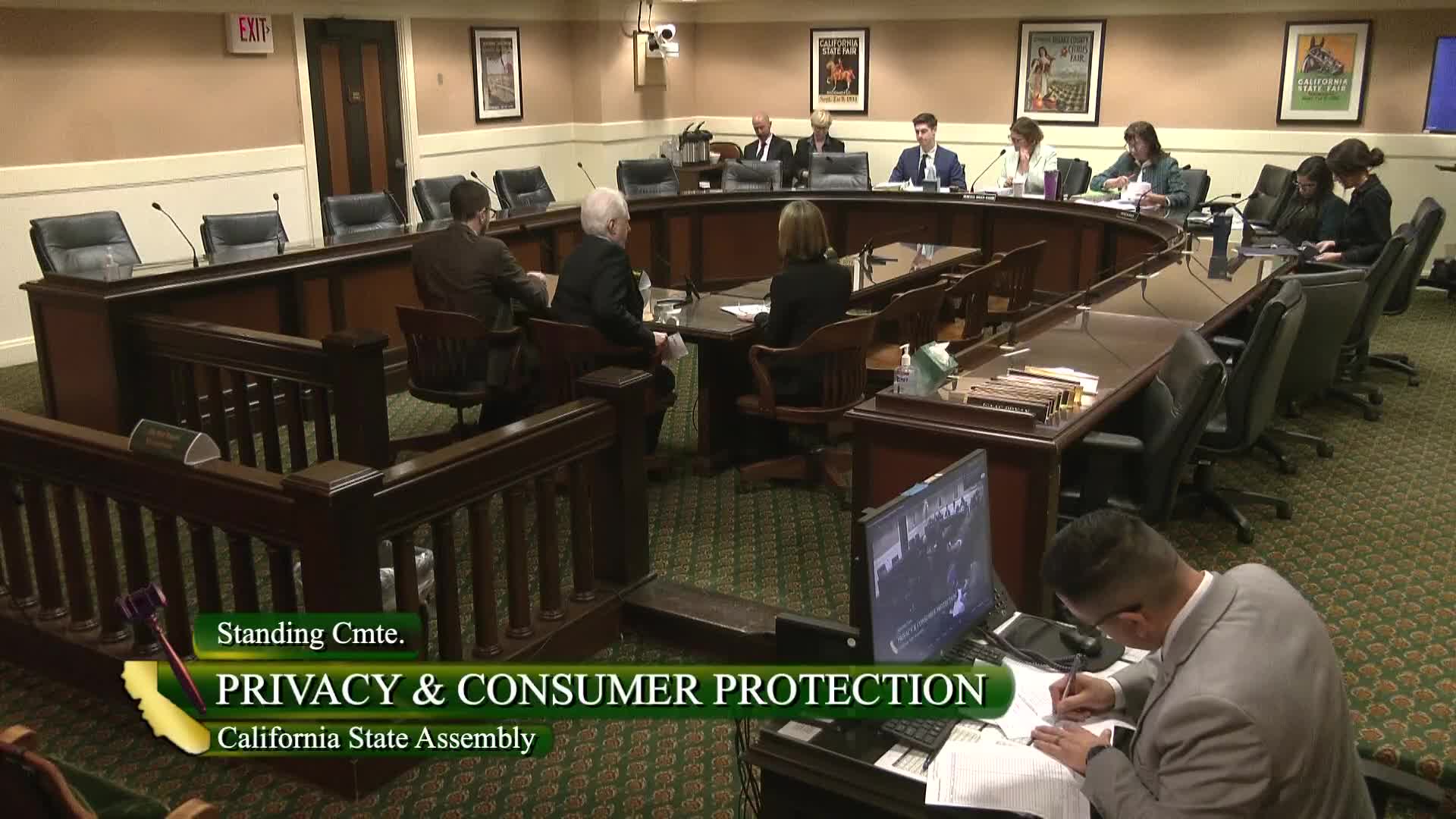
Sen. Scott Wiener asked the Assembly Consumer Protection and Privacy Committee to advance SB 53, a transparency-focused AI safety bill that would require large AI developers to disclose safety protocols, report critical incidents to authorities within 24 hours, and create a state-run compute consortium called Cal Compute.
Sen. Scott Wiener (D) asked the Assembly Consumer Protection and Privacy Committee to pass SB 53 as amended, a bill that would require large AI developers to publish summaries of safety and security protocols, report “critical safety incidents,” and create a publicly owned compute consortium called Cal Compute.
Wiener said SB 53 is built on last year’s SB 1047 and the governor’s working-group recommendations. He described the bill as a transparency measure rather than a liability regime: developers meeting the size threshold would publicize their safety practices (with redactions allowed for trade secrets). The bill would require 24-hour notification of authorities for “critical safety incidents” and a 15-day filing with the attorney general, while enforcement of the disclosure rules would rest with the attorney general rather than create new private liability.
Supporters framed the bill as a pragmatic compromise. Steve Newman, a software entrepreneur testifying in a personal capacity, said the reporting and whistleblower protections provide information regulators currently lack and urged the committee to support the proposal. Terry Oley of Economic Security California Action framed Cal Compute as a way to democratize expensive compute resources and reduce concentration of infrastructure in a few firms.
Industry groups voiced concerns. Representatives from the California Chamber of Commerce, TechNet and other technology trade groups said the bill’s developer-size trigger could miss risky models from small actors and sweep in many lower‑risk tools. They warned detailed internal disclosures and third‑party audits could expose trade secrets or create security risks. Cal Chamber and TechNet said enforcement should focus on material violations and allow a right to cure.
Committee members pressed for clarity on thresholds, the scope of required disclosures, and audit rules. Wiener and staff said they have accepted committee amendments and will continue stakeholder engagement, including with the administration, whose earlier veto and working group shaped the bill. The committee took a roll call on the measure and later recorded the bill moving to the Appropriations Committee; the transcript shows the committee ultimately recorded SB 53 as on its way to appropriations (final roll call recorded in committee transcript).
The record shows committee discussion focused on balancing industry concerns about secrecy and national competitiveness with public-safety and transparency goals. Committee members urged continued negotiations on audits, definitions of “catastrophic risk,” and which systems should be covered.
Outcome and next steps: the committee recorded a motion to pass SB 53 as amended to Appropriations and later announced the bill was sent to Appropriations; further amendments and executive-branch engagement were anticipated.