Get Full Government Meeting Transcripts, Videos, & Alerts Forever!
Get email alerts on the Agriculture Waste topic
No spam. Unsubscribe anytime.
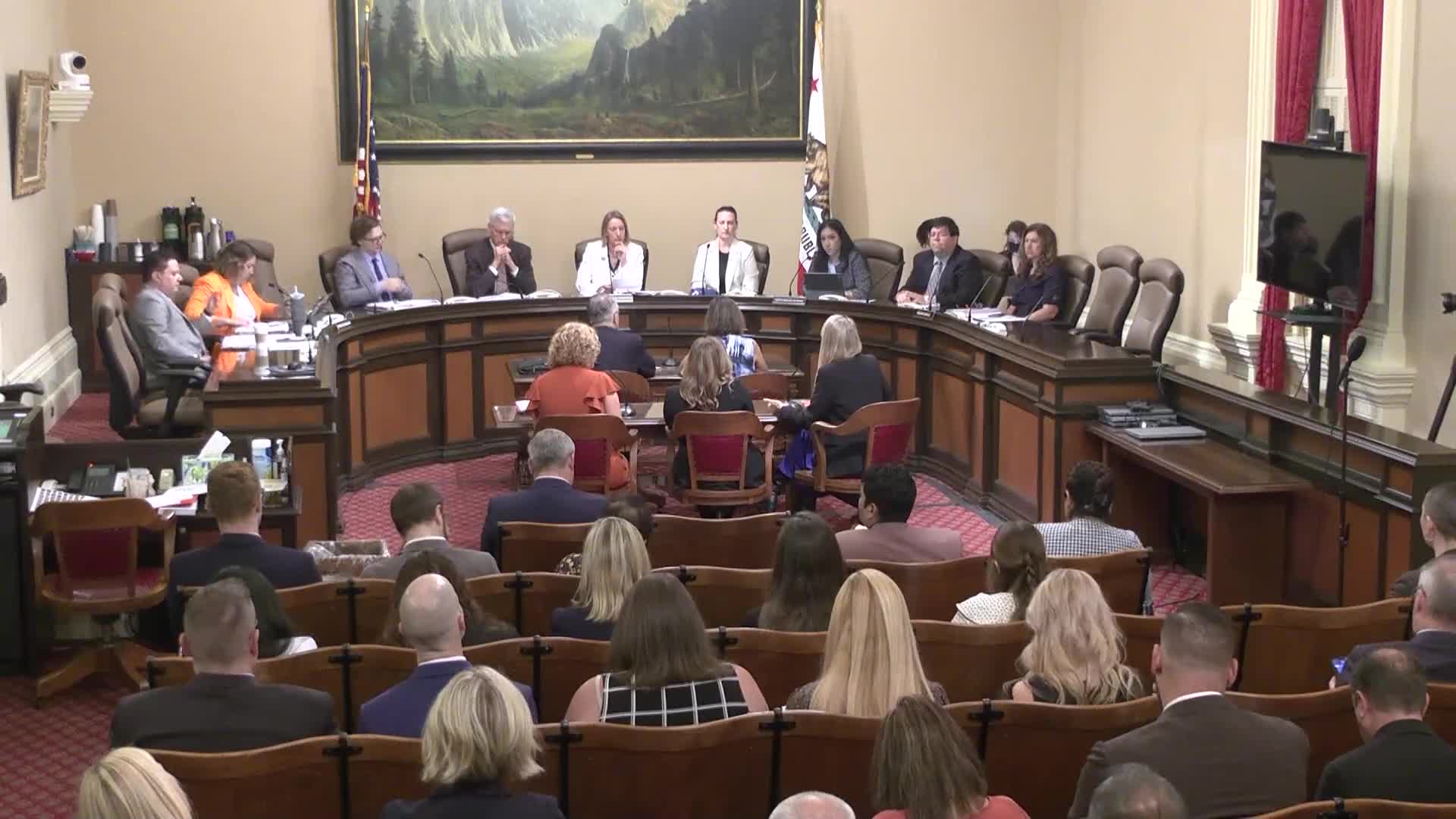
Committee advances AB 411 to let ranchers compost livestock carcasses on‑site with conditions after extensive debate
Summary
AB 411 would allow on‑farm composting of livestock mortalities, a practice allowed in many states. Supporters say it provides a safe, low‑cost option where rendering is unavailable; industry and Teamsters oppose unless stricter oversight and enforcement safeguards are added.
Assemblymember Pappan presented AB 411 to authorize limited on‑site composting of livestock carcasses, arguing it is a science‑backed disposal method used in 42 other states and can be a practical alternative where rendering services are unavailable.
"On‑site composting is a practical, proven tool on a very limited basis," the author said, noting compost reaches temperatures that destroy most pathogens and that the bill limits volumes and includes best management practices.
Supporters included Matthew Marsom of Roots of Change, who said the option helps ranchers lower disposal costs, improve soil health and keep nutrients on farms; Kirk Wilbur of the California Cattlemen’s Association said the state veterinarian has attested to the safety of properly managed carcass composting and that the bill reduced a previous maximum compost volume by two‑thirds in response to stakeholder concerns.
Industry and labor witnesses opposed or sought amendments. Sacramento Rendering Company and Teamsters Local 150 said rendering provides traceability, centralized inspection, and time‑and‑temperature protocols that their facilities follow to kill pathogens. "This bill has insufficient oversight and requires no trained professionals like myself and my fellow Teamsters employees," said Luis Vega of Teamsters Local 150. Company representatives argued composting requires trained operators, qualified experts and proper equipment and that without strong enforcement and oversight the changes could increase public‑health and environmental risks.
Proponents replied that the bill is small‑scale (100 cubic yards or less per event) and that most producers would continue to use rendering when available; supporters argued composting fills gaps where renderers cannot economically or logistically serve remote producers.
Committee adopted amendments and moved the bill to appropriations. Sponsors and opponents said negotiations would continue on oversight, training requirements and reporting to ensure public‑health protections.
Votes: committee recorded a favorable vote and transmitted the bill to appropriations (final committee tally reported as favorable and left on call).