Get Full Government Meeting Transcripts, Videos, & Alerts Forever!
Get email alerts on the Training Sop topic
No spam. Unsubscribe anytime.
PCRS debates training SOP for new civilian review board; members split on required police familiarization, accessibility language added
Summary
Portland PCRS discussed a draft training Standard Operating Procedure (SOP), with members debating which items should be required versus optional, and agreed to add accessibility language; staff will circulate a revised draft before the next meeting.
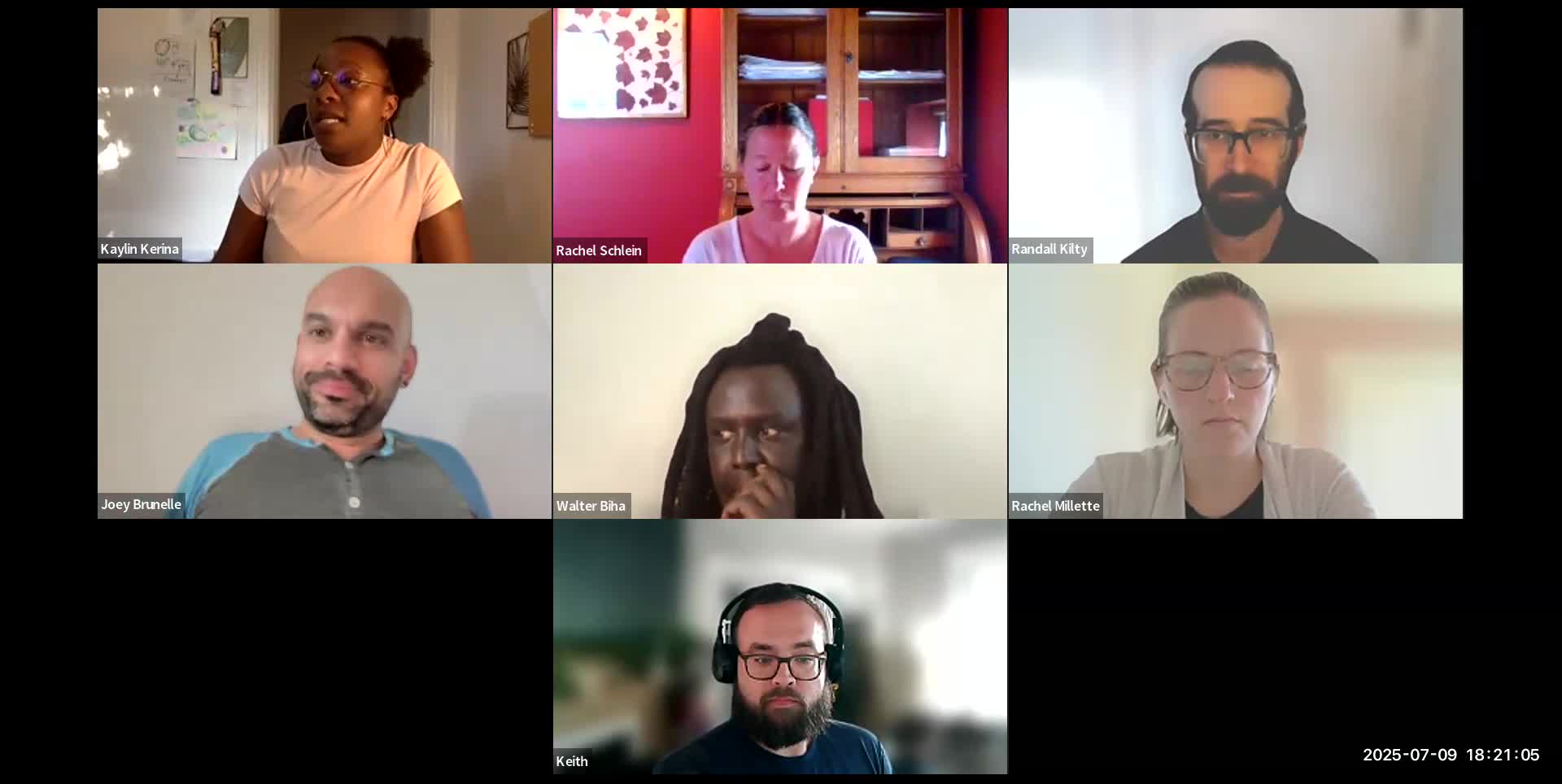
Portland's Police Civilian Review Subcommittee spent extensive time reviewing a draft training Standard Operating Procedure (SOP) for members of the civilian oversight body. Committee members debated which orientation items should be mandatory, proposed additional community training resources, and asked staff to add explicit accessibility language.
Rachel S. introduced the draft and said she planned to remove "the 2 middle columns that refer to city employees" because the SOP "doesn't speak to the roles, responsibilities of the employees." She also proposed that members be required within 60 days of appointment to "make themselves familiar with national models for civilian police oversight best practices" and suggested moving a virtual reality simulation to ongoing, optional training.
PCRS members split over how prescriptive the required section should be. Joey said he "loved the structure" of the draft but questioned whether some items (such as virtual reality) were relevant to the board's work. Randall urged that items be limited to what is strictly necessary for a member to perform PCRS duties, recommending that tours of police facilities and similar items be moved to optional or ongoing training. Keith and others said tours and in-person meetings had been personally helpful for understanding case context and asked that those remain available, even if optional. Several participants urged adding community-oriented training partners to the resources list; one member suggested including criminal-justice faculty, juvenile justice specialists, and local mental-health groups.
Accessibility was a consistent concern. A member who uses an e‑reader and who experiences migraine triggers requested that training materials be accessible in multiple formats and that accommodations be considered for ride-alongs and virtual-reality exercises. Randall volunteered to draft middle-ground language acknowledging accessibility and committing the PCRS to make reasonable efforts to provide alternatives when needed. The group agreed to add such language to the resources appendix.
Next steps: Rachel S. will revise the draft to reflect required vs. optional items, incorporate resource links, and circulate a revised SOP. Randall will provide proposed accessibility wording. The committee agreed to continue discussing the SOP at future meetings and to publish an updated draft for review before the next session.