Get Full Government Meeting Transcripts, Videos, & Alerts Forever!
Get email alerts on the Governance topic
No spam. Unsubscribe anytime.
Council moves to transition most council members from board voting seats to non-voting liaisons
Summary
Council discussed moving most council members off voting seats on advisory boards and agreed to transition them to non-voting liaison roles, while retaining elected representation on a small set of regional or statutory boards.
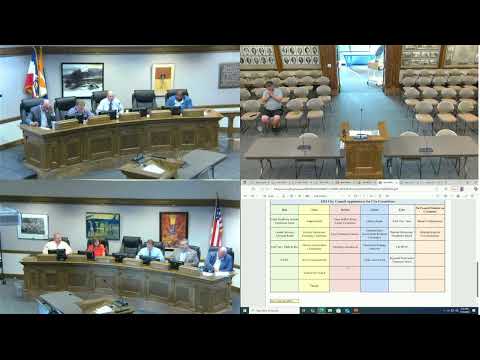
Cedar City councilors spent an extended portion of the July 16 work meeting discussing whether council members should continue to hold voting seats on dozens of advisory boards and committees. The mayor asked council members which appointments they would prefer to retain as voting seats and which should become non-voting liaison roles.
Why it matters: Council members sit on advisory boards in part to represent city priorities and to keep lines of communication open. But several council members noted nonvoting participation — or irregular attendance — can reduce board quorum and complicate volunteer boards’ operations. Moving to liaison roles preserves staff and elected oversight without occupying voting seats on boards that also need community appointees.
What council decided: Council asked staff to begin a process to remove the requirement that council members be voting members on most boards, replacing that status with an elected-official liaison role. Council identified a subset of boards that should retain elected representation (either as voting members or because statutes/bylaws require it): the water conservancy district, the local homeless council, the regional wastewater treatment board, the Frontier Homestead Foundation and the workforce-investment/housing board. The library board has bylaws and state guidance that may affect any change and staff will coordinate with that board if the council pursues modifications.
Implementation notes: Staff said the change would not be immediate; the city will work with affected boards so they can appoint replacement voting members or modify their bylaws where required. Council suggested a phased rollout (90 days) to allow boards to recruit new members and preserve quorum.
Ending: Staff will present ordinance/bylaw language and a timeline to transition council members to liaison roles on most boards while maintaining elected representation where statutes or board bylaws require it.