Get Full Government Meeting Transcripts, Videos, & Alerts Forever!
Get email alerts on the Capital Southeast Connector Jpa topic
No spam. Unsubscribe anytime.
El Dorado County delays payment to Capital Southeast Connector JPA, requests briefing
Summary
After public comment and supervisor questions about liability and benefits, the Board of Supervisors voted to delay a routine invoice to the Capital Southeast Connector Joint Powers Authority and ask staff to schedule a presentation from the JPA executive director before deciding whether to pay.
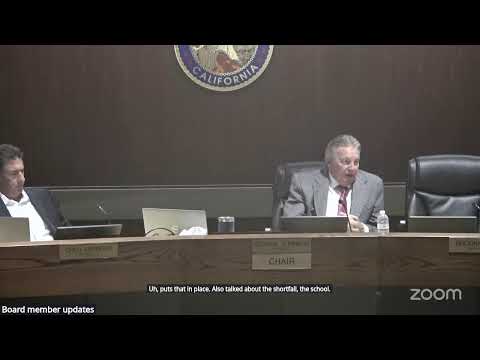
The El Dorado County Board of Supervisors voted Thursday to delay payment on an invoice from the Capital Southeast Connector Joint Powers Authority and ask county staff to schedule a presentation from the JPA’s executive director before acting on future contributions.
County transportation staff told the board the county joined the Capital Southeast Connector JPA in February 2006 to pursue joint planning, environmental analysis and grant funding for a corridor roughly parallel to U.S. 50 connecting Elk Grove and El Dorado Hills. Rafael Martinez, the county’s director of transportation, said El Dorado County’s portion of the JPA’s invoices is “due and payable upon receipt,” but recommended the board invite the JPA executive director to update the board on current work, schedule and benefits to the county.
The board’s request followed public comments and supervisor questions about what the county receives in return for its membership and whether membership could expose the county to bonded indebtedness. Residents and county transportation staff described limited direct construction benefits in El Dorado County to date and urged clarity on the remaining work that would affect local roads. Ken Greenwood and other speakers urged the board to obtain a current accounting of what the county has paid to date and what it has received in return.
County counsel told supervisors the JPA agreement does not clearly describe remedies for nonpayment and that declining to pay could place the county in technical default; enforcement of any default would likely be a multi-step process that could take time. That legal assessment, plus supervisors’ requests for clearer information about costs, scope and risks, led the board to delay payment and ask staff to coordinate a formal presentation by the JPA executive director before the county satisfies the invoice.
The board’s motion directed staff to continue the item off calendar while staff coordinates with the JPA and schedules a briefing for the board. The motion passed 4-0 with Supervisor Lane absent.
What happens next: transportation staff will contact the JPA and its executive director to arrange a presentation on the JPA’s current activities, grant prospects, the county’s benefits and any financing plan that governs additional contributions. The board’s deferral preserves time to review those materials before committing county funds.
Why it matters: The JPA covers a long regional corridor. County membership has supported environmental and planning products that staff said can be reused for local widening projects, but supervisors and residents said they need current, itemized information to assess whether ongoing payments reflect commensurate benefits or expose the county to future bond or debt obligations.