Get Full Government Meeting Transcripts, Videos, & Alerts Forever!
Get email alerts on the Board Governance topic
No spam. Unsubscribe anytime.
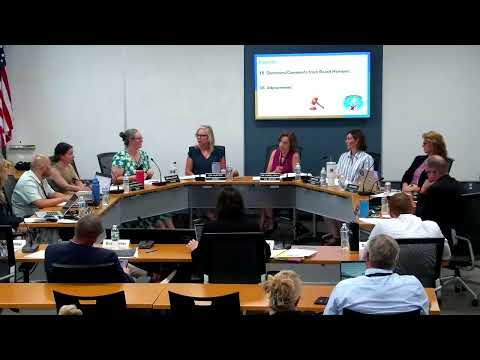
Northville board adopts bylaw change for monthly meetings, approves 2025-26 calendar after lengthy debate
Summary
After extended debate about meeting frequency, school visits and transparency, the Northville board adopted amended bylaws to require at least one regular board meeting each month and approved the 2025-26 Board of Education calendar (4–3).
The Northville Public Schools Board of Education voted to adopt an amendment to its bylaws establishing a floor of “at least one regular board meeting each month” and approved the district’s 2025-26 Board of Education calendar after an extended discussion about meeting frequency, committee structure and public transparency.
The bylaw change began as a first reading (motion 5) and drew debate during the meeting. Board member Dr. Kimball Wojtal presented the proposed wording change as part of an effort to align policies with state practice and to allow flexibility for study sessions or special calls. Several board members pressed to retain the phrase “each month” in the text; the board approved the first reading as modified. Later in the meeting the board moved to waive the typical two-reading process and treated the action as a second and final reading, then approved the amended bylaws by majority vote.
The board also debated and then approved the 2025-26 calendar (motion 6) which reduces the number of scheduled regular board meetings compared with recent years. The calendar passed 4–3. Supporters said the schedule frees space for deliberate, multi-hour “committee of the whole” (COW) meetings where the full board can do deeper work — strategic planning, policy review, master-planning discussions and other single-issue deliberations — instead of fragmenting work across smaller subcommittees. Opponents said the calendar cuts roughly one-third of previously scheduled meetings (from around 24 to 16), risks shorter notice or added special-call meetings, and reduces the number of school building visits that trustees traditionally used to monitor program implementation.
Several trustees and the superintendent discussed the trade-offs between efficiency and public access. One board member noted concerns that COW sessions often lack posted agendas and that moving detailed conversation into COWs could reduce public transparency. Another trustee said that if the district’s committee-of-the-whole meetings become the primary venue for deliberation, the board should publicize topics to encourage public attendance.
The board’s discussion also touched on related governance practices: elimination of standing subcommittees in favor of committee-of-the-whole deliberations, whether to post COW agendas publicly and the practical need to sometimes hold closed sessions for negotiations or personnel matters on short notice. The change in bylaws will be incorporated into board governance documents; staff said the amended language and the approved calendar will be published in board materials and that the second-reading/adoption and calendar vote close a process the board has been discussing for months.