
Planning commission denies Corniche Master Association bid to bar short‑term rentals in Monarch Hills
Get AI-powered insights, summaries, and transcripts
Sign Up Free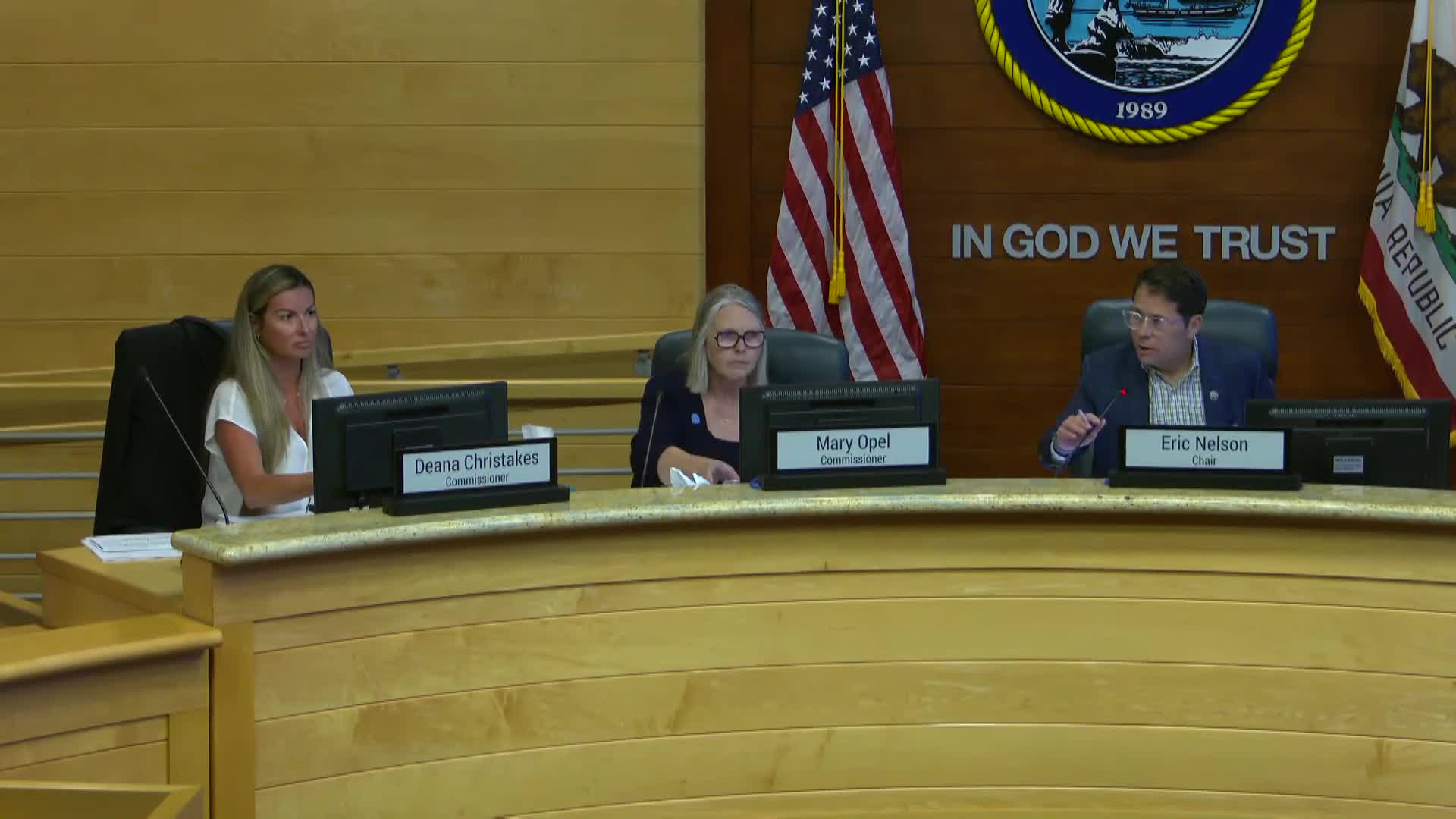
Summary
The Dana Point Planning Commission on July 14 denied Coastal Development Permit CDP‑25‑0004, a request from the Corniche Master Association to prohibit short‑term rentals of less than 30 days in the Monarch Hills condominium subassociation.
The Dana Point Planning Commission on July 14 denied Coastal Development Permit CDP‑25‑0004, which the Corniche Master Association had filed to prohibit short‑term rentals (STRs) of less than 30 days within the Monarch Hills condominium subassociation.
Case planner John Champ told the commission the Corniche Master Association’s master CC&Rs include a 30‑day minimum rental term, but Monarch Hills’ CC&Rs — recorded later — contain a seven‑day minimum that has permitted short‑term rentals for decades. Champ said the city has tracked STR activity in Monarch Hills since 2013 and that the subassociation currently had about 45 active STR permits at the time of the hearing; Champ said prior CDPs approved for other subassociations (Corniche Sur Mer and Ritz Point) involved communities that had no history of active STRs and therefore were materially different. Champ told commissioners staff does not support the requested CDP and warned that approval could reduce public access to lower‑cost overnight accommodations and create unresolved legal conflicts between the master association and the subassociation.
The item drew the largest public comment turnout of the meeting: the commission limited speakers to two minutes and heard 34 people. Speakers favoring the master association’s request argued the master declaration is the prevailing governing document and must be enforced; those voices included Delita Cobold, president of the Corniche Master Association, who said the master declaration requires a 30‑day minimum and “the master association CC and R supersede the 3 sub association documents, therefore, they must all comply with the master association’s governing restrictions.” Supporters also said STRs have produced noise, trash, security issues and disproportionate wear and tear on shared facilities.
Opponents of the requested CDP urged respect for property rights, said STRs support tourism and local businesses, and described problem calls as isolated. Multiple speakers said they operate STRs responsibly and rely on the income to maintain properties; several urged the city not to overturn permits already issued. Speakers opposing the CDP included homeowners and property managers who described long‑term, permitted use of STRs under Monarch Hills’ documents and said the city had previously issued permits.
Commission discussion focused on legal and policy limits of the commission’s role. Several commissioners said the dispute appeared to be between HOAs and their governing documents and that the commission must base its decision on the seven findings required for a coastal development permit. Commissioners said they could not make the findings because staff’s analysis showed the requested prohibition would be inconsistent with the Local Coastal Program and could reduce public access to coastal overnight accommodations. One commissioner said the matter “belongs in a courtroom” or in HOA dispute resolution rather than being decided by the planning commission.
Following discussion the commission voted to deny CDP‑25‑0004. The denial preserves existing short‑term rental permits in Monarch Hills and leaves unresolved the conflict between the master association and Monarch Hills CC&Rs; staff noted the decision could prompt legal challenges and recommended the parties pursue resolution through their governing documents or the courts. John Champ told commissioners the prior Coastal Commission and city approvals of the short‑term rental program and the presence of active permitted STRs in Monarch Hills weighed in the staff recommendation against approving the master association’s request.