Get Full Government Meeting Transcripts, Videos, & Alerts Forever!
Get email alerts on the Distributed Energy Resources topic
No spam. Unsubscribe anytime.
Senate committee advances AB 44 to clarify how distributed energy resources can be counted to reduce peak demand and ratepayer costs
Summary
AB 44 would direct the California Energy Commission to issue guidance for how behind-the-meter technologies (batteries, EVs, smart thermostats) can qualify to lower system load forecasts, letting utilities buy less expensive power and reduce costs for all customers.
The committee unanimously recommended AB 44, a bill aimed at lowering peak electricity costs by clarifying how distributed energy resources (DERs) — batteries, electric vehicle chargers, and smart thermostats — qualify to reduce a utility’s forecasted peak demand.
Assemblymember Schulz told the committee the bill would direct the California Energy Commission to publish technical guidelines so third-party DER providers and load-serving entities know the testing and methodologies required to count load reductions for procurement and planning. Supporters said the measure could lower the amount utilities must buy in the wholesale market for tight peak hours, producing savings for ratepayers.
Supporters included Advanced Energy United, NRG (retail electricity provider), Community Choice Aggregators (CCAs), environmental groups and solar and storage trade associations. Rebecca Lee of NRG and Dylan Hoffman of Advanced Energy United described how clearer verification and common metrics would allow more reliable integration of aggregated DERs into utility planning and resource adequacy.
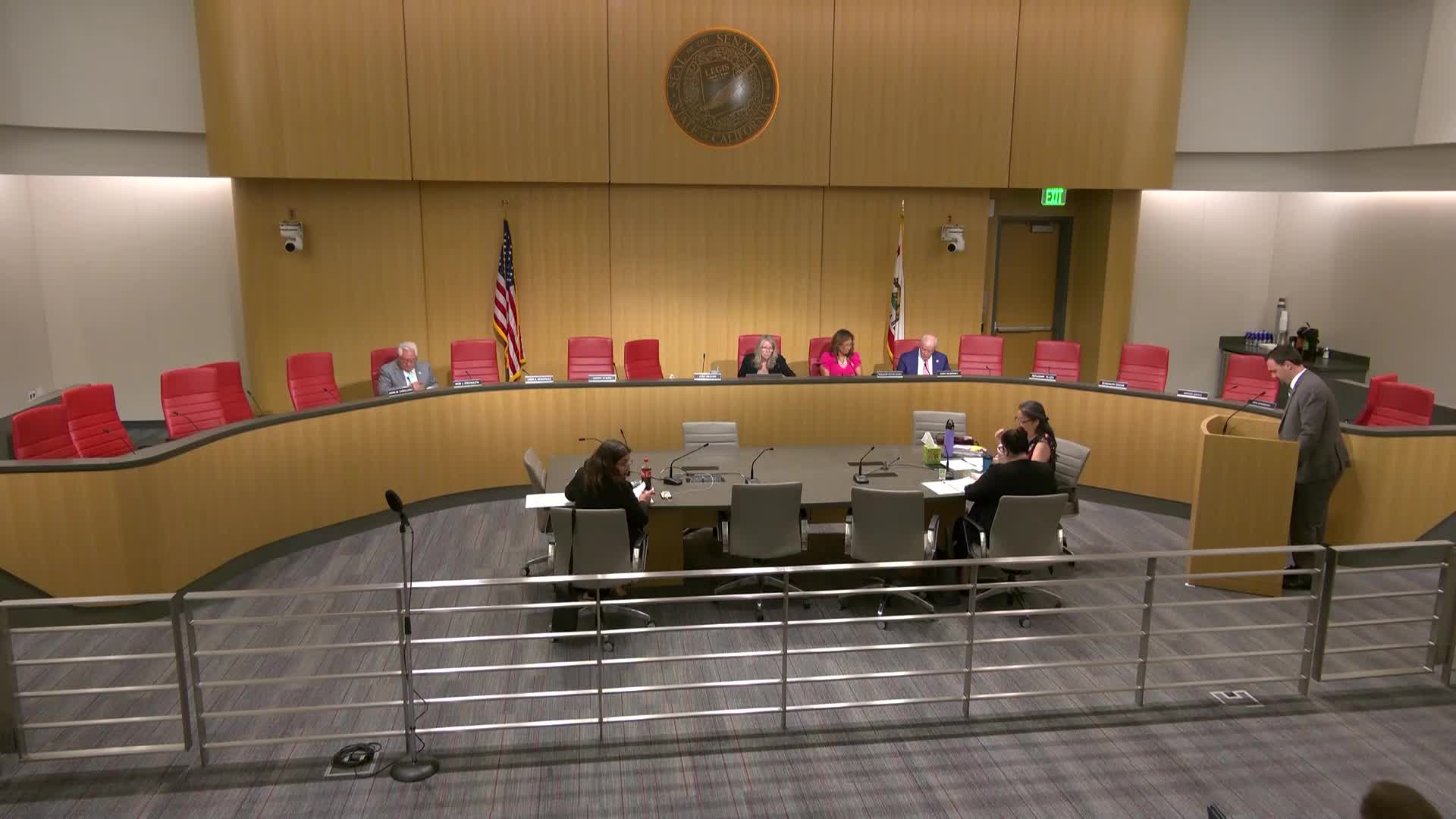
Committee action: AB 44 was passed as amended to the Senate Appropriations Committee with broad bipartisan support. Senators said improved verification and testing could permit more market participation, lower portfolio costs and improve reliability.
The bill now moves to fiscal review; backers said they expect the CEC to consult with utilities and providers on technical standards to make the DER contribution credible for planning and procurement.