
American Fork Irrigation official: canyon flows likely 60–65% of normal; Highland to pursue recharge plans
Get AI-powered insights, summaries, and transcripts
Sign Up Free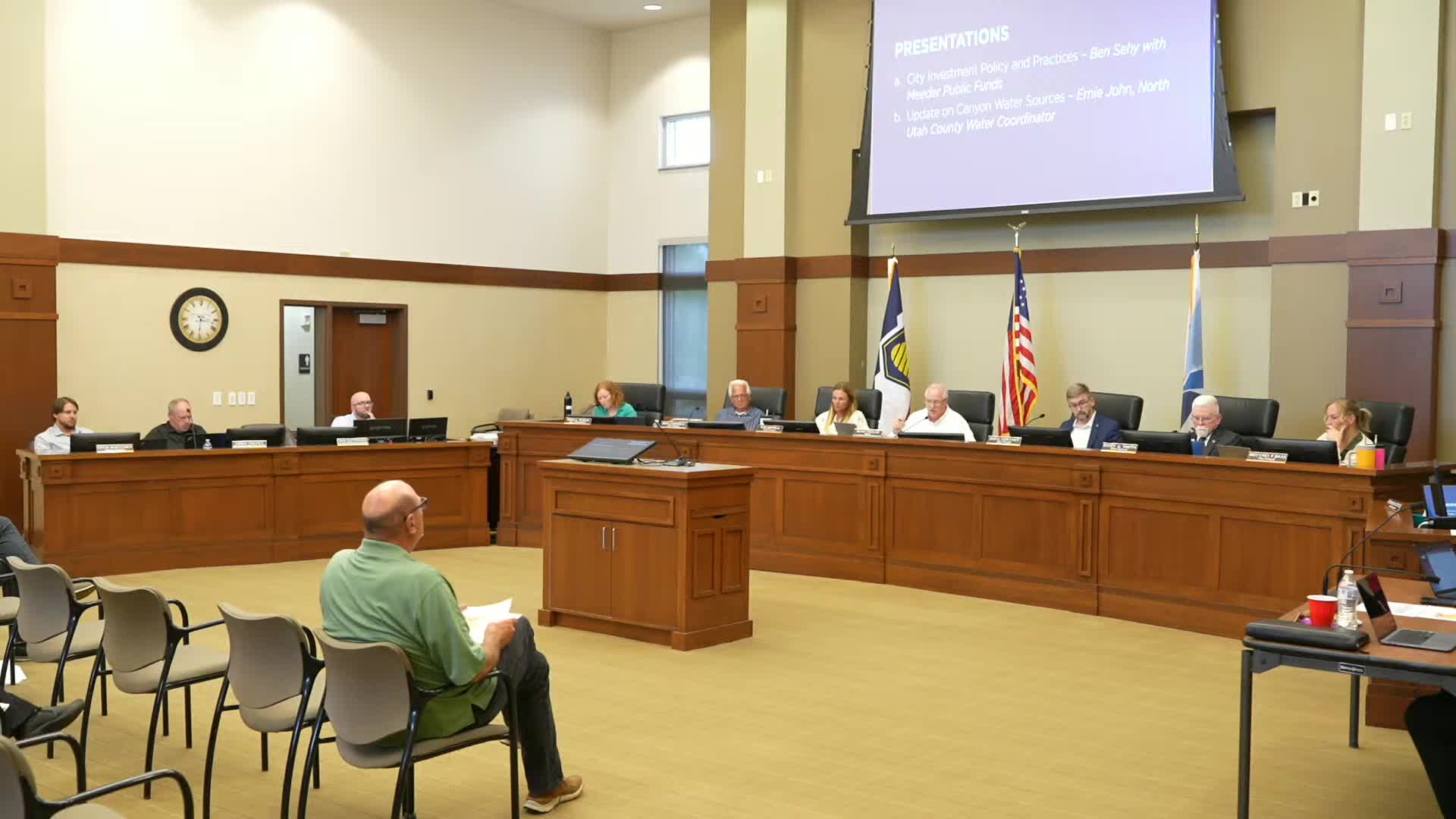
Summary
Ernie Johns, North Utah County Water Coordinator for American Fork Irrigation, told the Highland City Council that lower-than-expected mountain runoff this spring means less surface water from American Fork Canyon and stressed long-term groundwater recharge and interagency coordination as the path forward.
Ernie Johns, North Utah County Water Coordinator for American Fork Irrigation, told the Highland City Council on July 15 that American Fork Canyon runoff this year will likely be only about 60–65% of a normal year, leaving cities that rely on canyon water to tap secondary sources and accelerate conservation.
Johns, who said Highland City directly owns 25% of American Fork Irrigation’s water and that American Fork Irrigation controls roughly 62% of the canyon’s water, said the system started the year with full reservoirs but warm late-season weather and early melt reduced the usable snowpack that feeds pressurized irrigation. “We’re truly looking at about a 60, probably 65% year when this year shakes out in terms of drought water coming out of American Fork Canyon,” he said.
Johns laid out near- and long-term steps officials are using to manage scarce supplies. Short-term, he said managers move excess water nightly among agencies and draw on other sources (Deer Creek, CUP water and the Murdock pipeline) where available. He said two new pump stations at 6000 West will be online “by the end of the month,” increasing the ability to convey noncanyon water into the city’s pressurized irrigation system.
On longer-term solutions, Johns described a multiyear pilot to recharge groundwater by diverting excess canyon flows into a recently purchased gravel-pit recharge site. Central Utah Water purchased the pit with federal funding and the North Utah County Aquifer Council will run test phases. “This winter I’ll be running phase 2 of a pilot program, and I’ll be running water to the gravel pit,” Johns said, noting engineers expect several years of testing before widespread use.
Johns also warned of continuing pressure at the state level to reallocate water and said irrigation entities monitor proposed bills and defend existing rights. He told council members he regularly testifies on water legislation in Salt Lake City. “There’s a lot of pressure, but they aren’t taking it yet. We just need to keep our eye on them,” Johns said.
Council members asked about local conservation and questions about why some parks and golf courses remain green while others show drought stress. Johns said park and athletic fields are prioritized because of injury and safety concerns and praised Highland staff for drought-related reductions elsewhere. He urged continued resident conservation and noted “drought fatigue” as a factor in higher residential use this season.
Johns offered to continue briefings for council and staff and to provide the data reports his office produces, including long-term river-gauge records and his internal flow projections. He also said the American Fork Irrigation weir and automation project is partly manual now and will be fully automated after fall construction so managers can move water on demand to where it is needed.